
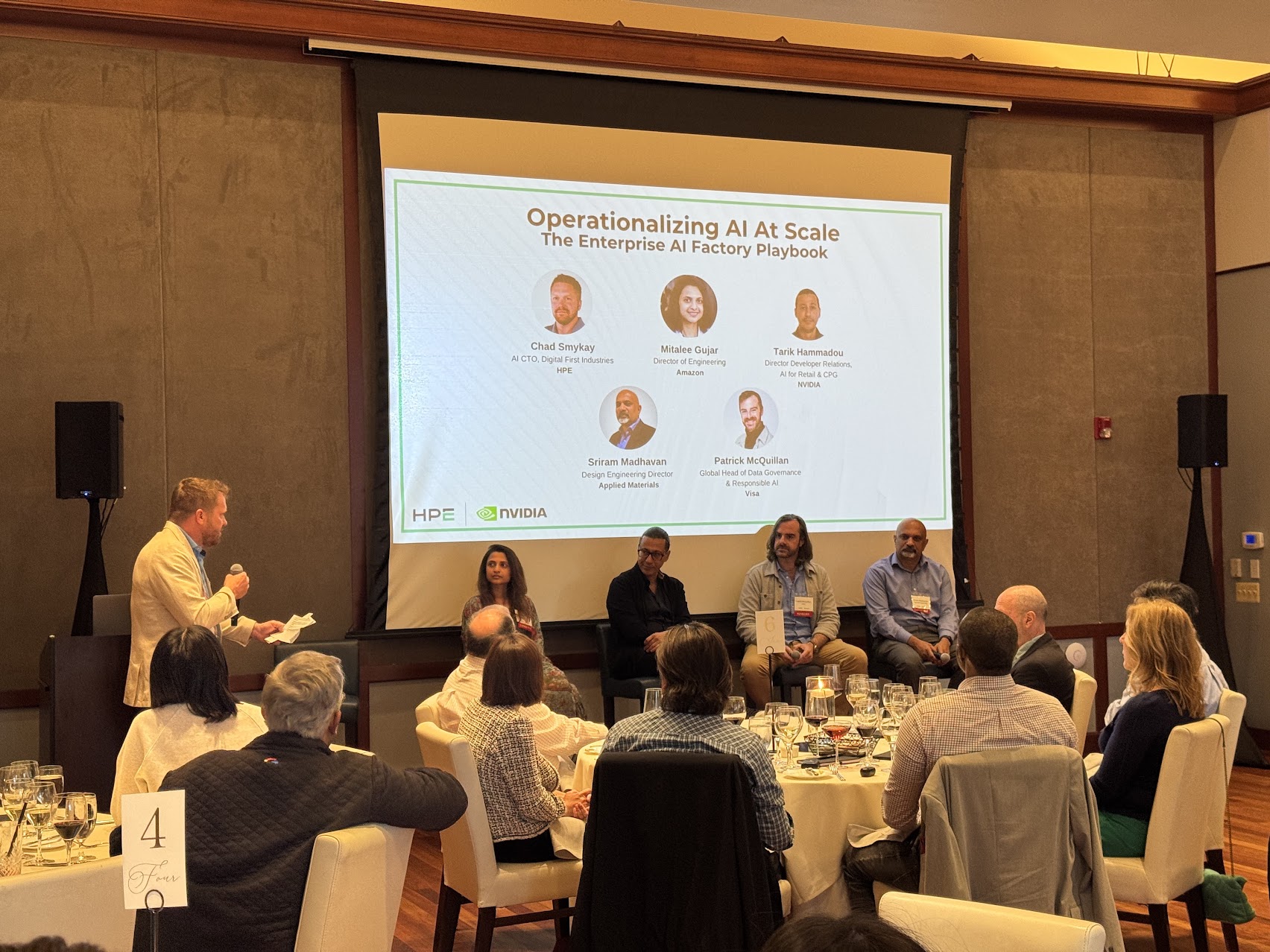
Panel
Chad Smykay
AI CTO & Distinguished Technologist, Industry Verticals, North America
Hewlett Packard Enterprise


Executive summary
Enterprises are moving from experimentation with AI to operational deployment, but many are encountering friction in scaling initiatives effectively. While foundational models and tooling have advanced rapidly, organizations are struggling with integration into legacy systems, unclear ownership of use cases, and inconsistent alignment between AI initiatives and business objectives. The gap between technical capability and operational execution is emerging as the primary constraint to realizing value.A recurring challenge is balancing standardization with flexibility. Over-standardization can limit innovation, particularly in emerging areas such as generative and agentic AI, while lack of governance introduces risk, inefficiency, and inconsistent outcomes. Leading organizations are adopting a hybrid approach, applying structured controls for repeatable AI use cases while allowing more flexibility in exploratory and high-innovation environments. This is particularly relevant as enterprises transition from traditional AI/ML to more dynamic, agent-driven systems.At the same time, organizations are recognizing that AI success is less about technology selection and more about problem definition, data readiness, and cultural adoption. Misaligned incentives, such as deploying AI for visibility rather than value, are leading to failed initiatives and low ROI. The enterprises making progress are those that prioritize clear use cases, align AI with business strategy, and build feedback loops that enable continuous learning and improvement.
The discussion
AI CTO & Distinguished Technologist, Industry Verticals, North America

Director Developer Relations, AI for Retail & CPG

Director of Engineering

Design Engineering Director

Global Head of AI & Data Governance
Key themes
Structured frameworks are required for reliability and compliance, but excessive standardization can limit experimentation and slow progress in emerging AI use cases.
AI delivers value when applied to clearly defined problems and embedded into workflows, rather than deployed for its own sake.
Incomplete, outdated, or poorly governed data limits model performance, making continuous data pipelines and feedback mechanisms essential for maintaining relevance.
Fragmented architectures and siloed data environments continue to slow AI adoption, requiring modernization alongside deployment.
Many AI projects are driven by external pressure or internal visibility rather than customer needs, resulting in low adoption and limited ROI.
Actionable takeaways
Define specific use cases tied to measurable outcomes before deploying AI solutions.
Apply strict controls for repeatable, high-risk use cases while maintaining flexibility for experimentation in emerging areas.
Continuously update models with new data and validate outputs against real-world outcomes to prevent performance degradation.
Prioritize modernization efforts that unlock data accessibility and interoperability rather than attempting full system overhauls.
Evaluate whether initiatives deliver tangible value to customers or operations, not just internal or market signaling.
Identify AI champions within business units and provide them with tools and autonomy to test and scale use cases.
Maintain human oversight and clear ownership, particularly in customer-facing or high-risk applications.
Focus initial deployments on processes that are repetitive, data-driven, and constrained by human capacity.
Treat early initiatives as learning cycles, using failures to refine models, processes, and governance structures.
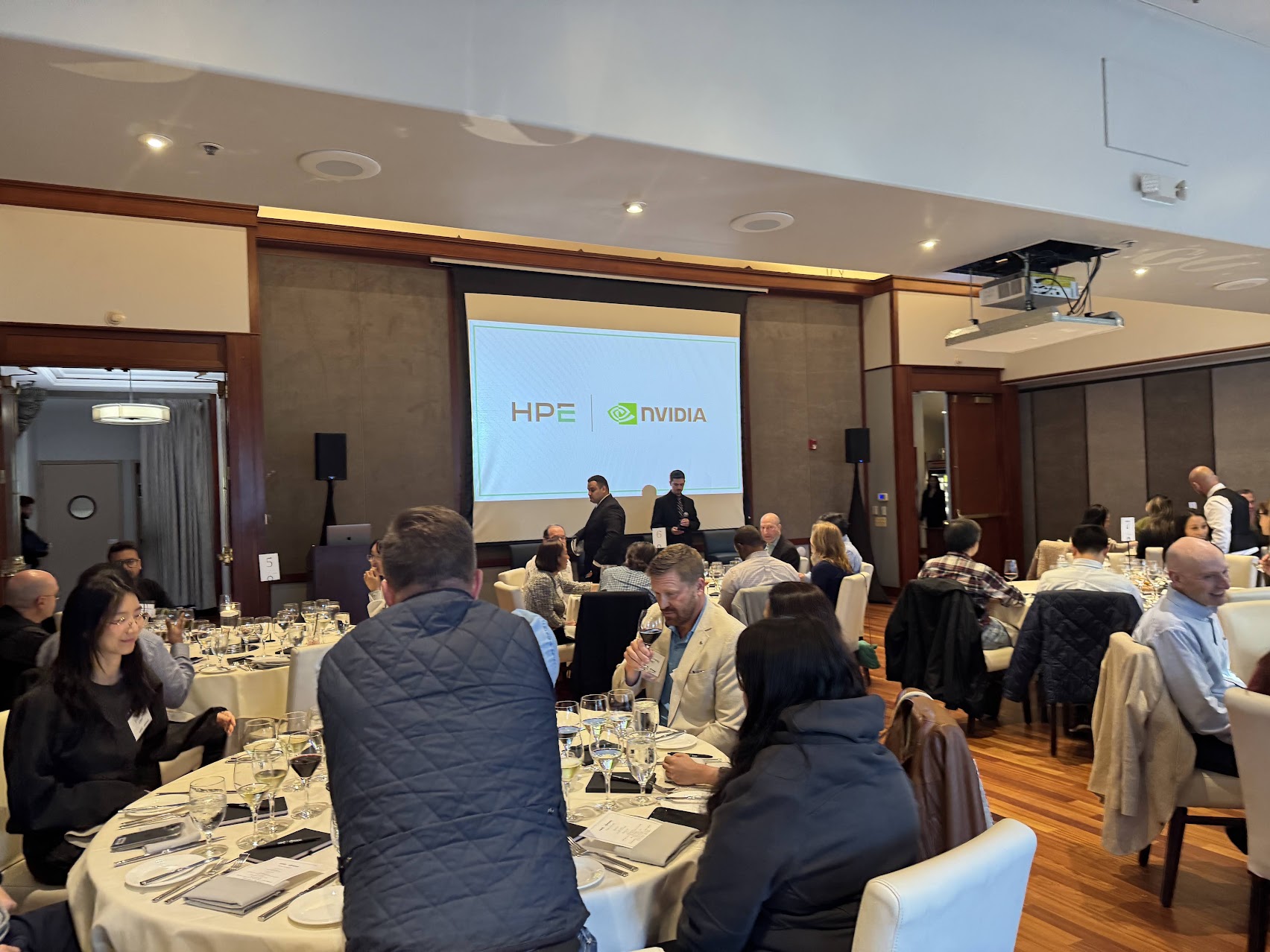
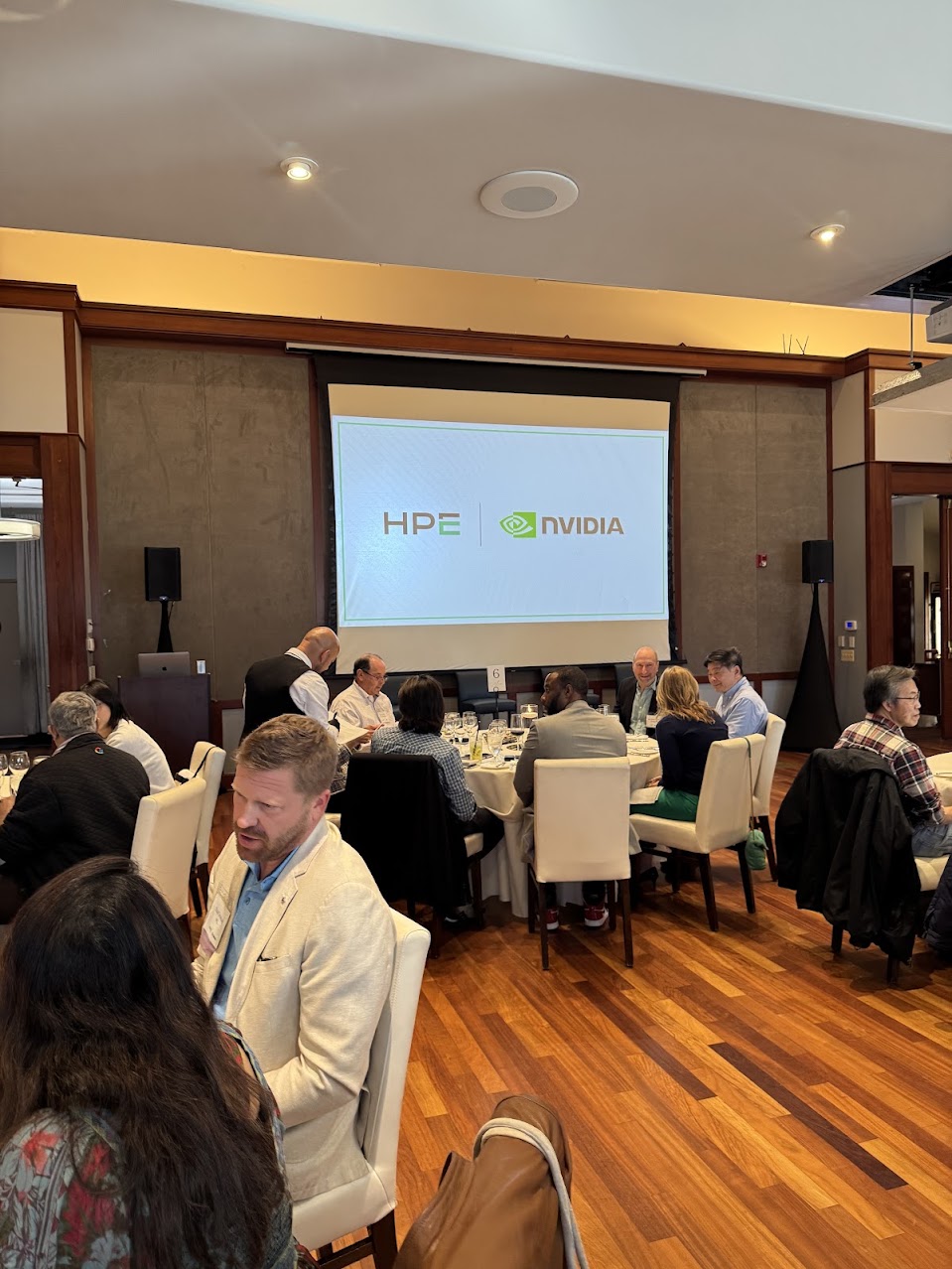
Event moments



Presented by

Unlock your boldest ambitions with Hewlett Packard Enterprise, your essential partner for the AI era. HPE uses the power of AI, cloud, and networking to help you move faster, work smarter, and achieve more. With deep expertise and bold ingenuity, we empower organizations to turn data into foresight, elevate performance, and drive real-world impact—at scale. Rooted in decades of innovation, we focus on helping companies adapt, grow, lead, and challenge the limits of what’s possible. www.hpe.com
Learn more about HPE ↗
NVIDIA is a full‑stack, accelerated computing company that delivers the AI infrastructure and software powering the world’s most demanding enterprises, from cloud to data center to factory floor. We combine industry‑leading GPUs, high‑performance networking, and optimized software into integrated platforms that enable you to build, deploy, and scale generative AI, digital twins, and advanced analytics with unmatched performance and efficiency. As the engine behind many of the world’s largest clouds and AI initiatives, NVIDIA helps organizations transform their data into a competitive advantage, modernize their core systems, and accelerate innovation while reducing total cost of ownership and time to value.
Learn more about NVIDIA ↗