
Panel
Malcolm Ferguson
Distinguished Technologist
Hewlett Packard Enterprise


Executive summary
Executive SummaryThe discussion explored how enterprises are adopting agentic AI—autonomous systems capable of learning, reasoning, and acting within business environments. Executives emphasized that the greatest challenge is not the technology itself but building the right foundations: trustworthy data, responsible governance, and scalable infrastructure. Leaders agreed that organizations must balance innovation with control—leveraging AI to automate complex workflows while ensuring transparency, compliance, and human oversight where necessary.Agentic AI’s value lies in its ability to extend beyond static automation, learning dynamically from context and adapting to new inputs. Participants shared examples spanning financial services, hospitality, and enterprise IT—where autonomous systems enhance fraud detection, customer experience, and operational efficiency. Yet they cautioned that these systems demand disciplined data strategy, human-in-the-loop validation, and careful orchestration across cloud and on-prem environments. The future will favor hybrid architectures that keep data secure while tapping into the computational scale of cloud ecosystems.Ultimately, enterprise AI success depends on coupling innovation with accountability—embedding AI governance, engineering rigor, and human judgment into every phase of design, deployment, and monitoring. As one theme emerged repeatedly: AI should enhance decision-making, not replace it.
The discussion
Distinguished Technologist

Solutions Architect

Director, Software Engineering

Senior Vice President of Software Engineering
Key themes
Enterprises are rebalancing from public-cloud-only strategies toward colocation, private cloud, and edge deployments to address latency, data privacy, and cost efficiency for GPU-intensive workloads.
Organizations are moving beyond chat interfaces to multi-agent systems that perform research, automation, compliance validation, and real-time decision support across business functions.
Video analytics, digital twins, healthcare imaging, and fraud detection require local processing and high-bandwidth fabrics, making edge and colocation essential components of AI strategy.
Regulated industries require traceability, source attribution, and observability in AI outputs, accelerating adoption of RAG, deep-research agents, and telemetry-driven oversight.
Liquid cooling, power-dense racks, and renewable-powered data centers are becoming critical to support large-scale GPU deployments while controlling cost and environmental impact.
Actionable takeaways
Prioritize latency-sensitive and data-sovereign use cases for edge or colocation, while using public cloud for burst capacity and large-scale model training.
Move from single-prompt models to orchestrated agents for research, compliance, operations, and decision automation.
Integrate ERP, CRM, data lakes, and external sources through secure, encrypted pipelines to enable trusted RAG and reasoning systems.
Require source tracing, audit logs, and model-judging frameworks to support regulatory review and operational confidence.
Align AI roadmaps with liquid-cooling readiness, energy sourcing, and high-density rack design to avoid future capacity bottlenecks.
Use pre-validated agent, digital twin, and analytics frameworks as starting points, then customize for enterprise-specific governance and integration requirements.
Event moments

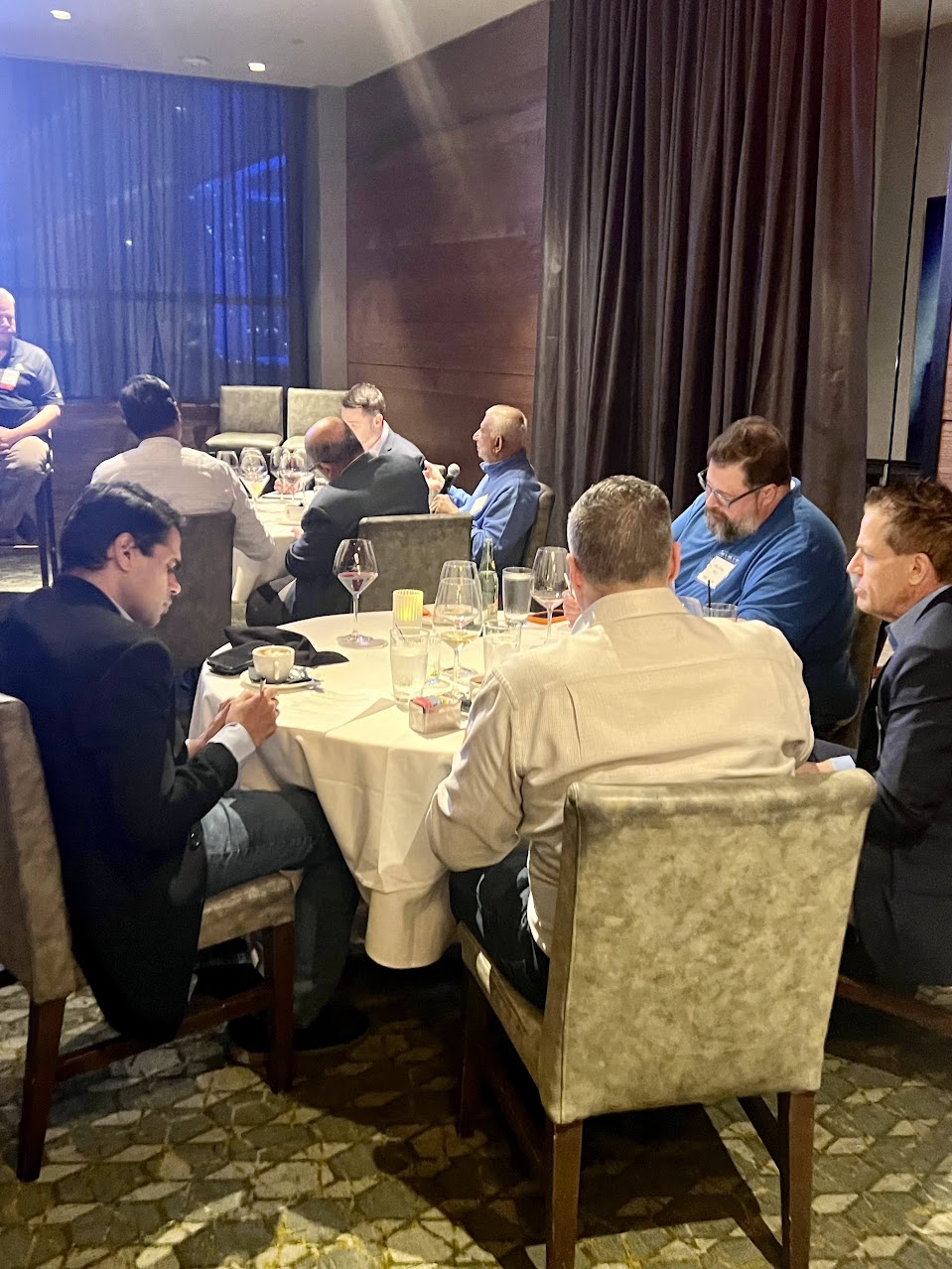




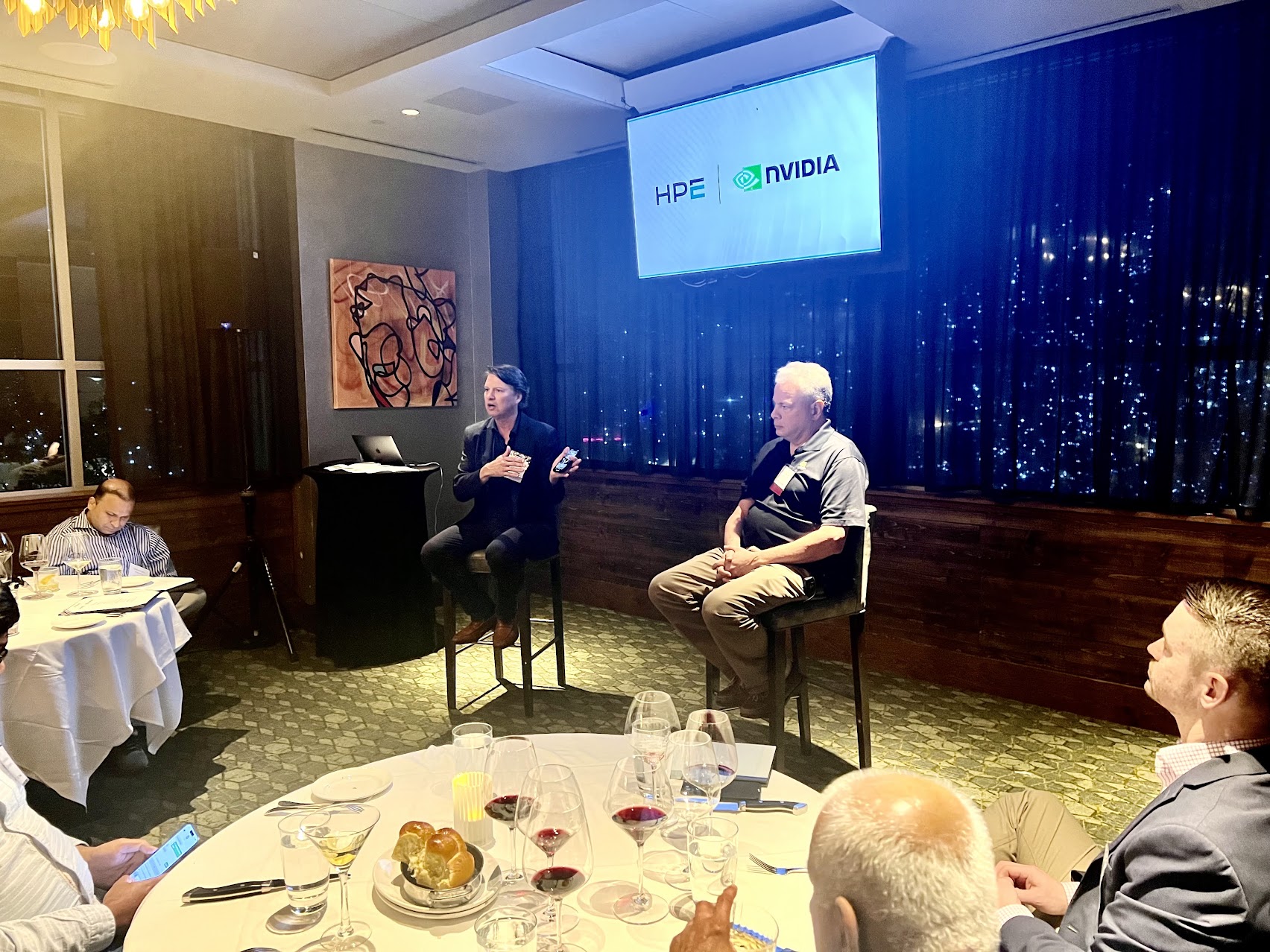
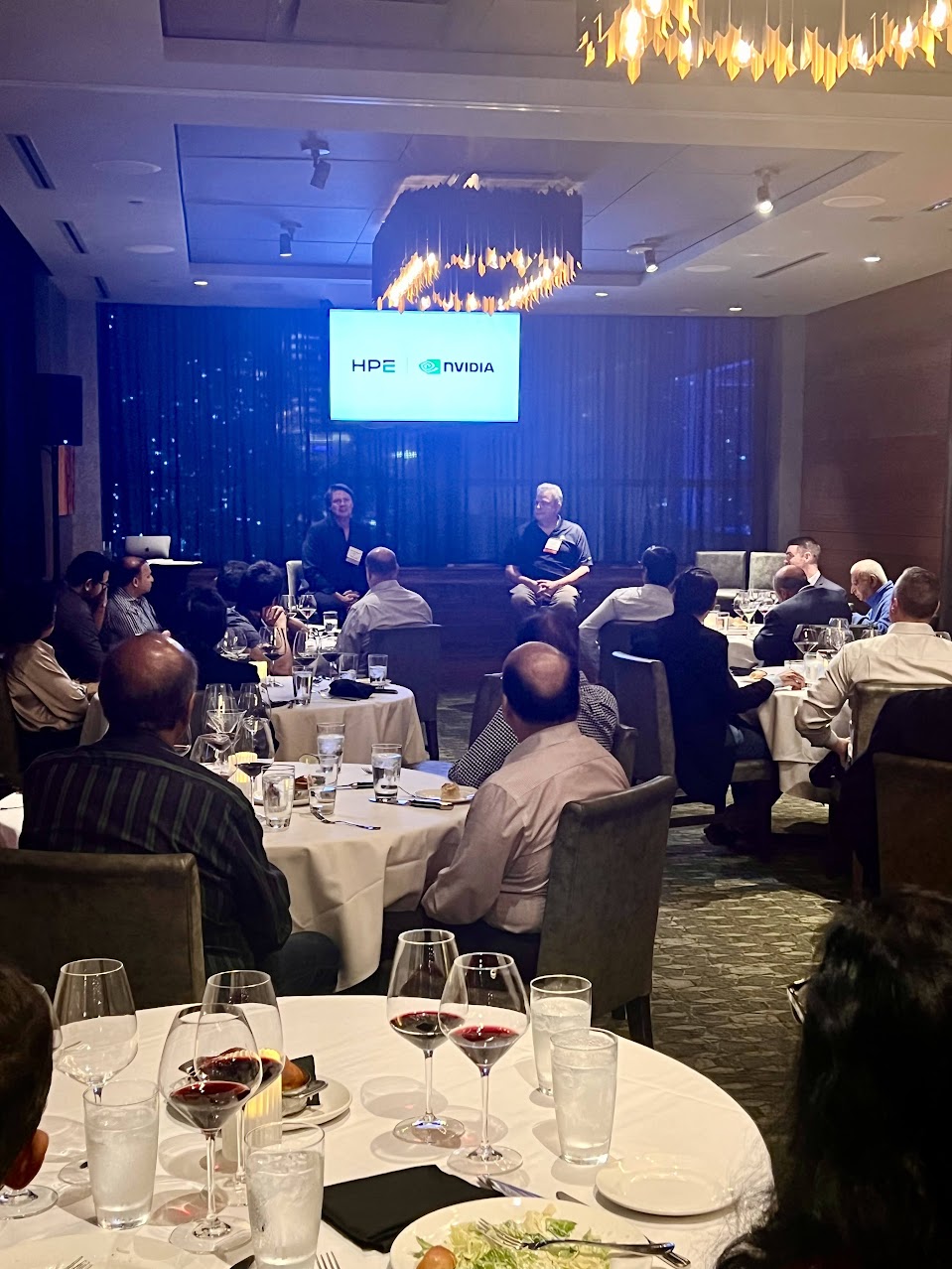
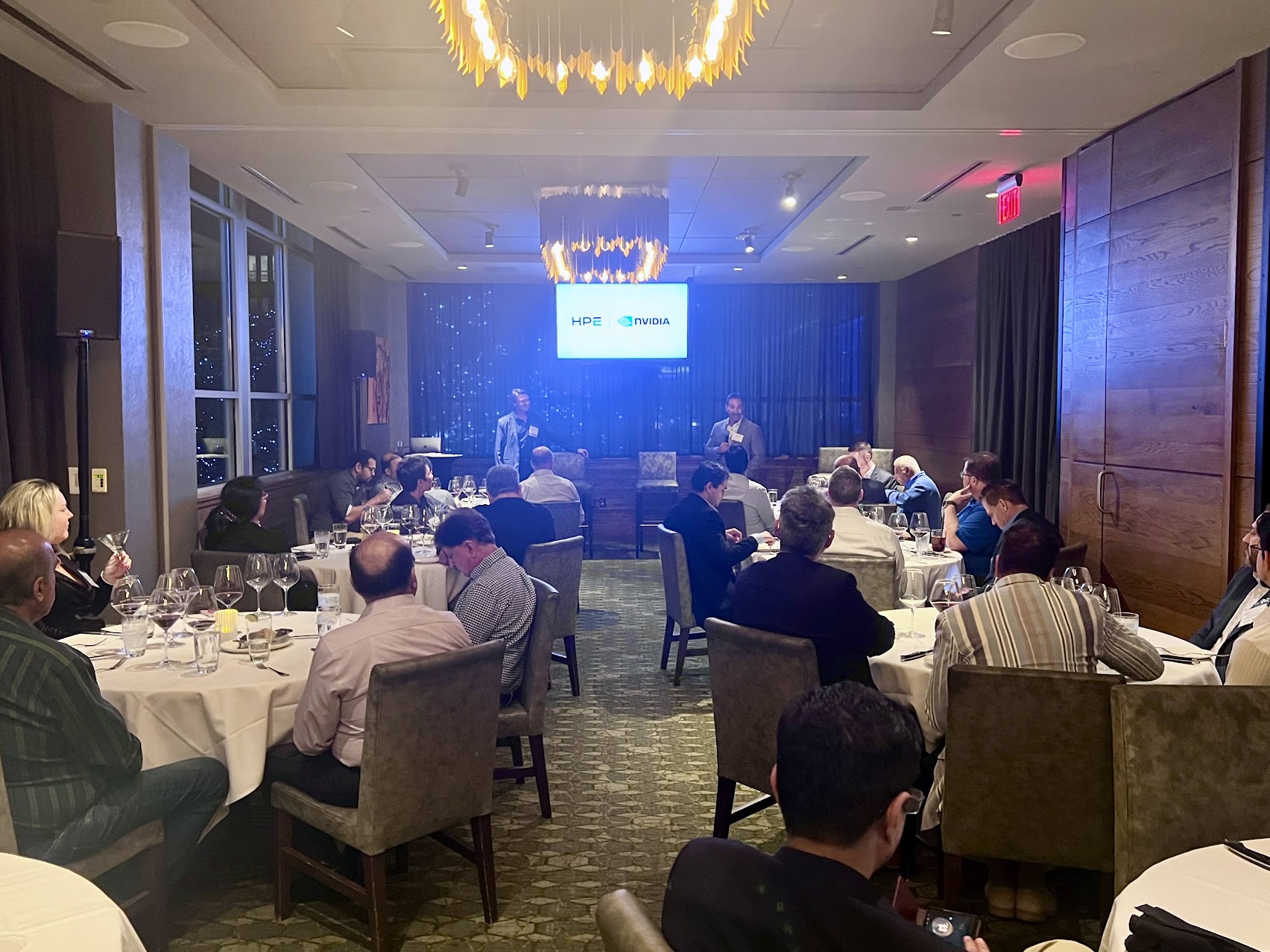







Presented by

Unlock your boldest ambitions with HPE, your essential partner for the AI era. HPE uses the power of AI, cloud, and networking to help you move faster, work smarter, and achieve more. With deep expertise and bold ingenuity, we empower organizations to turn data into foresight, elevate performance, and drive real-world impact—at scale. Rooted in decades of innovation, we focus on helping companies adapt, grow, lead, and challenge the limits of what’s possible. www.hpe.com
Learn more about HPE ↗NVIDIA Corporation is a market leader in visual computing technology dedicated to creating products that enhance the interactive experience on consumer and professional computing platforms. Its graphics and communications processors have broad market reach and are incorporated into a wide variety of computing platforms, including consumer PCs, enterprise PCs, notebook PCs, professional workstations, handhelds, and video game consoles. NVIDIA is headquartered in Santa Clara, California and employs more than 1,900 people worldwide. For more information, visit the Company’s Web site at www.nvidia.com.
Learn more about NVIDIA ↗