
Protiviti
Kyle Swanson
Managing Director

Post-event recap
Driving innovation, governance, and change — and why the design decisions made early in an ERP program determine how safely automation and AI can scale later.
Executive summary
Enterprise organizations are accelerating ERP modernization to improve scalability, data integrity, and decision velocity, but the conversation has shifted decisively from system replacement to governance-enabled transformation. Leaders emphasized that ERP programs now serve as the operational foundation for automation, analytics, and AI, making early design decisions—particularly around data migration, controls, and integration—material to long-term business risk and value realization.
A recurring tension emerged between speed and control. Organizations that delayed risk, audit, and data governance involvement encountered friction later, while those that embedded these perspectives early reported smoother adoption, stronger stakeholder trust, and fewer downstream compliance challenges. Rather than slowing progress, disciplined governance was positioned as an enabler of scale, allowing automation and AI to move into production with confidence.
As AI adoption matures, the focus is moving from experimentation to operationalization. Leaders described a pragmatic shift toward bounded, high-ROI use cases—procurement, contract review, revenue processes—supported by human-in-the-loop oversight, transparent logging, and staged rollout models. The consensus view: enterprises that treat AI as an augmentation layer, not a replacement engine, are better positioned to realize value without destabilizing financial, regulatory, or workforce foundations.
Featured panel
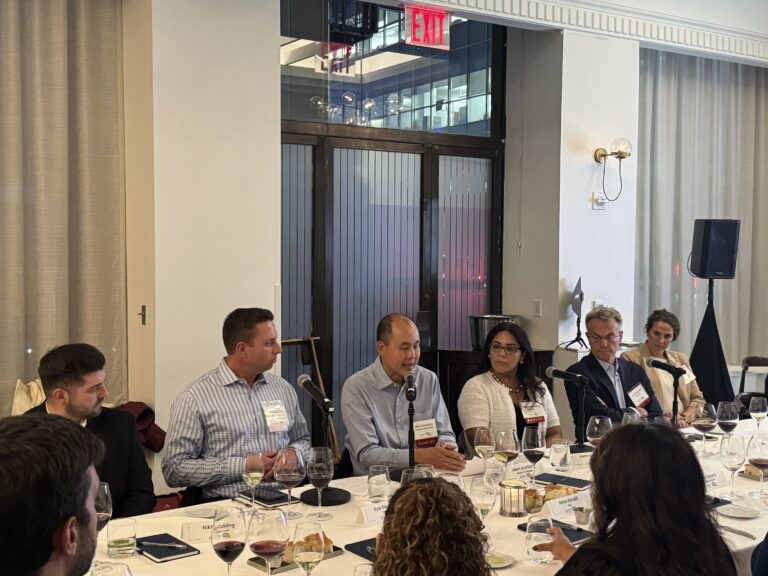
A cross-functional discussion spanning internal audit, enterprise risk, finance operations, and technology consulting.
Protiviti
Managing Director

Sesame Workshop
Vice President, Finance and Controller

UiPath
VP Head of Internal Audit and Enterprise Risk

Protiviti
Managing Director
Key themes
Five themes framed the discussion about ERP modernization, controls, and AI governance.
Modern ERP initiatives are being framed as enterprise data and automation platforms, enabling faster closes, higher transaction volumes, and improved reporting accuracy.
Involving audit, risk, and data governance during design and migration phases reduces rework, accelerates SOX readiness, and strengthens credibility with regulators and auditors.
Opening balances and historical data integrity are now recognized as control-critical assets, requiring formal validation, documentation, and auditability from day one.
Organizations are shifting from high-level AI principles to technical controls—logging, access boundaries, model transparency, and risk-tiered use case intake.
Successful AI deployments maintain clear human review points, particularly for financial reporting, contracts, and regulated decisions, to mitigate hallucinations and emergent risk.
The operating principle
Disciplined governance is an enabler of scale.
Teams that brought risk, audit, and data governance in at design time reported smoother adoption and fewer downstream compliance problems than those that added them afterwards.
Actionable takeaways
Seven moves for modernizing the core while keeping automation and AI inside the controls.
Embed risk, audit, and data governance in ERP and AI programs at inception, not post-implementation, to avoid compliance drag and stakeholder resistance later.
Treat data migration as a first-order control event, with documented cutoffs, completeness checks, and reconciliation evidence aligned to external audit expectations.
Prioritize AI use cases with clear ROI and bounded risk, such as procurement automation, contract lifecycle management, and revenue review, before expanding into judgment-heavy domains.
Adopt a risk-tiered intake model for AI initiatives, classifying use cases by regulatory, financial, and reputational impact to determine governance depth and approval paths.
Use parallel-run and sandbox approaches to validate AI outputs against existing processes before production deployment, especially in SOX-relevant workflows.
Invest in workforce enablement alongside technology, reinforcing critical thinking, review discipline, and AI literacy to prevent over-reliance on automated outputs.
Measure success in time saved and risk reduced, not just cost eliminated, positioning automation and AI as tools that free senior talent to focus on higher-value analysis and oversight.
From the room
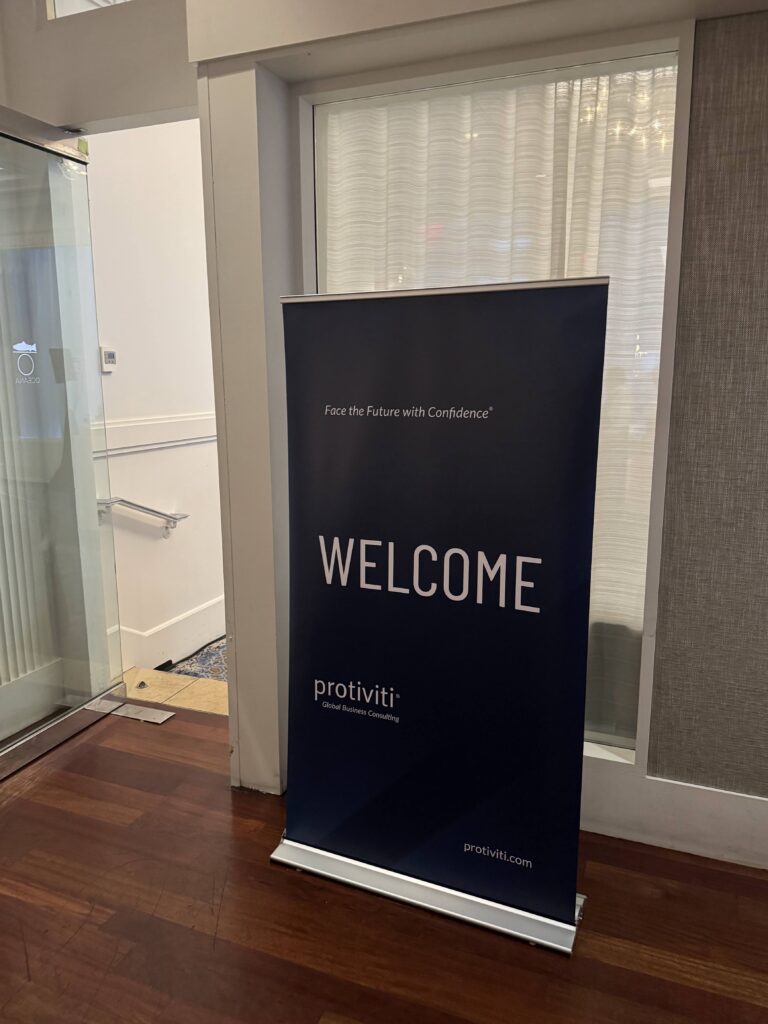
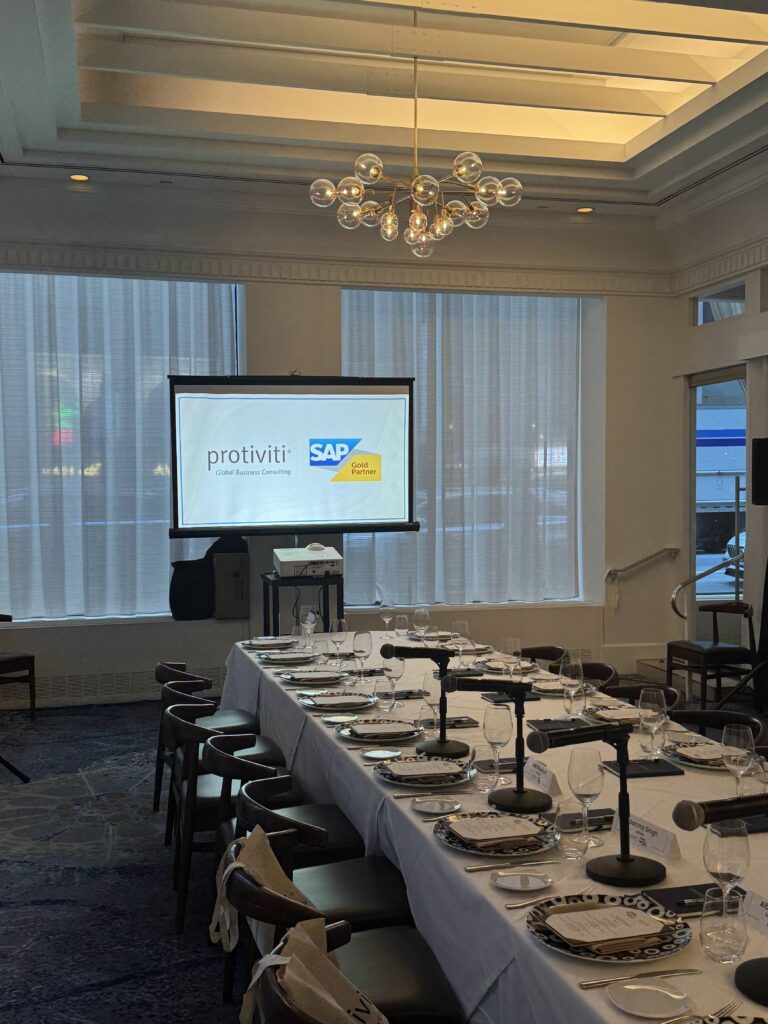

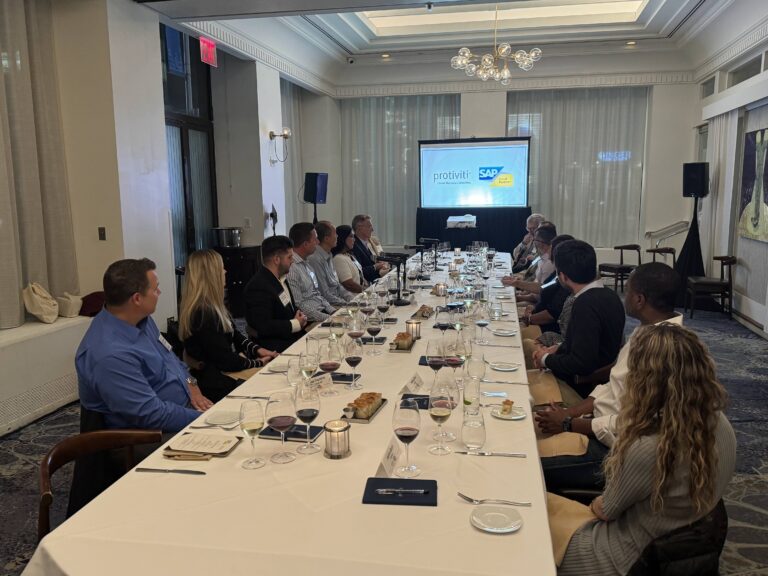

Event sponsor

Protiviti is a global consulting firm that delivers deep expertise, objective insights, a tailored approach and unparalleled collaboration to help leaders confidently face the future. Our consulting solutions span critical business problems in technology, digital, business process, analytics, risk, compliance, transactions and internal audit.
Our more than 11,000 people serve clients ranging from business, governments, public-sector agencies and not-for-profits through the network of Protiviti and independently owned Member Firms in more than 90 offices in over 25 countries. We have served more than 80 percent of Fortune 100 and nearly 80 percent of Fortune 500 companies.
Visit protiviti.com ↗