The Infrastructure Supercycle: Navigating Cost, Capacity and Vendor Risk
Private Executive Lunch
Executive summary
From experimentation to durable business transformation
Enterprise AI is moving from experimentation toward business transformation, but scaling successfully requires more than access to better models. The organizations making the most progress are starting with clearly defined business outcomes, then aligning governance, infrastructure, data, security, and operating processes around those goals. Without that foundation, companies risk becoming trapped in repeated pilots that never deliver measurable value.
Infrastructure and governance are becoming increasingly important as AI workloads expand. Enterprises need to determine which workloads should remain private, which can leverage public cloud resources, how capacity should scale with demand, and how sensitive data can remain protected. At the same time, AI introduces new operational risks, including faster-moving cyber threats, shadow AI, uncontrolled application growth, and technical debt created by rapidly generated software.
The human side of AI transformation remains equally important. Successful adoption depends on clear ownership, strong change management, workforce education, and workflows that complement rather than simply replace human judgment. As AI becomes more autonomous, the role of people is likely to shift from performing every task to overseeing outcomes, exceptions, risk, and strategic decisions.

Featured discussion
Perspectives from the room


Key themes
What the room explored
- 01
Business Outcomes Must Lead AI Strategy
AI initiatives are more likely to scale when they begin with a defined business problem, measurable outcome, and clear ownership rather than a mandate to adopt AI.
- 02
Governance Must Enable Innovation, Not Block It
Effective governance combines visibility, access controls, secure environments, and clear policies while making approved AI tools easy for employees to use.
- 03
Infrastructure Strategy Is Becoming a Competitive Issue
Enterprises must balance owned infrastructure, cloud capacity, colocation, and consumption models as AI changes faster than traditional technology refresh cycles.
- 04
Security Must Operate at AI Speed
Threat actors can increasingly exploit vulnerabilities faster than traditional patching and response processes can react, increasing the importance of automation and layered controls.
- 05
AI Transformation Is Ultimately an Organizational Change
Technology alone does not create adoption. Employees need training, context, incentives, and confidence that AI will help them perform their work more effectively.
Operating principle
Start with the business outcome, then build the governance, infrastructure, security, and people strategy required to scale it.
Actionable takeaways
What enterprise leaders can do next
- 01
Start with the business outcome
Define what the organization is trying to improve before deciding where AI fits.
- 02
Assign clear ownership to every AI initiative
Establish responsibility for the business outcome, risk, governance, support, and long-term operation of each solution.
- 03
Create secure paths for experimentation
Give employees approved sandboxes, models, data access, and tools so innovation does not move into unmanaged shadow AI environments.
- 04
Modernize infrastructure for variable AI demand
Separate persistent workloads from temporary capacity needs and design environments that can expand without major capital overprovisioning.
- 05
Treat AI-generated applications as production software
Plan for support, security, maintenance, ownership, testing, and technical debt from the beginning.
- 06
Accelerate security response with automation
Use AI alongside existing security controls to identify threats, develop mitigations, and reduce the time between vulnerability discovery and protection.
- 07
Build change management into deployment plans
Train employees, explain the value of new tools, incorporate feedback, and redesign workflows rather than simply introducing technology.
- 08
Protect the talent pipeline
Use AI to increase productivity while continuing to develop junior employees who will become the domain experts, architects, and leaders needed in the future.
The room
Companies represented
Enterprise leaders from technology, financial services, energy, healthcare, education, security, and other industries were represented in the room.
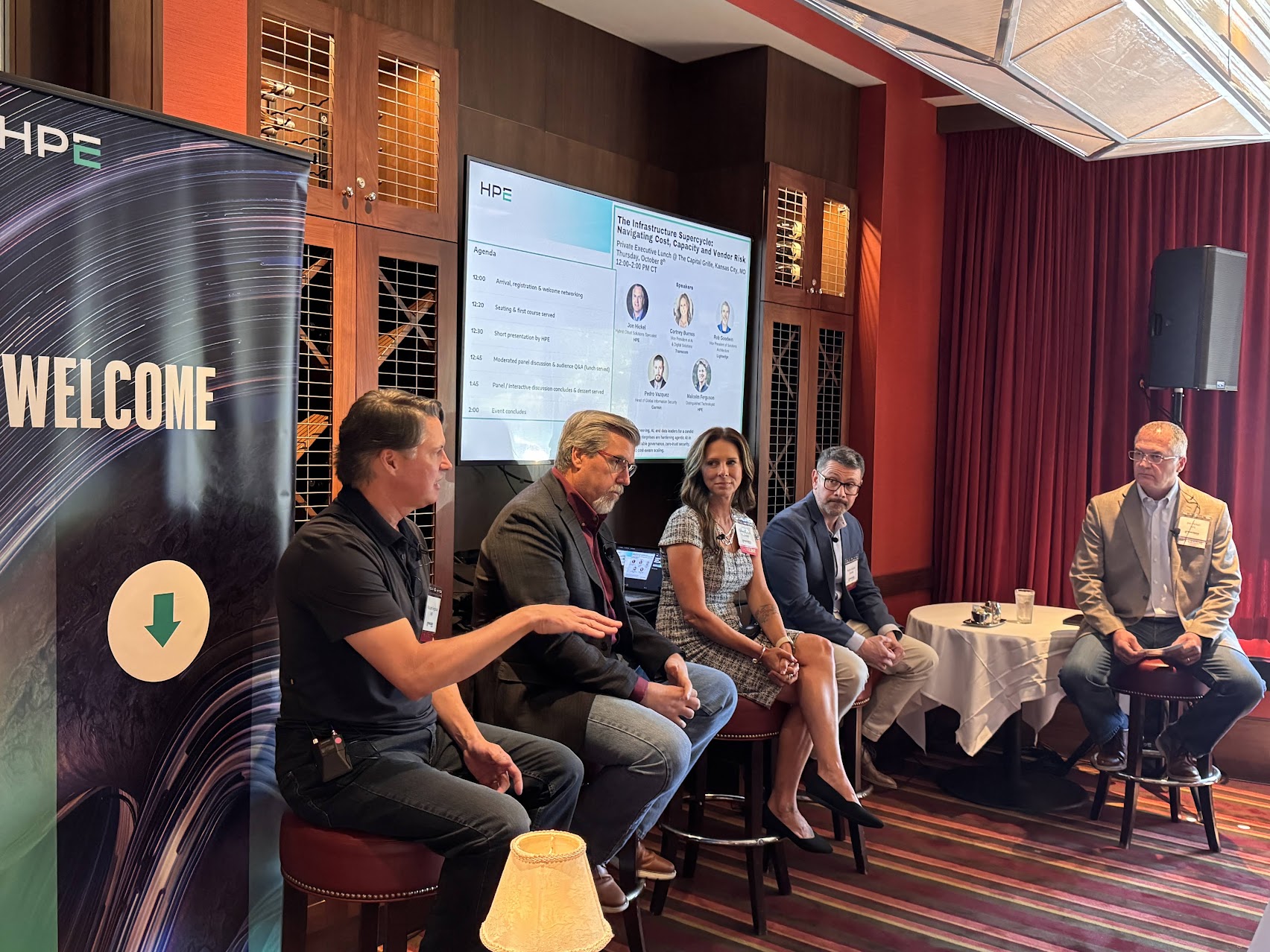
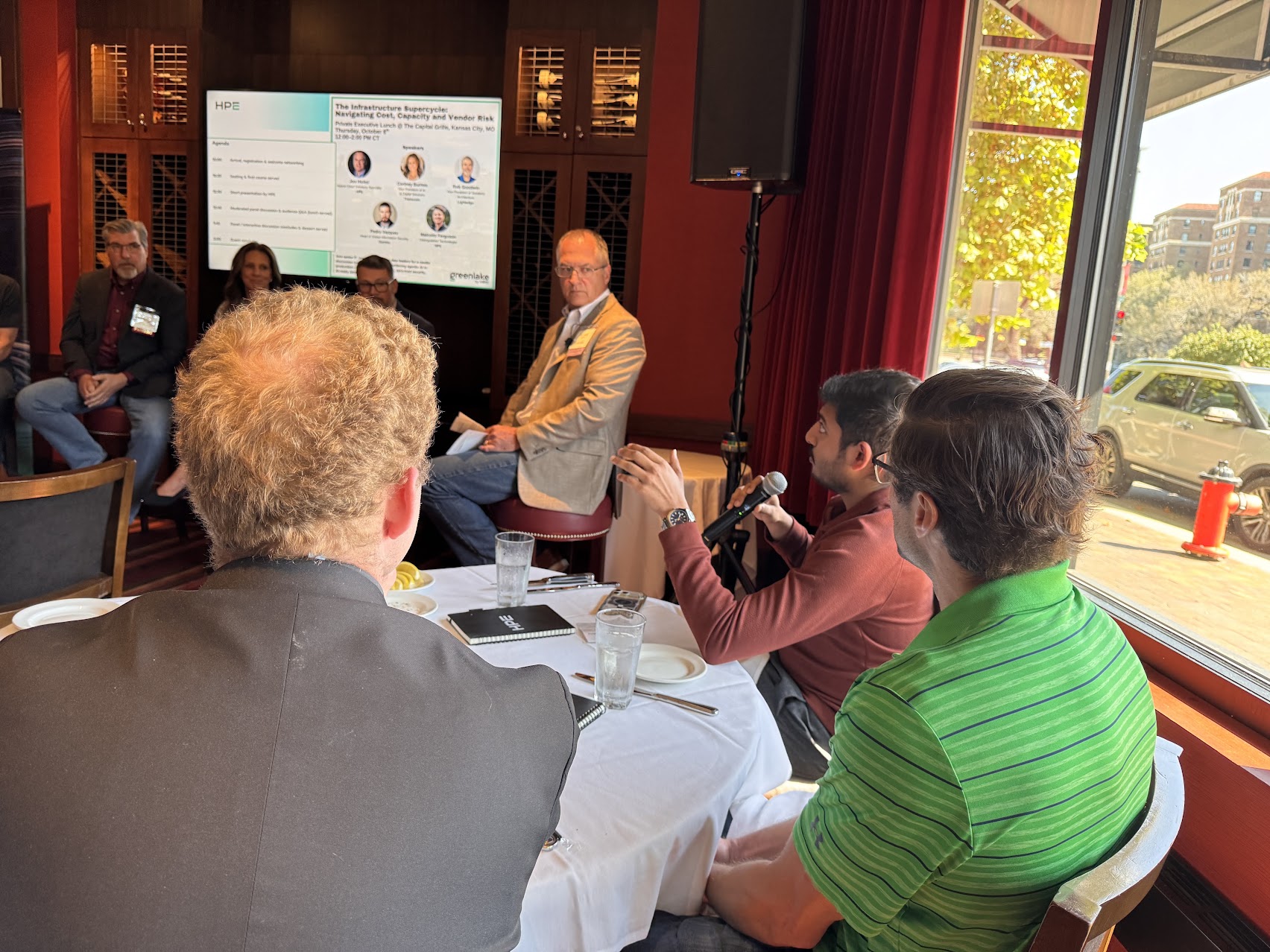
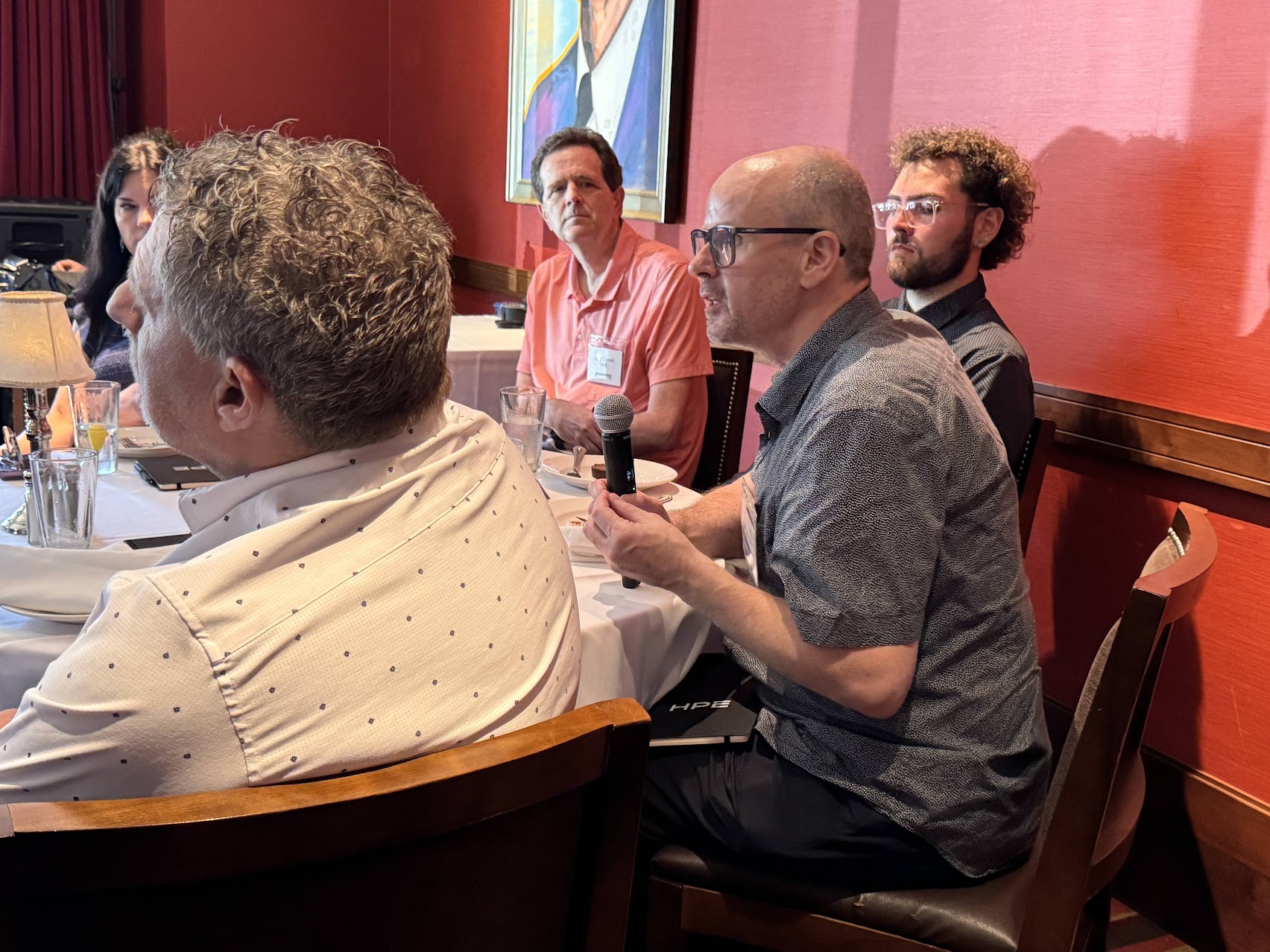
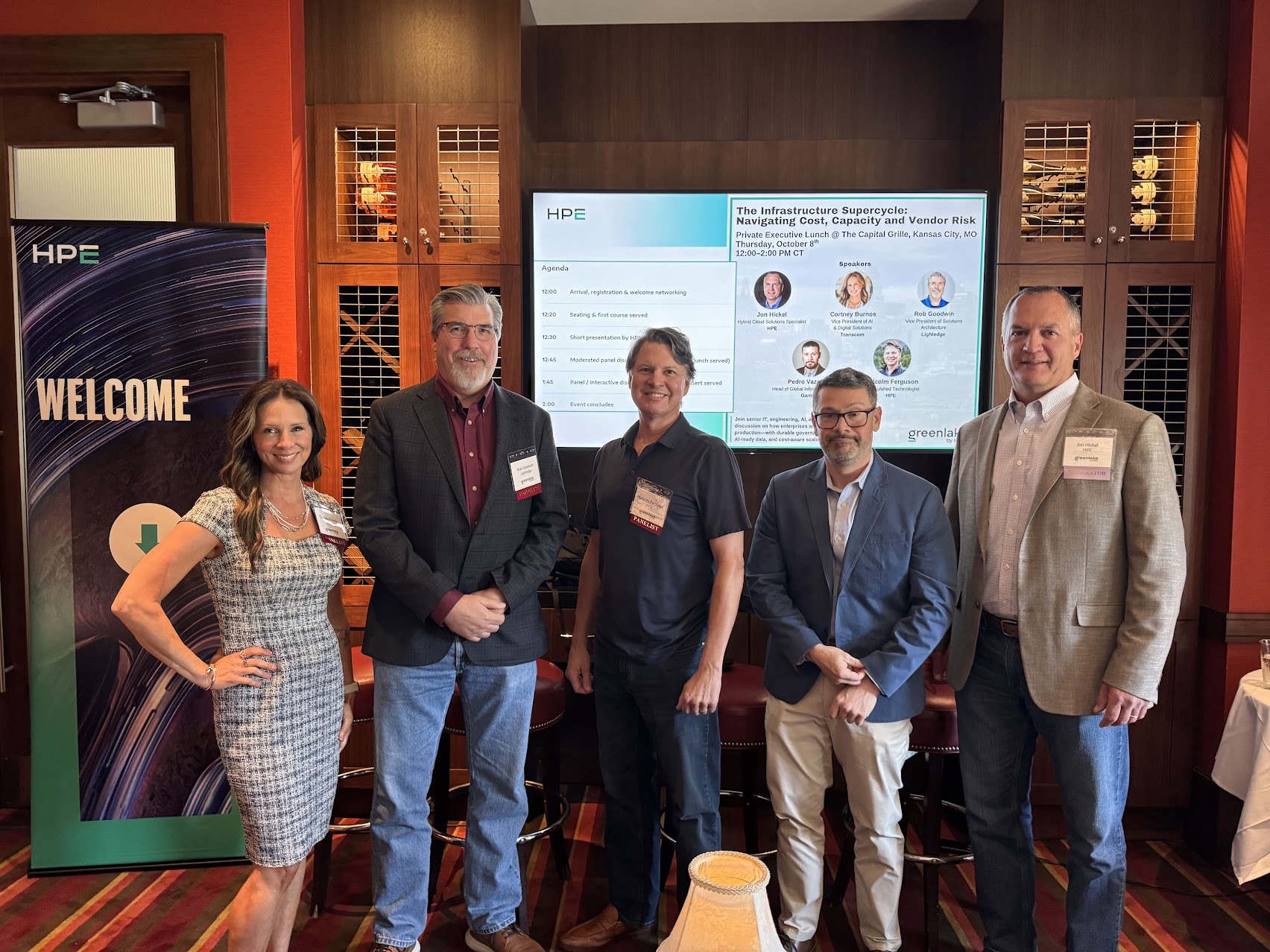
Event photography
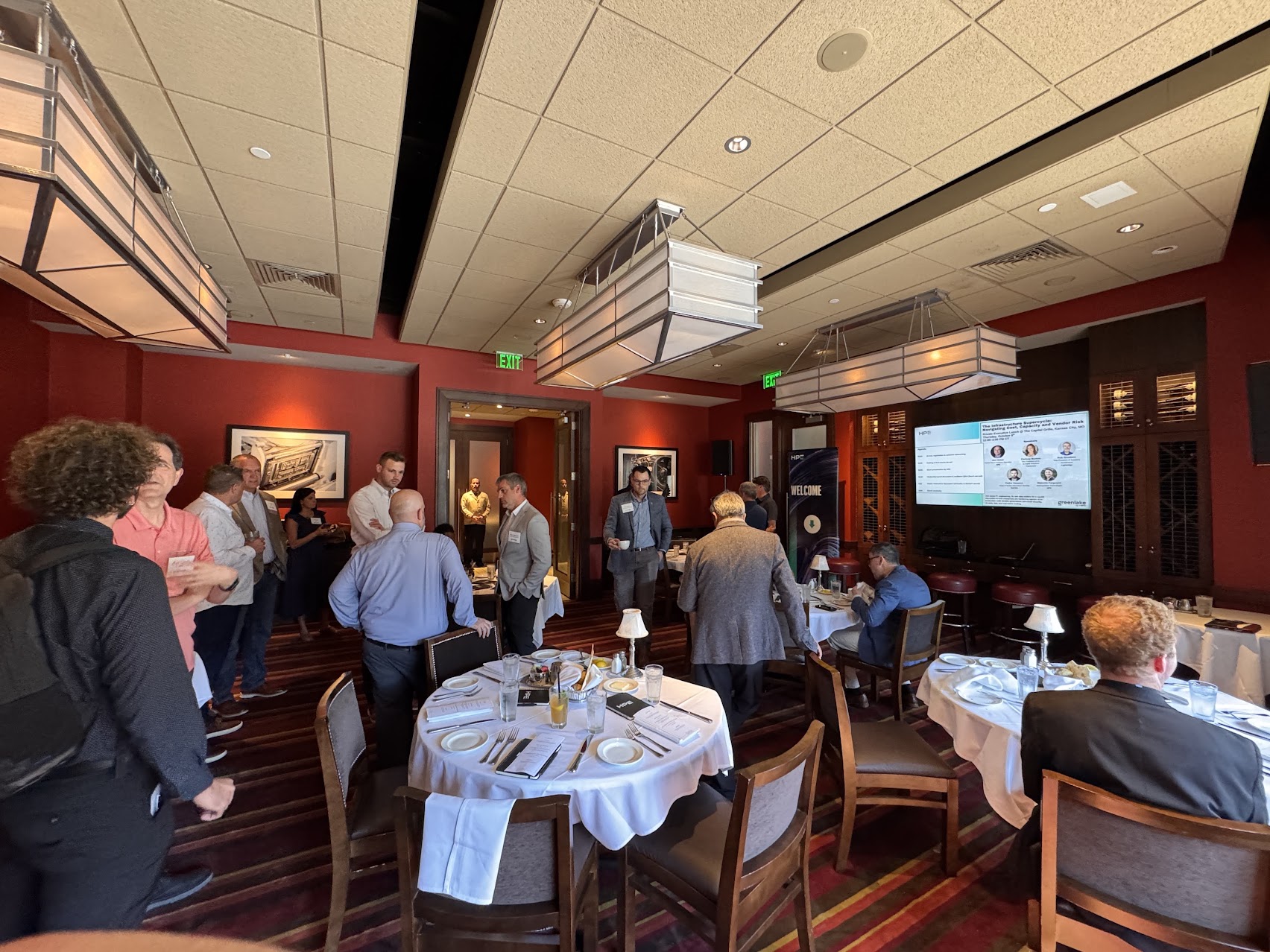
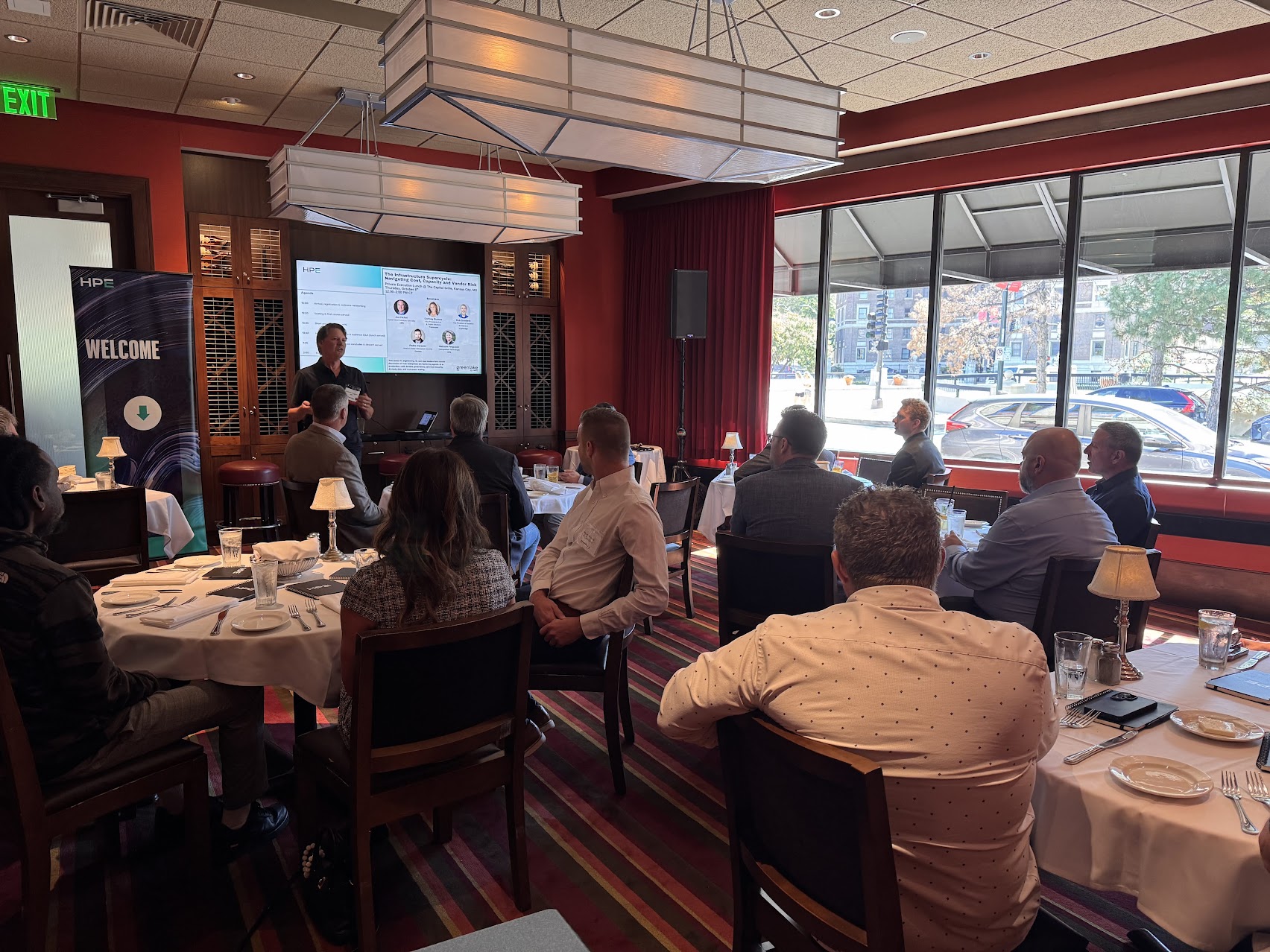
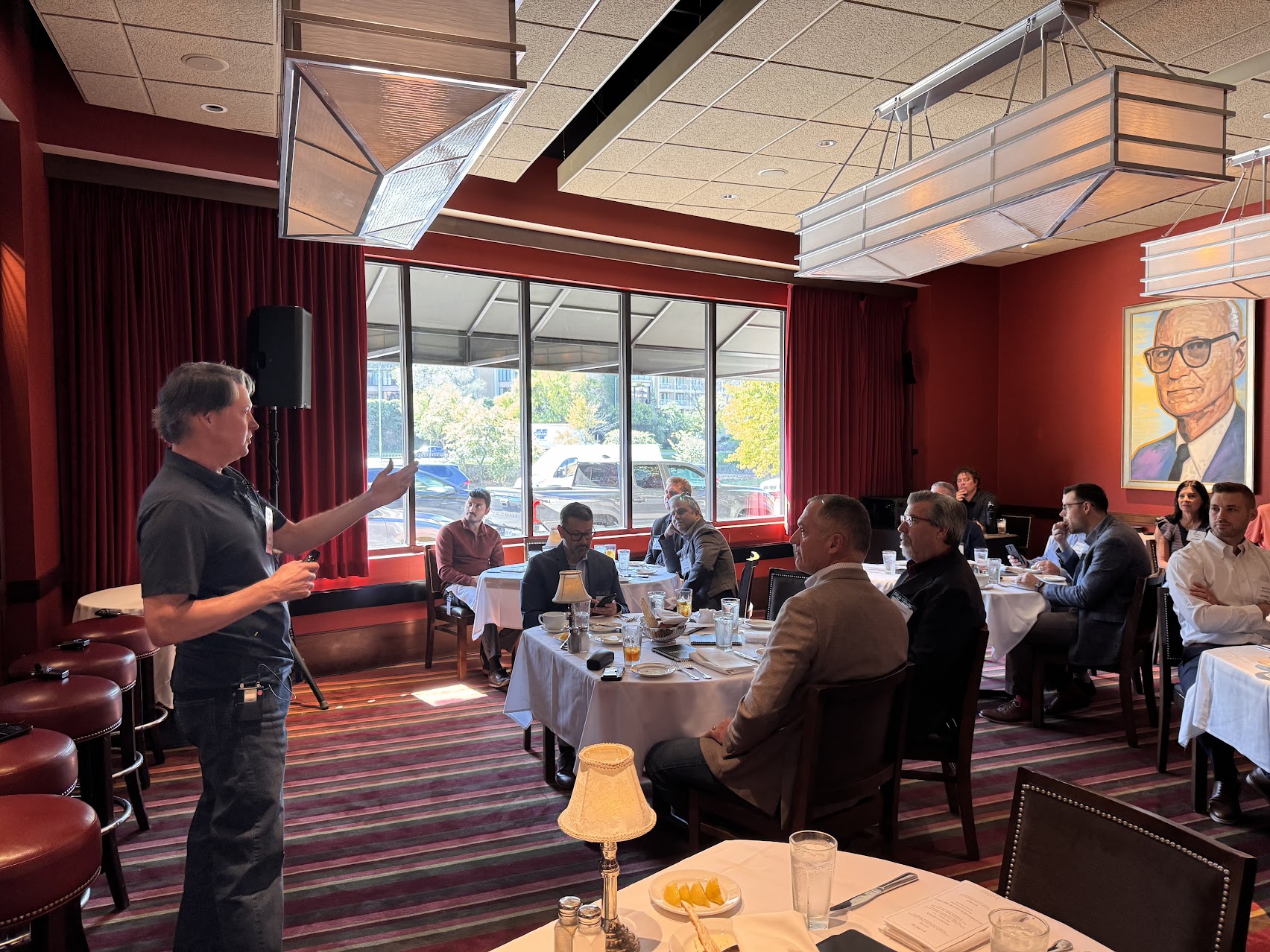
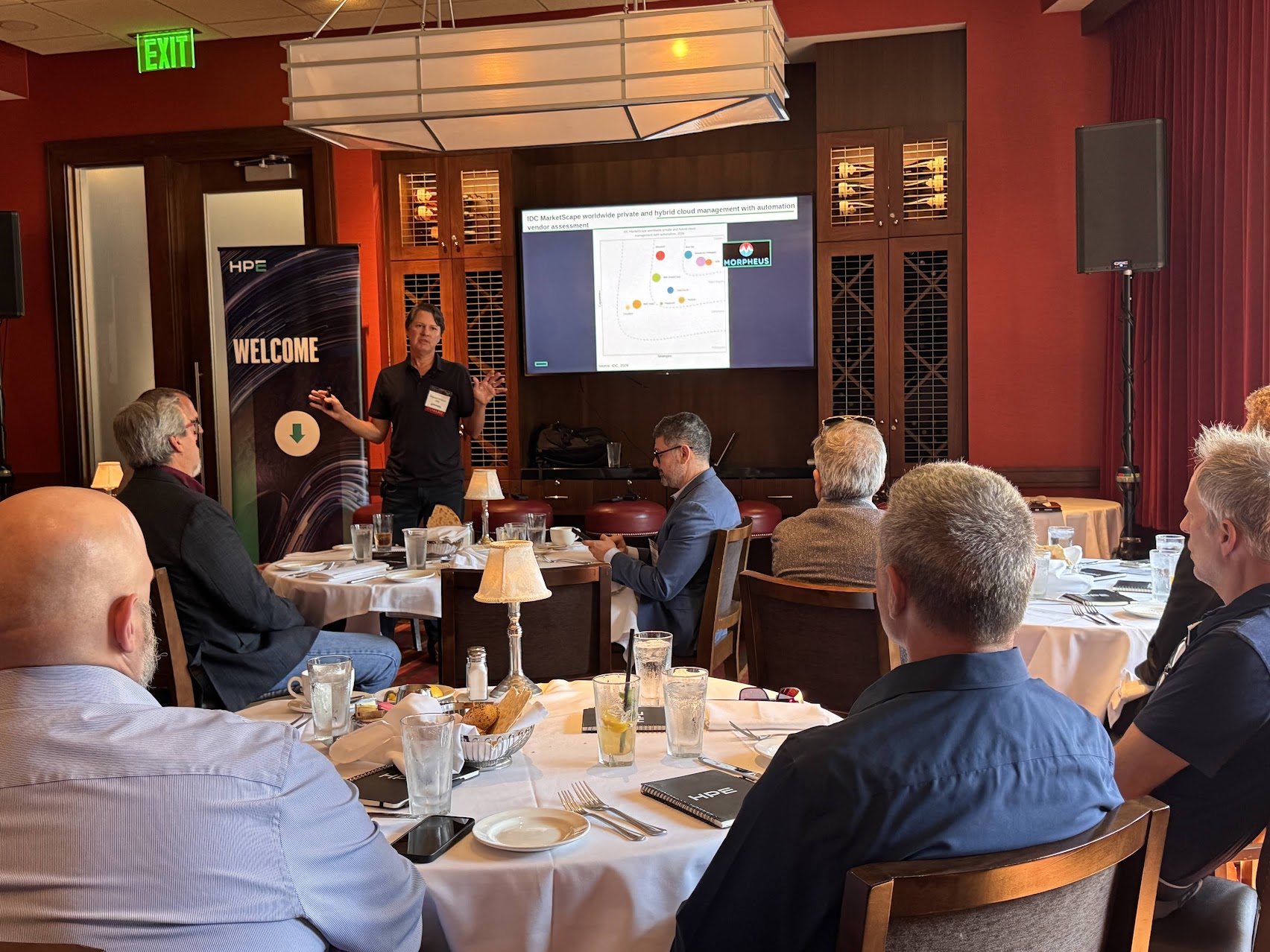
From the room
Presented by
Event sponsor
HPE GreenLake brings cloud agility to applications and data wherever they live, combining scalable infrastructure, built-in security, and intelligent operations. It helps enterprises modernize infrastructure, manage variable demand, and operate with greater control over performance, cost, and data.
Learn more about HPE Greenlake ›