
Beyond the Pilot: Operationalizing Agentic AI
Private Executive Dinner & Wine Tasting
Executive summary
From experiments to accountable runtime systems
Enterprise AI is increasingly becoming a production and operating model challenge rather than a model-quality challenge. Organizations are finding that successful pilots do not automatically translate into scalable systems. The biggest barriers are often unclear business value, weak ownership, incomplete processes, fragmented data, rising costs, and insufficient risk controls.
The strongest production strategies combine centralized governance with gradual deployment. Leaders are using evaluation gates, limited user groups, feature flags, human oversight, and tightly scoped agent permissions to build confidence before expanding autonomy. In regulated environments, auditability is becoming especially important. Organizations need to explain who or what made a decision, why it was made, what data was used, and whether the action can be reversed.
AI economics are also becoming more disciplined. Token usage alone does not determine value. Enterprises are increasingly evaluating productivity, time to market, customer impact, risk reduction, and total operating cost before deciding whether an AI initiative should scale. The underlying principle is straightforward: use AI where it creates a meaningful advantage, not simply because a process can be automated.
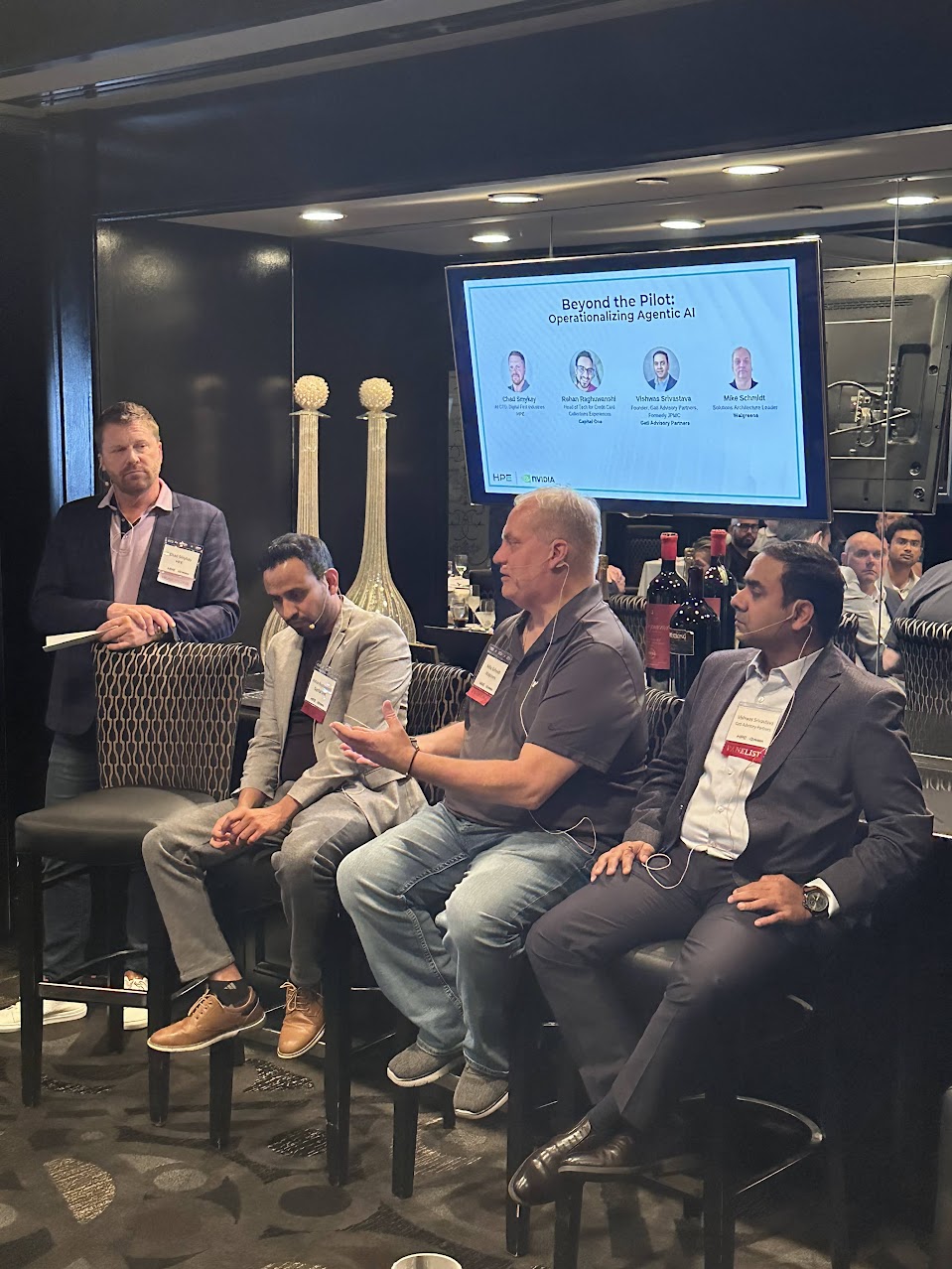
Featured discussion
Perspectives from the room


Vishwas Srivastava
Founder, Gati Advisory Partners · SVP, Technology

Rohan Raghuwanshi
Head of Tech for Credit Card Collections Experiences

Key themes
What the room explored
- 01
Production Readiness Requires More Than a Successful Pilot
Scaling AI depends on ownership, infrastructure, data quality, governance, and production-grade engineering, not simply model performance.
- 02
Business Value Must Lead the Technology Decision
AI initiatives are more likely to succeed when they begin with a clearly defined business problem and measurable outcome.
- 03
Autonomy Should Increase Gradually
Organizations are moving from human-in-the-loop workflows toward greater automation only as confidence, controls, and evidence improve.
- 04
Governance and Auditability Are Becoming Core Requirements
Enterprises need clear decision trails, scoped access, evaluation frameworks, and accountability for agent actions.
- 05
AI Economics Must Be Evaluated End to End
Leaders are looking beyond tokens to consider productivity, infrastructure, development effort, latency, risk, and long-term operating cost.
Operating principle
Scale autonomy only as quickly as business value, evidence, and controls allow.
Actionable takeaways
What enterprise leaders can do next
- 01
Start with the business problem
Define the customer, operational, or financial outcome before choosing an AI approach.
- 02
Standardize how AI moves into production
Use common evaluation criteria, security reviews, compliance gates, and production-readiness standards across teams.
- 03
Scale deployments incrementally
Begin with small user groups, controlled segments, or limited workflows and expand as performance is proven.
- 04
Match autonomy to risk
Keep humans involved for exceptions and high-impact decisions while allowing greater automation in low-risk, predictable workflows.
- 05
Design every agent with clear boundaries
Define ownership, identity, permissions, approved tools, cost limits, and actions that can be reversed.
- 06
Measure outcomes, not adoption alone
Track business value, time to market, productivity, customer impact, risk reduction, and quality rather than simply usage or token volume.
- 07
Treat data readiness as a production requirement
Poor, incomplete, or untrusted data will limit the reliability of even the strongest models.
- 08
Use build versus buy strategically
Buy capabilities that are broadly standardized and build where proprietary workflows, data, or expertise create competitive advantage.
The room
Companies represented
Leaders from across industries came together to exchange practical perspectives on moving agentic AI into production.
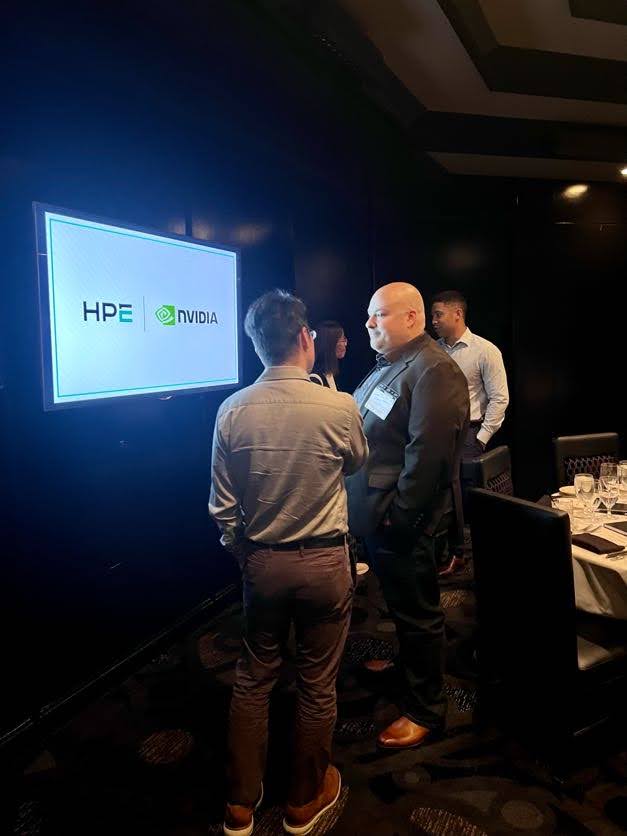
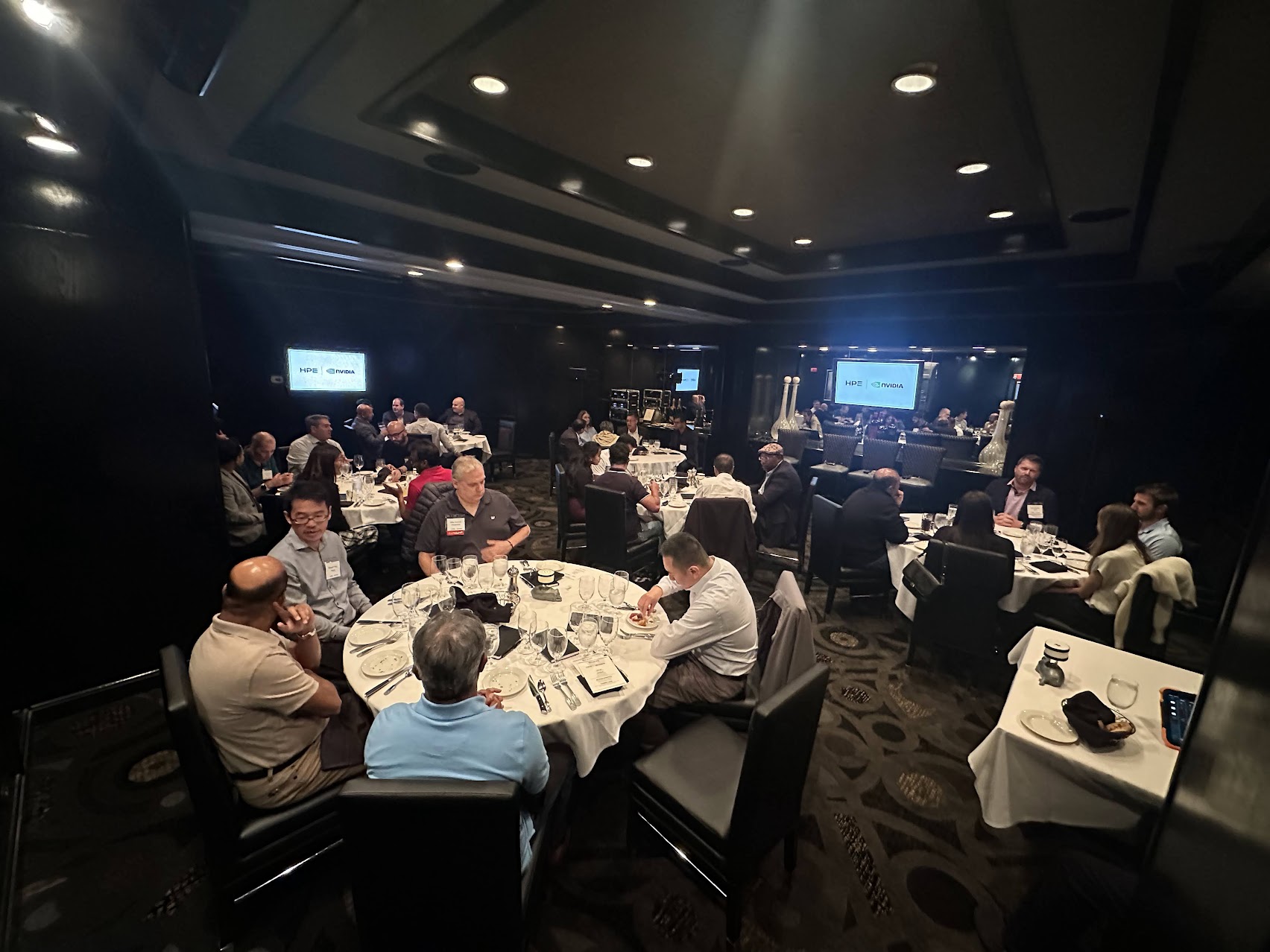
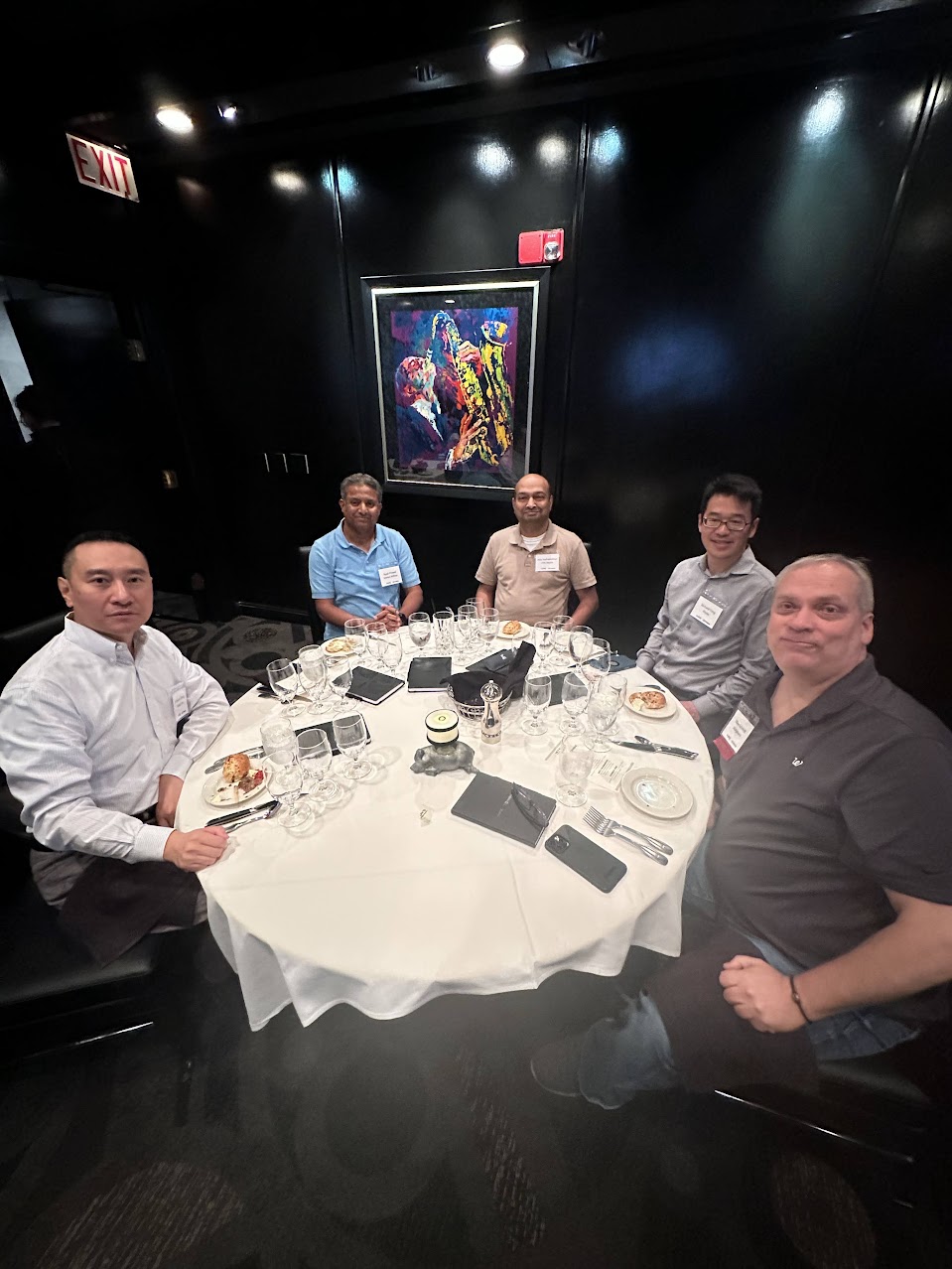
Event photography
From the room
Presented by
Event sponsors

Unlock your boldest ambitions with HPE, your essential partner for the AI era. HPE uses the power of AI, cloud, and networking to help you move faster, work smarter, and achieve more. With deep expertise and bold ingenuity, we empower organizations to turn data into foresight, elevate performance, and drive real-world impact—at scale. Rooted in decades of innovation, we focus on helping companies adapt, grow, lead, and challenge the limits of what’s possible.
Learn more about HPE ›

NVIDIA is a full-stack accelerated computing company delivering the AI infrastructure and software that power demanding enterprise workloads from cloud to data center to factory floor. Its integrated platforms combine industry-leading GPUs, high-performance networking, and optimized software to help organizations build, deploy, and scale generative AI, digital twins, and advanced analytics with greater performance and efficiency. NVIDIA helps enterprises transform data into competitive advantage, modernize core systems, reduce total cost of ownership, and accelerate time to value.
Learn more about NVIDIA ›