
Moderator
Paul Squyres
Hybrid Cloud Sales Director
HPE


Building a Hybrid Cloud Foundation with HPE GreenLake.
Executive summary
Enterprise AI strategies are shifting toward hybrid operating models that balance cloud flexibility with security, control, performance, and predictable economics.
Enterprise AI strategies are increasingly shifting toward hybrid operating models that balance the flexibility of public cloud with the security, control, performance, and predictable economics of private infrastructure. The discussion emphasized that workload placement should be determined by business requirements, including data sensitivity, latency, regulatory obligations, capacity needs, and long-term cost, rather than by a single cloud-first policy.
Moving AI from pilot to production requires more than infrastructure. Successful initiatives begin with a clearly defined business outcome, are tested with realistic production data, and scale gradually through controlled user groups. Many pilots stall when idealized inputs meet complex real-world conditions, when ROI is unclear, or when governance, user experience, and operational readiness are addressed too late.
The conversation also reinforced that enterprise AI is a people and governance transformation. Organizations need employees who understand both the technology and the business process, leaders who can identify meaningful use cases, and governance frameworks that evolve as models and architectures change. Collaboration across internal teams, industry peers, technology partners, and regulatory bodies can help organizations build capability faster without recreating every solution independently.
Moderator & panel
The panel examined how enterprises can build the infrastructure, governance, data, and operating practices required to move AI from controlled pilots into production.
Hybrid Cloud Sales Director

Distinguished Technologist

Director of Cloud Engineering
Organizations represented
Leaders from 23 organizations joined the conversation, bringing perspectives from financial services, telecommunications, technology, healthcare, hospitality, consulting, and enterprise services.
Key themes
The conversation consistently returned to five requirements for building enterprise AI that can move beyond experimentation and operate reliably at scale.
Organizations are placing workloads across private cloud, public cloud, colocation, and edge environments based on security, performance, economics, and data requirements.
AI initiatives scale when they solve an achievable business problem and demonstrate measurable value, not simply because the technology is available.
Static policies are insufficient when models, data pipelines, and AI architectures change rapidly. Responsible AI requires continuous review and updated controls.
Enterprises need secure access to proprietary data while retaining the ability to connect with external models, platforms, and public data sources.
Technical expertise alone is not enough. Leaders, frontline teams, and users must understand the capabilities, limitations, and practical applications of AI.
Actionable takeaways
These actions translate the discussion into practical decisions for technology, data, security, risk, operations, and business leaders.
Evaluate each AI workload based on data sensitivity, latency, compliance, performance, scale, and cost before deciding where it should run.
Take advantage of cloud flexibility for experimentation or temporary capacity while maintaining tighter control over sensitive production data and persistent workloads.
Test AI solutions with representative users, gather feedback, improve the experience, and expand only after value and reliability are demonstrated.
Establish the expected financial, operational, or customer outcome and determine how success will be measured before making significant infrastructure investments.
Avoid relying only on clean or idealized pilot inputs. Production testing should account for incomplete data, unexpected scenarios, varied users, and operational complexity.
Establish access controls, data policies, ethical standards, compliance reviews, monitoring, and decision rights at the beginning of the initiative.
Reassess controls whenever an organization changes models, data flows, interfaces, or AI architectures rather than assuming previous approvals still apply.
Give employees access to approved AI capabilities connected to internal data without requiring them to place sensitive information into unmanaged public tools.
Ensure AI solutions are intuitive, natural, and embedded into existing workflows. Technical capability does not create value if employees or customers cannot use it effectively.
Provide practical workshops that help leaders understand what AI can do, where it creates value, and what limitations must be considered.
Combine data scientists, engineers, domain experts, security, compliance, operations, and user experience professionals around shared business outcomes.
Collaborate with technology partners, peer organizations, industry consortia, and regulatory groups to access expertise and proven approaches.
Start with focused models and manageable infrastructure, then expand capacity, sophistication, and autonomy as adoption and business value increase.
Event moments
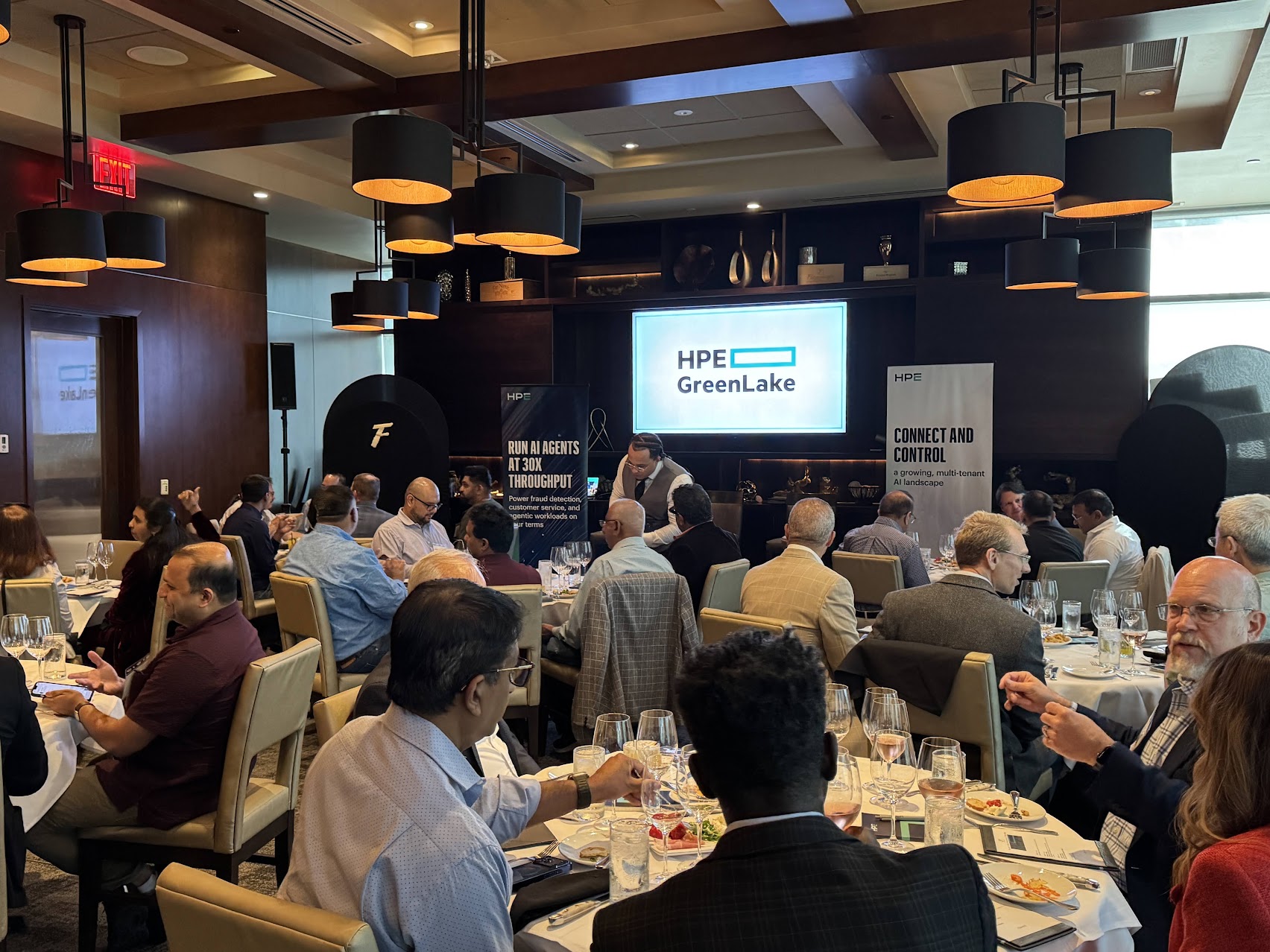
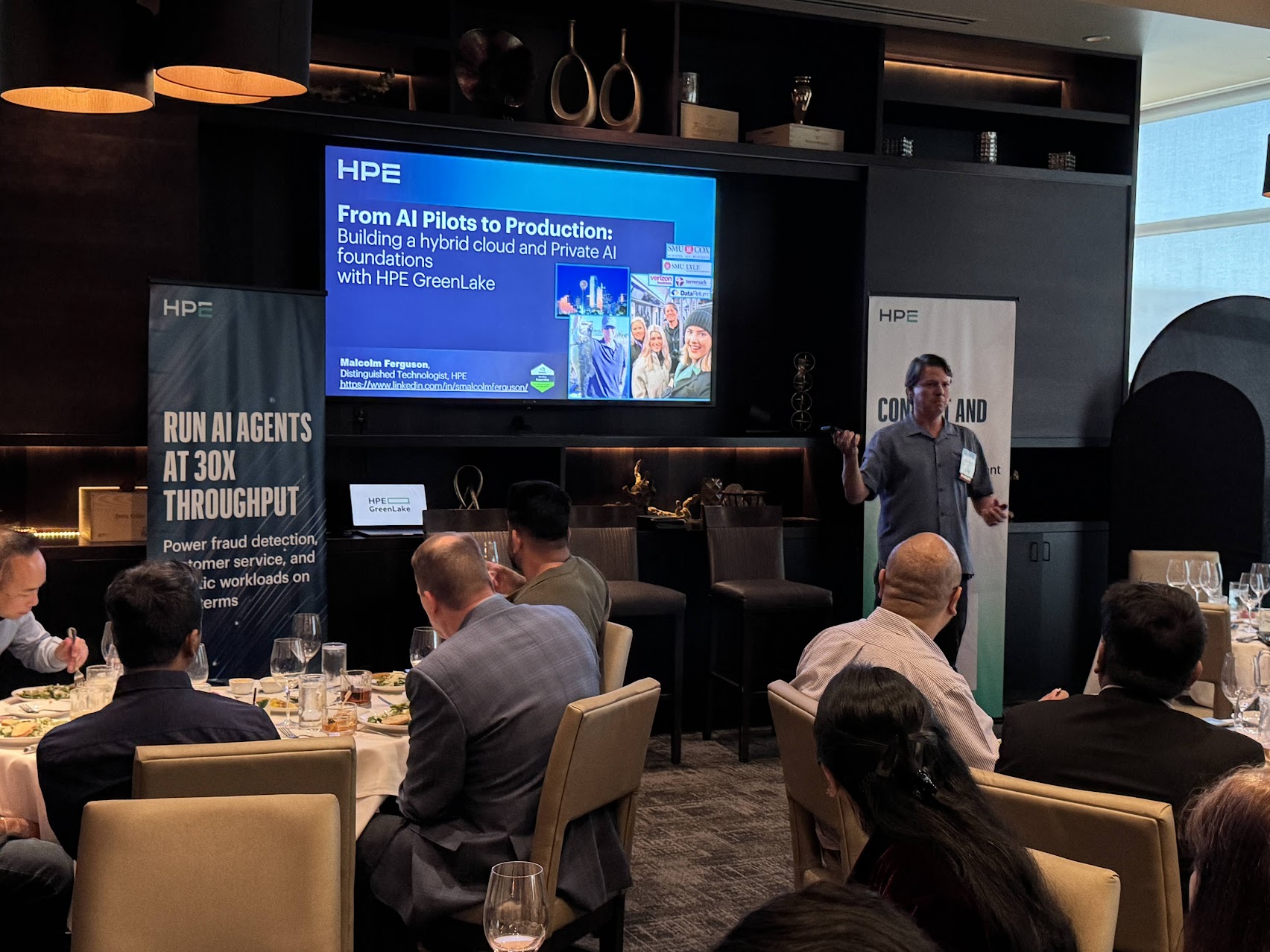
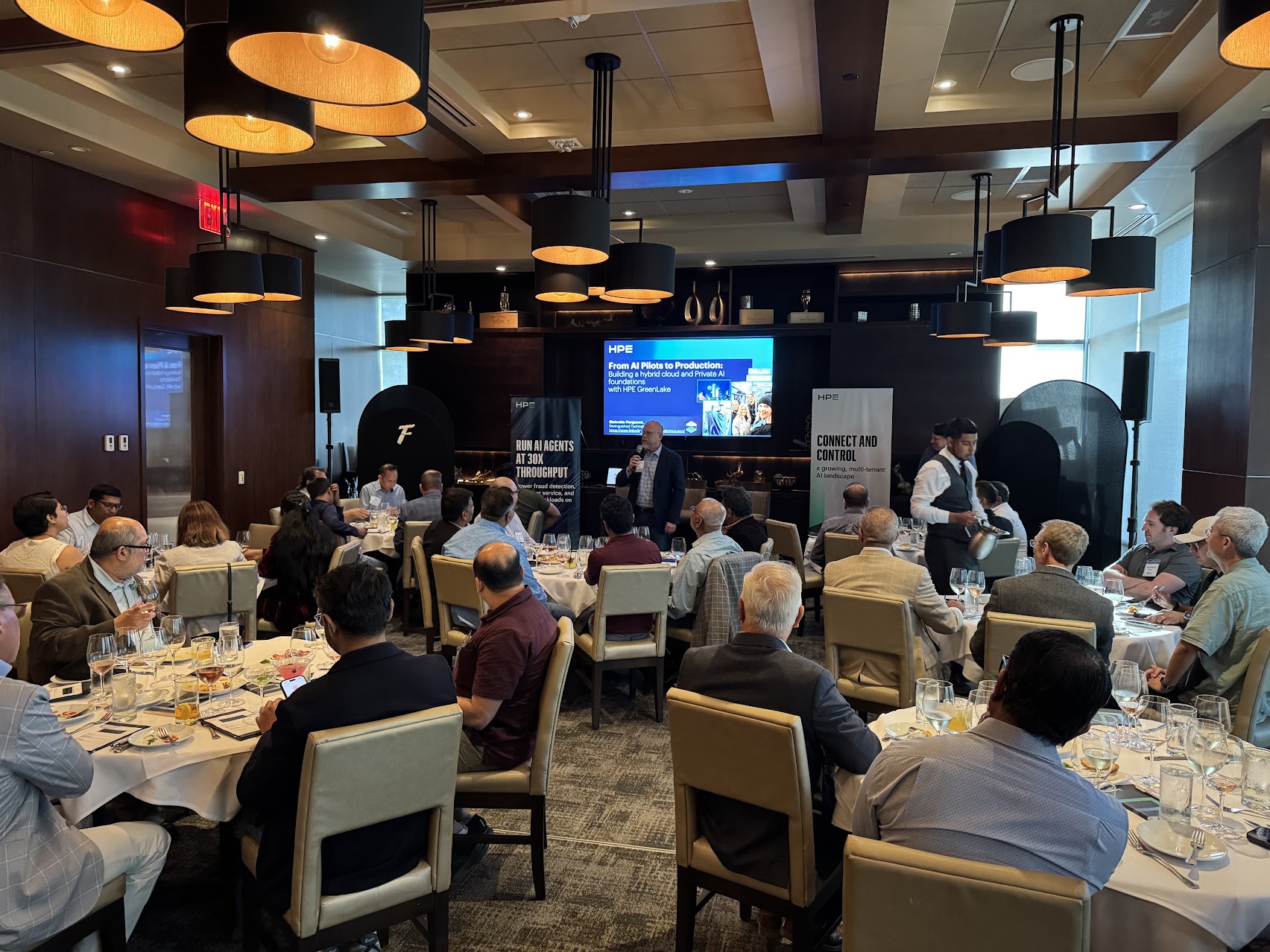
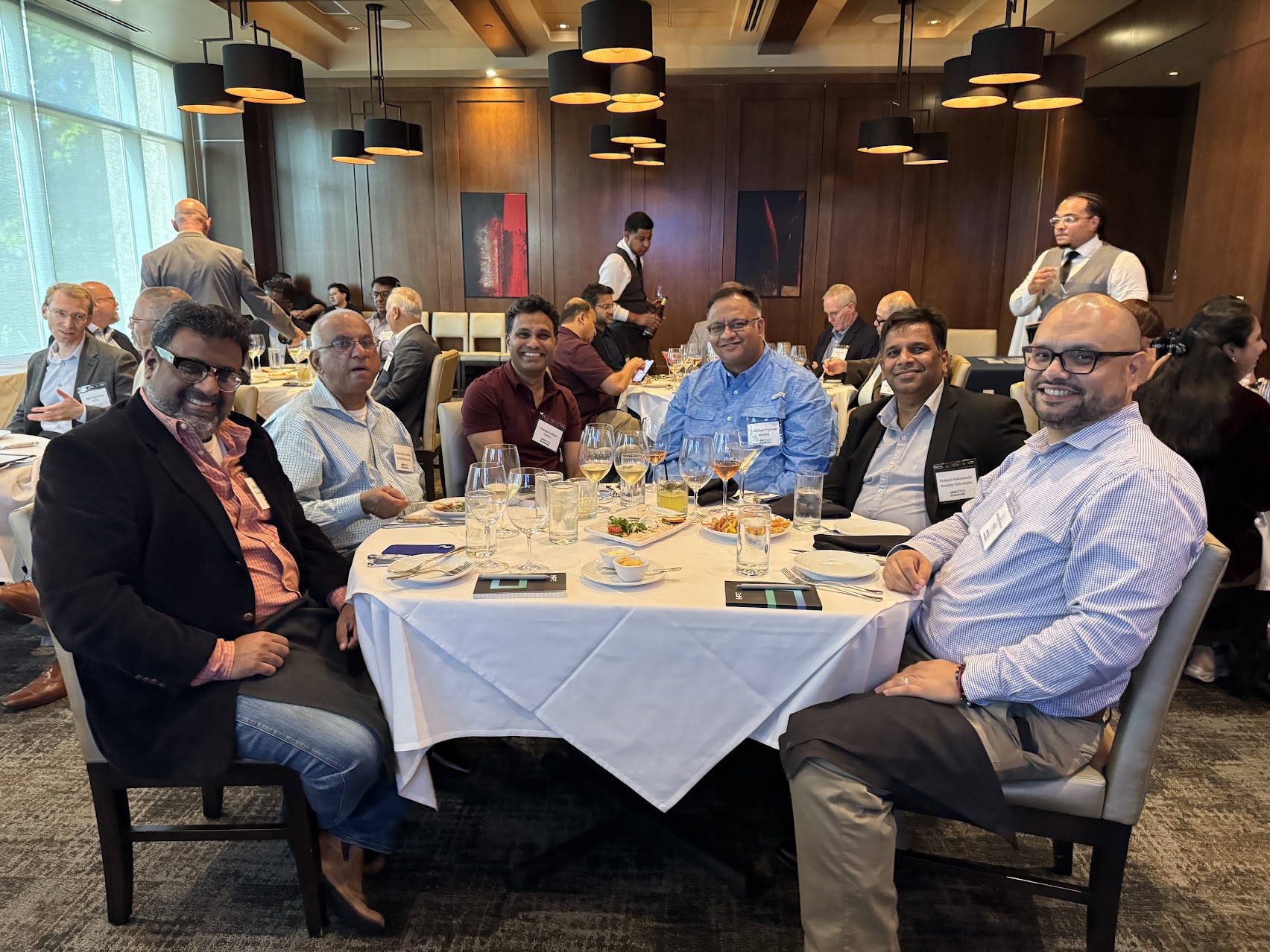
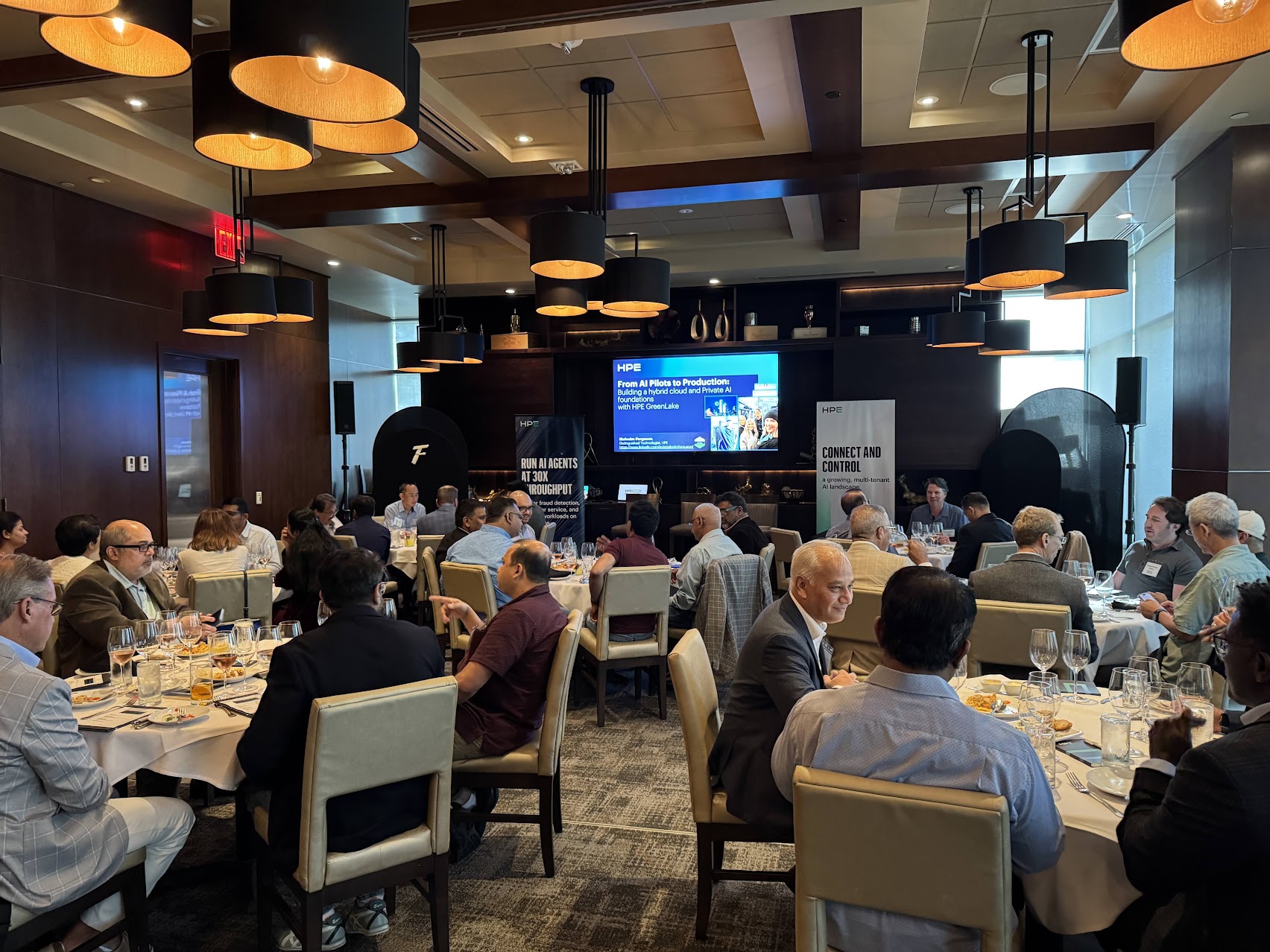
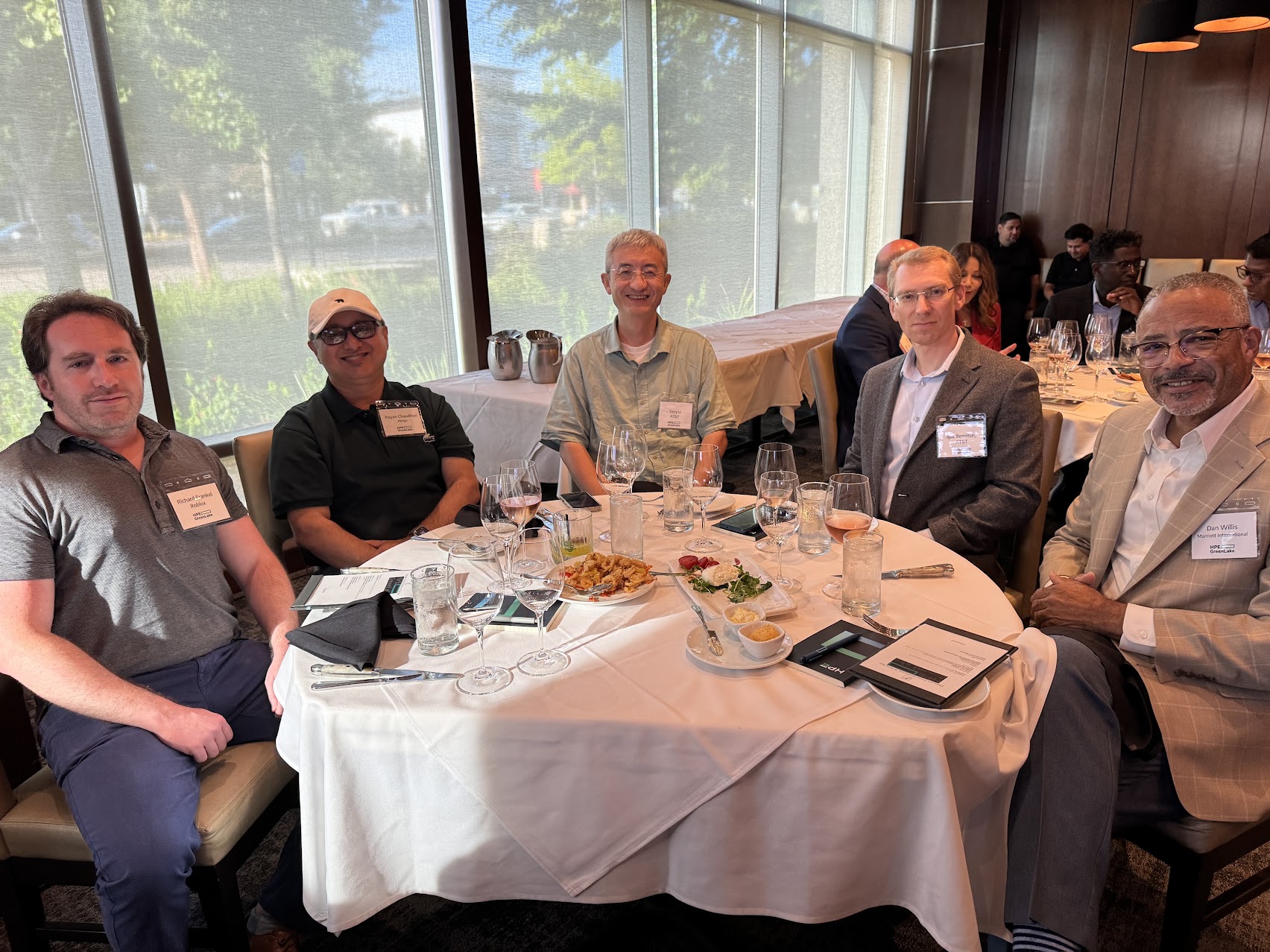
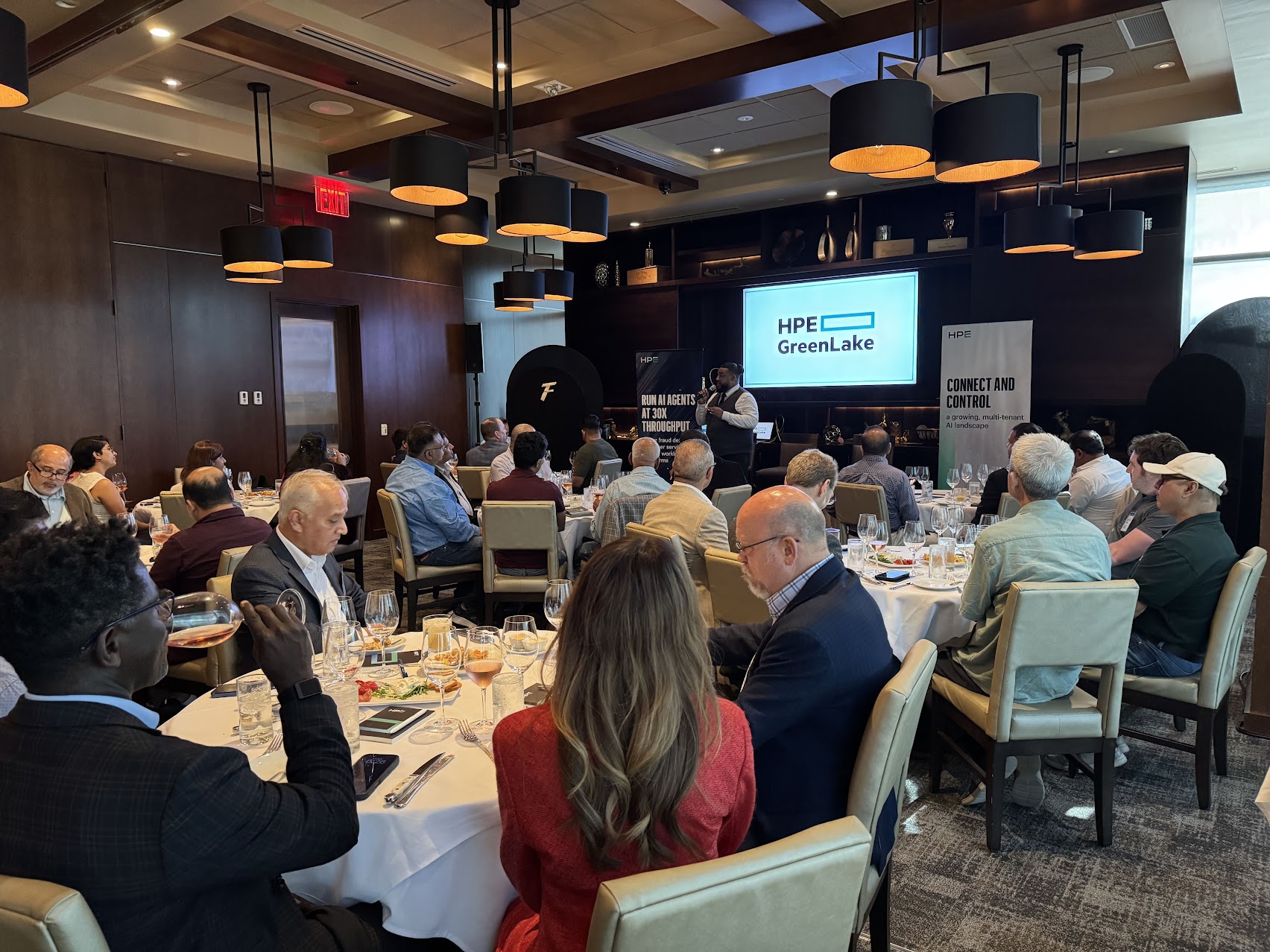
The evening combined a moderated panel with candid peer discussion, giving attendees space to compare strategies for hybrid cloud, data, governance, and production AI.






Event sponsor
Unlock your organization’s next phase of innovation with HPE GreenLake, the edge-to-cloud platform designed for the AI era. HPE GreenLake brings cloud agility to applications and data wherever they live, combining scalable infrastructure, built-in security, and intelligent operations. With deep expertise across AI, cloud, and networking, HPE helps enterprises turn data into insight, improve performance, and operate with greater speed and control. Backed by decades of innovation, HPE GreenLake enables organizations to modernize, scale, and lead with confidence.
Learn more about HPE GreenLake ↗