 Moderator


Post-Event Recap
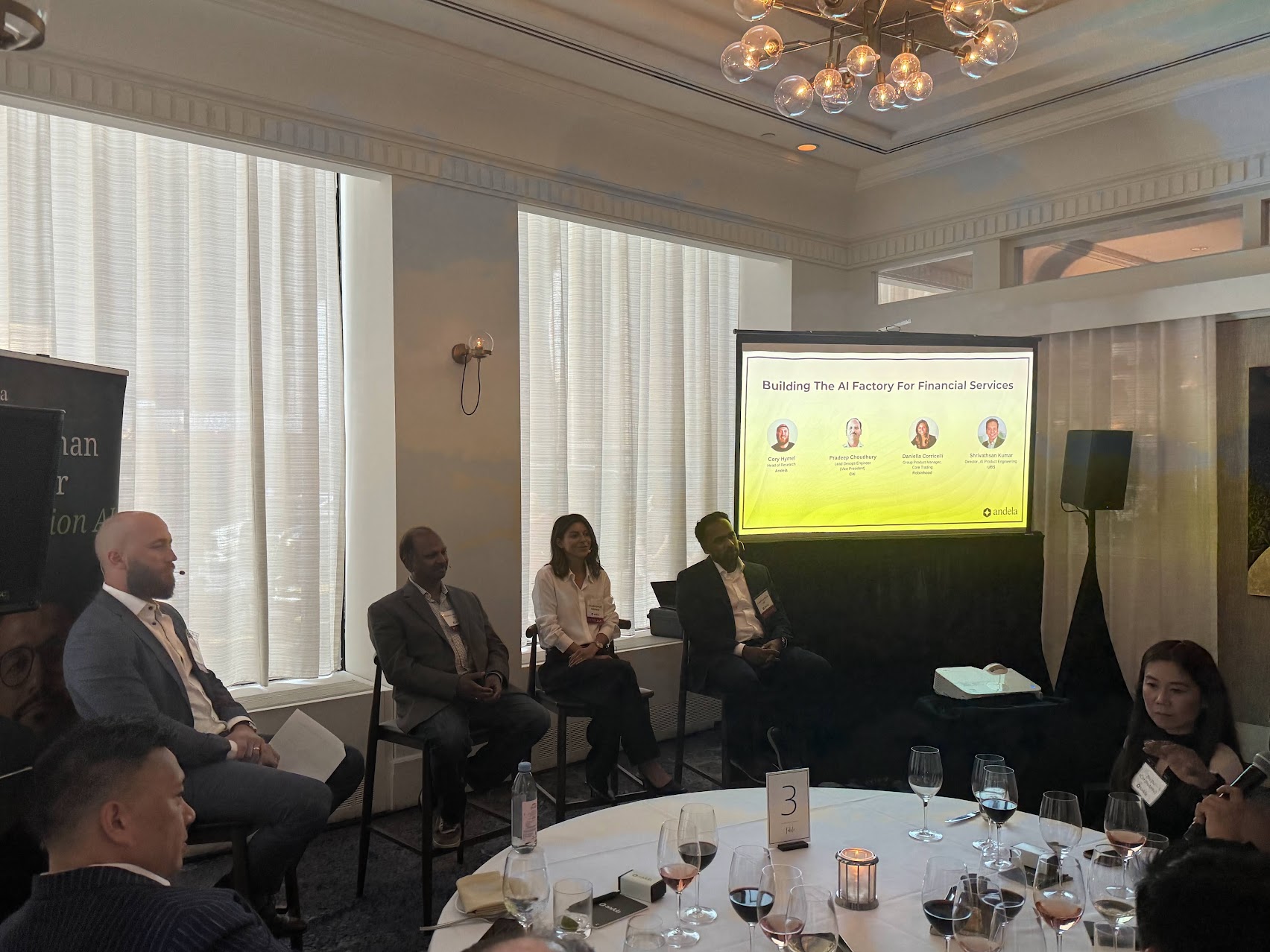
Building the AI Factory for Financial Services
A candid executive conversation on moving from individual AI productivity gains to measurable enterprise value, production discipline, and differentiated customer outcomes.
Executive summary
What leaders are seeing now
The discussion explored the realities of enterprise AI adoption—where momentum is building, where production bottlenecks are emerging, and what will differentiate successful organizations.
Enterprise AI adoption is producing clear productivity gains at the individual level, but many organizations are still struggling to translate those gains into measurable business performance. The discussion highlighted that faster coding, research, analysis, and content creation do not automatically improve enterprise outcomes. Instead, productivity often shifts bottlenecks downstream into product prioritization, testing, security, governance, deployment, and operational support.
A central theme was the need to move from broad experimentation toward more disciplined, business-led adoption. Giving every employee access to AI tools can encourage learning, but it can also create duplicated agents, rising token costs, fragmented solutions, and limited accountability. Successful initiatives begin with a clearly defined customer or business problem, use the right combination of deterministic systems, traditional machine learning, and generative AI, and are tested against real production data rather than idealized synthetic environments.
The discussion also reinforced that competitive advantage will not come from access to the same foundation models everyone else can use. It will come from proprietary data, customer insight, strong product judgment, secure system design, and the ability to integrate AI into differentiated workflows. Human oversight remains essential, particularly in regulated environments where quality, accuracy, safety, and accountability must be established before AI reaches customers.
Moderator and panel
Perspectives from the room
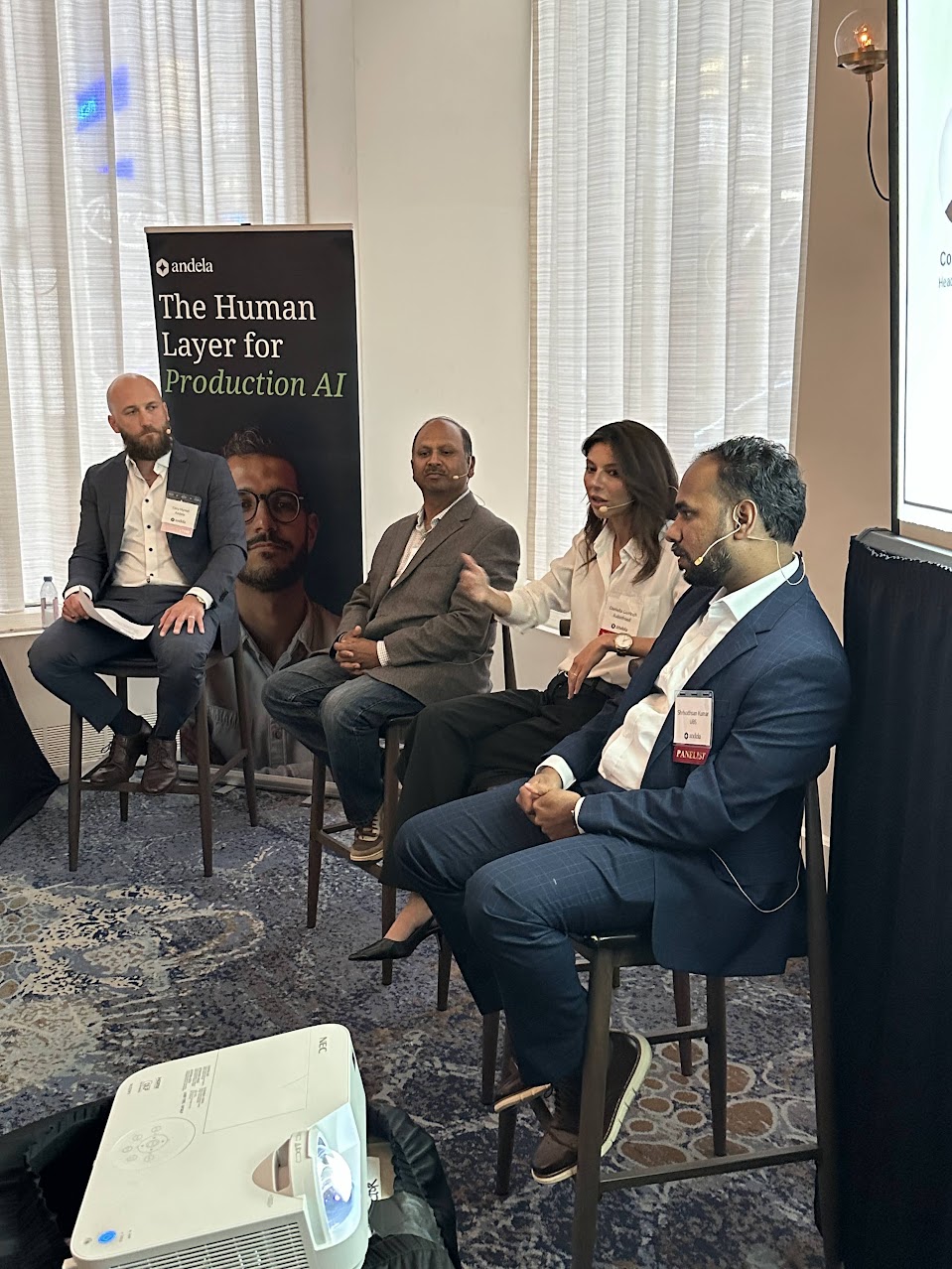
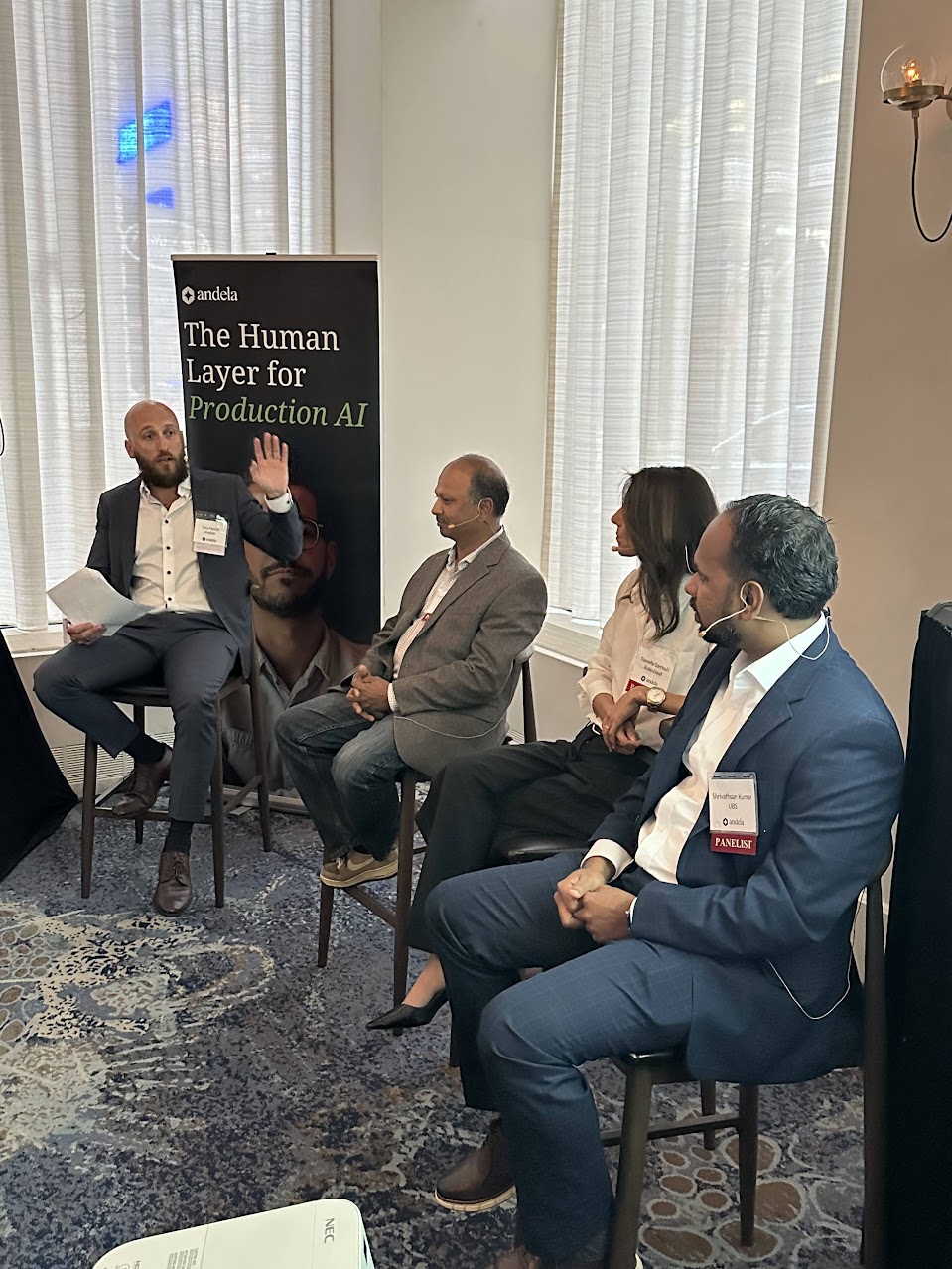
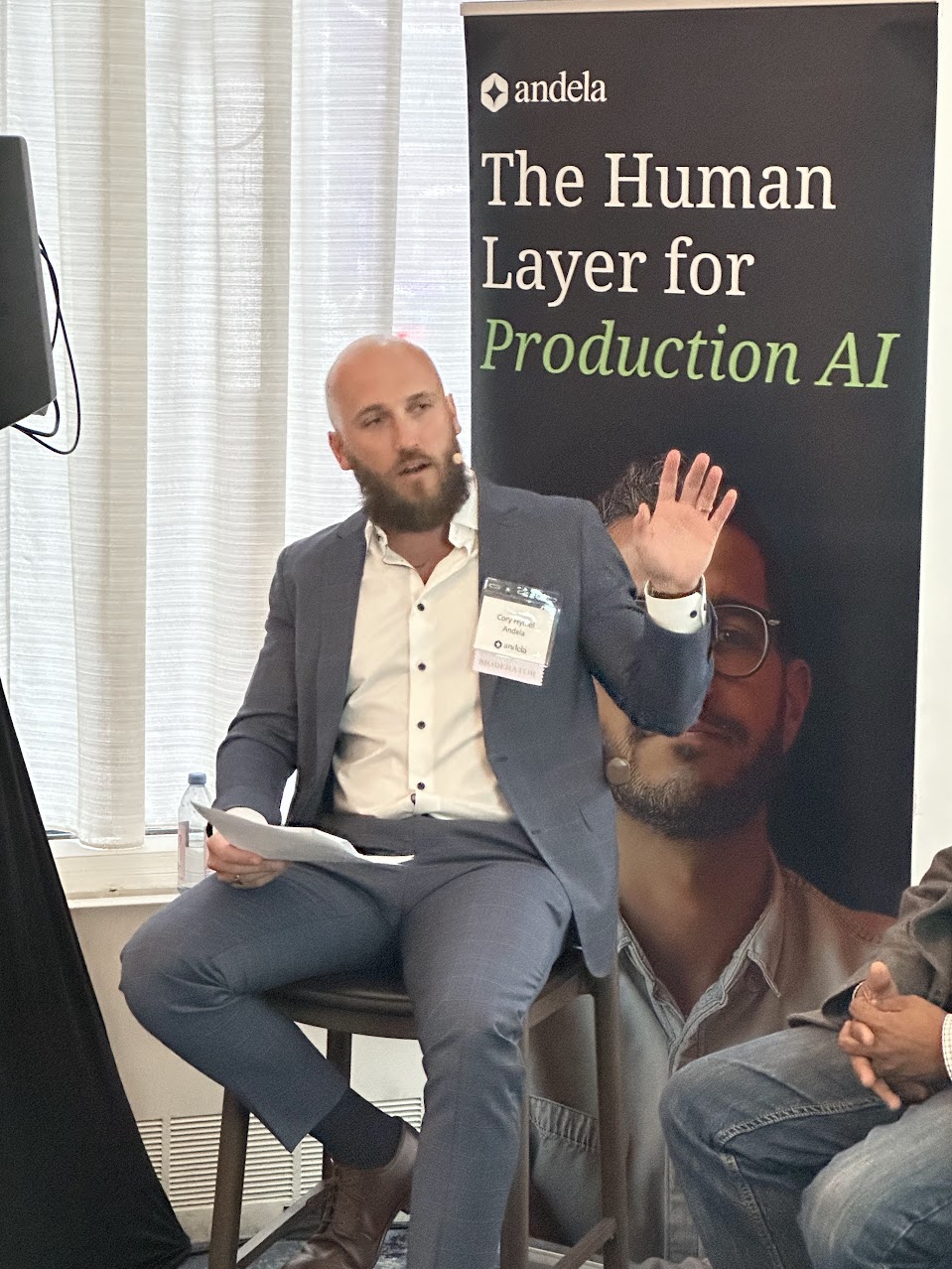
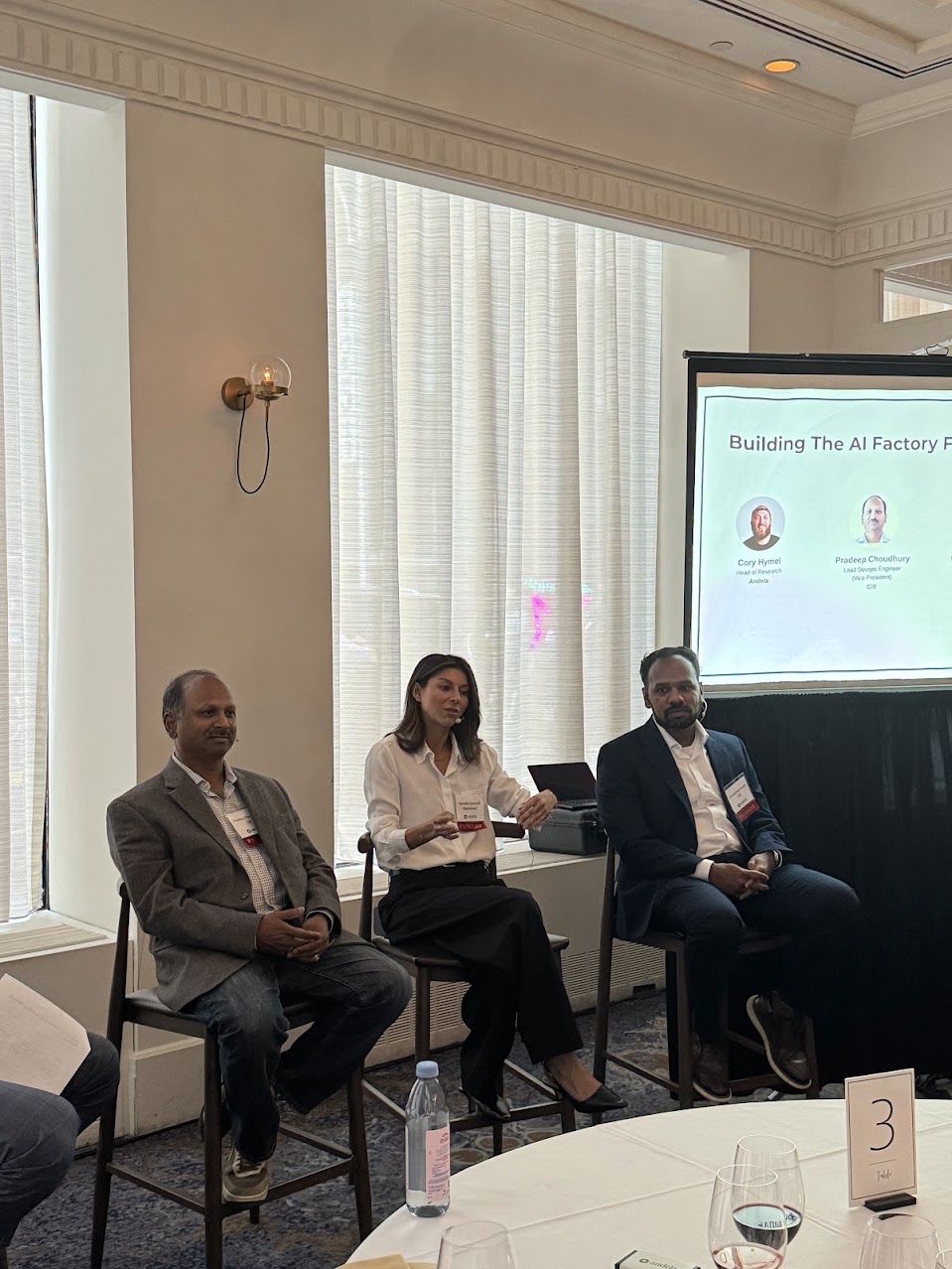
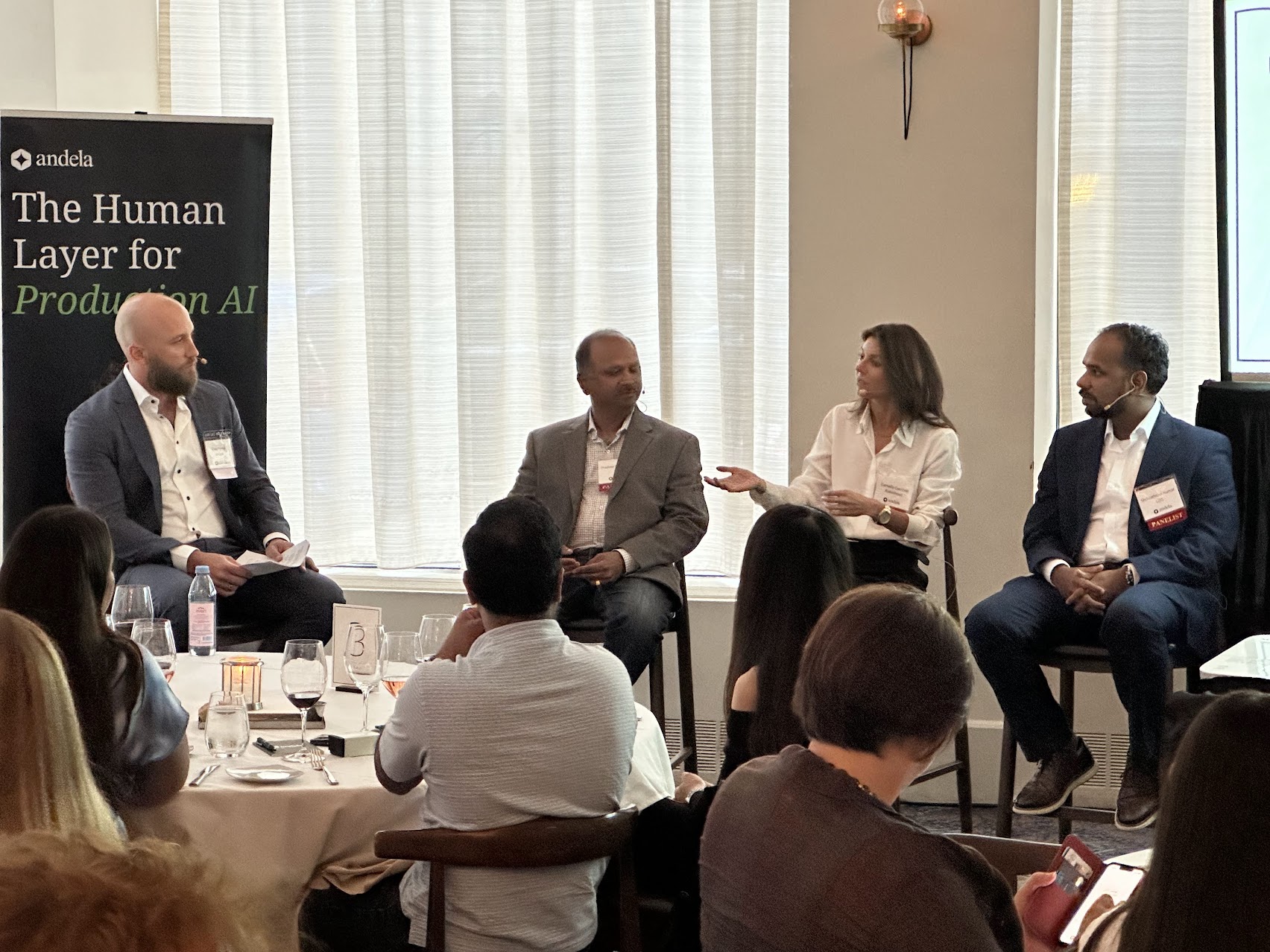
The panel brought together research, engineering, AI product, and core trading leaders from Andela, Citi, UBS, and Robinhood.



Organizations represented
Companies in the room
Leaders from 21 organizations joined the conversation, bringing perspectives from banking, capital markets, payments, insurance, financial technology, and institutional investing.
Citi
Lupine
Bank of America
Morgan Stanley
Pre-Rec Inc.
UBS
Citigroup
PGIM (Prudential)
Stripe
MUFG Bank
Ambac (Octave)
Northfield Bank
Stone Capital
UN Pension Fund
DB Capital
HSS
Fiserv
Goldman Sachs
Millennium
Tsimagine
Robinhood
Key themes
What shapes production-ready AI
Five ideas consistently shaped the discussion: measurable enterprise value, business-led adoption, production data readiness, human oversight, and proprietary context.
01
Individual Productivity Does Not Equal Enterprise Value
AI can accelerate individual tasks while simply shifting bottlenecks into review, prioritization, deployment, and governance.
02
Business Problems Must Lead AI Strategy
The strongest initiatives begin with a clear customer or operational need, not a mandate to find somewhere to use AI.
03
Data Readiness Determines Production Success
Poorly curated, fragmented, or oversized data inputs create unreliable outputs, excessive token usage, and costly surprises at scale.
04
Governance and Human Oversight Remain Essential
Regulated and customer-facing applications require defined quality, accuracy, safety, security, and escalation standards.
05
Proprietary Context Creates Competitive Advantage
Foundation models are becoming widely accessible, making enterprise data, customer relationships, and internal expertise more important differentiators.
Actionable takeaways
What enterprise leaders can do next
These actions translate the discussion into practical decisions for business, product, technology, data, risk, and operations teams.
Connect AI initiatives to existing business goals
Evaluate whether AI can accelerate revenue growth, reduce cost, improve capital efficiency, or strengthen the customer experience.
Measure end-to-end outcomes, not individual activity
Track faster releases, customer adoption, reduced risk, revenue impact, and operational performance rather than prompts, agents, or code volume.
Identify where productivity bottlenecks will move
Prepare product, quality assurance, security, operations, and governance teams for the increased output generated by AI-enabled employees.
Be more selective about experimentation
Move away from unlimited access and indiscriminate agent creation toward tightly scoped, high-value use cases.
Evaluate the data before building the pilot
Test with representative production data early to understand quality, context requirements, security exposure, and likely inference cost.
Use the simplest technology that solves the problem
Combine deterministic software, traditional machine learning, statistical models, and generative AI based on the actual requirements of the workflow.
Define production quality gates
Establish thresholds for quality, accuracy, safety, privacy, and reliability before releasing AI-powered capabilities to customers or employees.
Build evaluation data through real user testing
Use controlled pilots and representative users to understand actual behavior, identify unexpected questions, and create meaningful evaluation datasets.
Design for token and infrastructure efficiency
Limit unnecessary context, avoid sending entire data repositories to models, and use caching, smaller models, or local solutions where appropriate.
Create role-based AI environments
Give users access to approved tools, data, libraries, and sandboxes that match their responsibilities rather than offering unrestricted access to everything.
Maintain cross-functional accountability
Treat AI incidents like other production failures by involving product, engineering, operations, security, legal, and risk leaders based on severity.
Invest in durable human capabilities
Prioritize employees who understand customers, end-to-end workflows, system architecture, data, and business strategy as routine coding becomes more automated.
Use proprietary data as a strategic moat
Focus AI investments on the customer insight, operational history, and domain knowledge competitors cannot easily replicate.












Event sponsor
The human layer for production AI
Andela helps enterprises hire AI talent, build AI solutions, and upskill teams for the AI era — with a global network of 150,000 engineers.
Learn more about Andela ↗