
Moderator
Kyle Lindquist
Sales Director, PC AI
HPE


Building a hybrid cloud foundation for enterprise AI with HPE GreenLake.
Executive summary
The path from AI experimentation to repeatable business value depends on operational discipline, workload-aware infrastructure, trusted context, and continuous governance.
Enterprise AI initiatives often stall between proof of concept and production because organizations underestimate the operational work required to scale them. The discussion highlighted several recurring barriers: unclear problem statements, inflated ROI expectations, insufficient reliability engineering, fragmented data, weak observability, and governance processes that are introduced too late. Successful programs begin with a measurable business problem and move through controlled release stages that allow teams to test quality, performance, risk, and adoption before expanding access.
AI infrastructure decisions are also becoming more workload-specific. Public cloud, private cloud, on-premises systems, and edge environments each play a role depending on data sensitivity, latency, scale, capacity, and economics. Leaders emphasized that the model itself is only one part of the architecture. Reliable AI depends equally on trusted enterprise data, the application or agent framework surrounding the model, and continuous monitoring after deployment.
The broader takeaway is that AI must be managed as a living production capability, not a one-time implementation. Models drift, business conditions change, costs grow, and employee behavior evolves. Organizations that combine executive sponsorship, workforce education, responsible governance, and strong contextual data will be better positioned to move beyond experimentation and deliver repeatable business value.
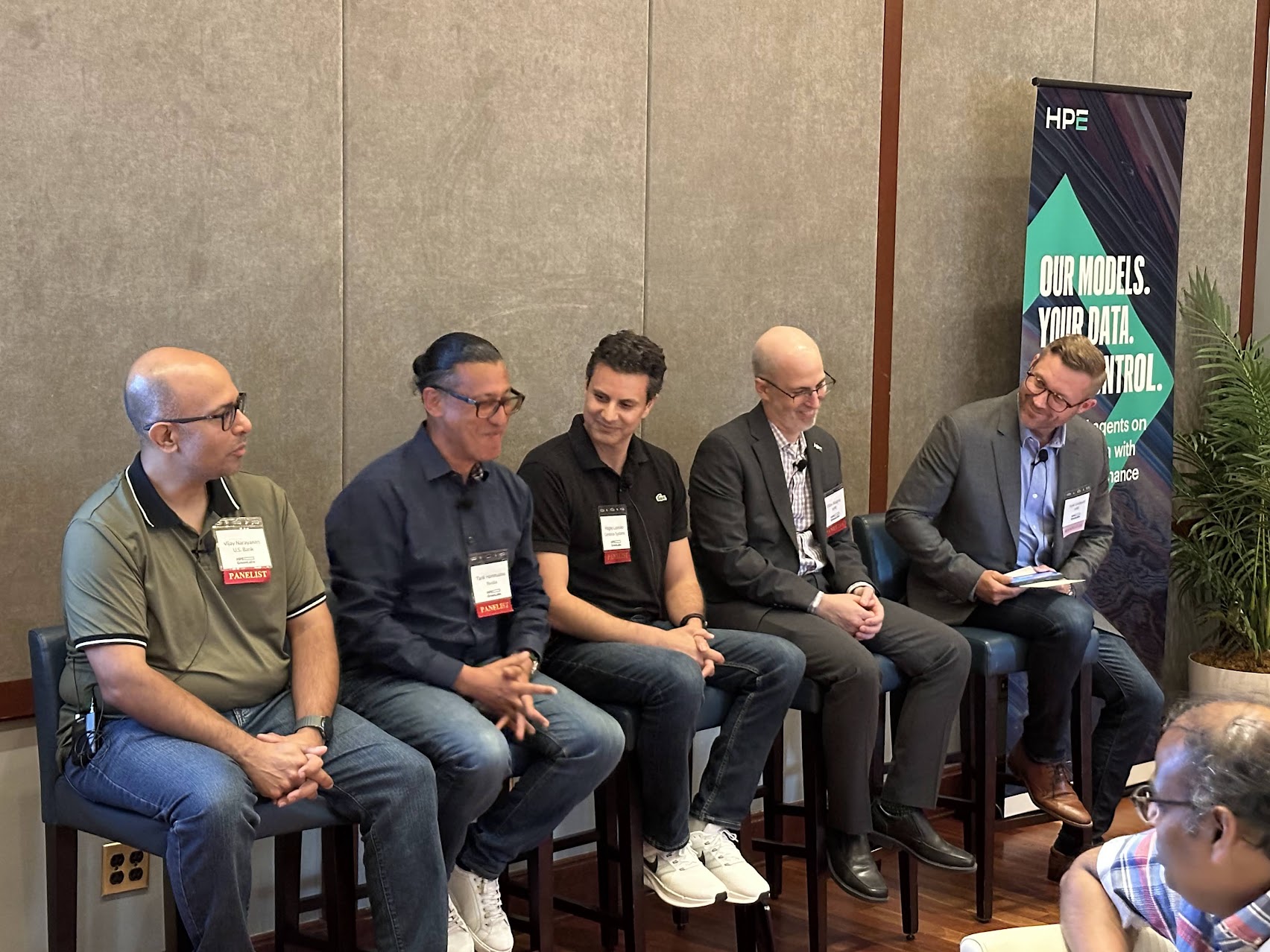
Moderator & panel
Technology leaders examined how enterprises can move AI into production while balancing reliability, data, governance, infrastructure, economics, and workforce adoption.
Sales Director, PC AI

Engineering Leader – VP

Chief Technologist

Director, Developer Relations, AI for Retail & CPG

Senior Vice President, AI Inference
Organizations represented
Leaders from 29 organizations joined the conversation, bringing perspectives from financial services, technology, healthcare, higher education, transportation, and the public sector.
Key themes
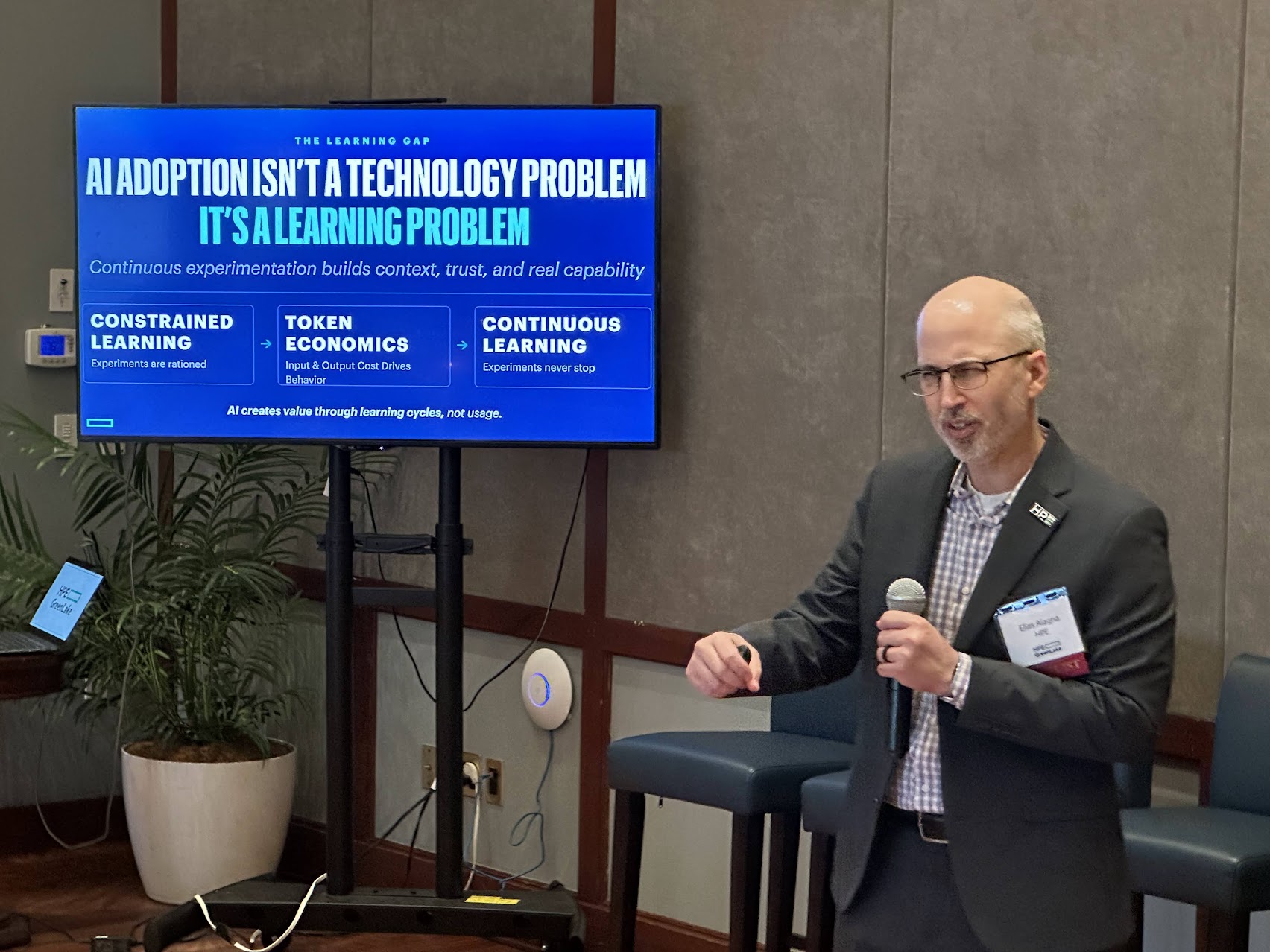
The conversation consistently returned to five requirements for moving beyond isolated pilots and building AI capabilities that can be trusted, operated, and expanded.
AI initiatives are more likely to scale when they begin with a measurable operational or financial problem rather than a general mandate to use AI.
Teams need release gates, service-level expectations, monitoring, recovery plans, and ongoing quality evaluation before expanding access.
Workload placement increasingly depends on latency, data sensitivity, compute capacity, security, and long-term economics.
Enterprise agents need access to trusted documentation, operational knowledge, data models, and current business context to perform reliably.
Executive sponsorship, employee training, embedded technical support, and responsible AI frameworks are essential to sustained adoption.
Actionable takeaways
These actions translate the discussion into practical decisions for business, technology, data, risk, and operations teams.
Tie each initiative to a defined business outcome such as inventory reduction, faster customer service, improved branch experience, lower operational cost, or reduced risk.
Move from limited private previews to broader testing and then general availability as reliability, adoption, and controls improve.
Include infrastructure, model usage, engineering support, monitoring, upgrades, drift management, and retraining when estimating ROI.
Not every workflow requires an autonomous agent or frontier model. Consider traditional automation, classical machine learning, or smaller models where they can produce the required outcome.
Focus on faster feature delivery, fewer incidents, improved customer outcomes, reduced risk, and financial value rather than lines of code, prompts, or tool logins.
Track latency, errors, usage, cost, output quality, user satisfaction, and model behavior continuously after deployment.
Define budget limits, stopping conditions, escalation rules, and outcome targets so multi-agent systems do not operate indefinitely or unpredictably.
Run latency-sensitive workloads near the data source, protect sensitive data appropriately, and use cloud elasticity where flexibility matters most.
Give agents controlled, read-only access to current documentation, runbooks, repositories, operational systems, and enterprise knowledge sources.
Reassess deployed systems regularly as users, data, models, regulations, and business requirements change.
Train employees on how to use approved tools, choose models, control costs, evaluate outputs, and recognize where human review is required.
Use centers of excellence or forward-deployed engineers to connect operational knowledge with AI architecture and implementation skills.
Define ethics, privacy, security, and human oversight requirements before development rather than introducing them after the solution is built.
Event moments
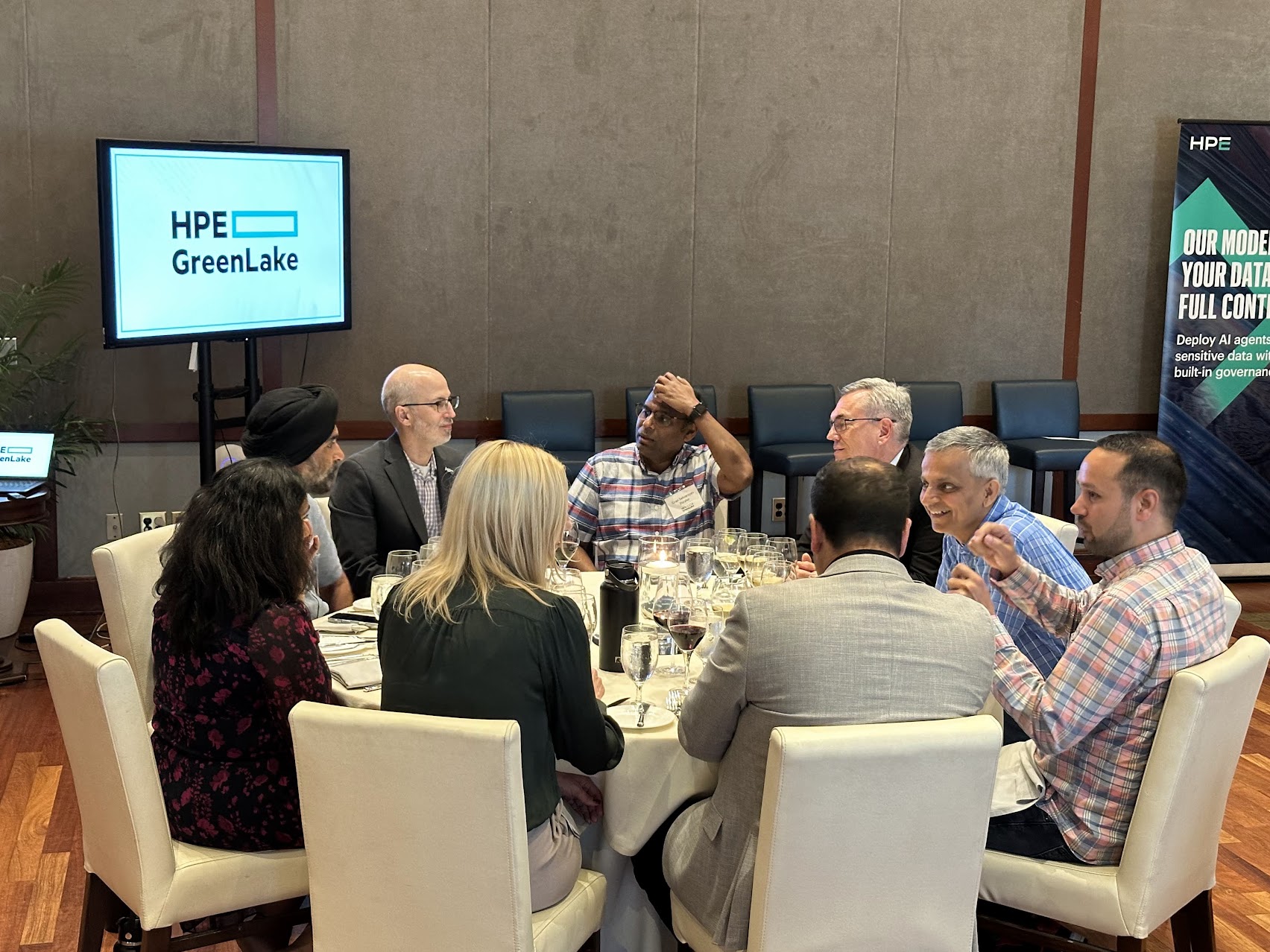
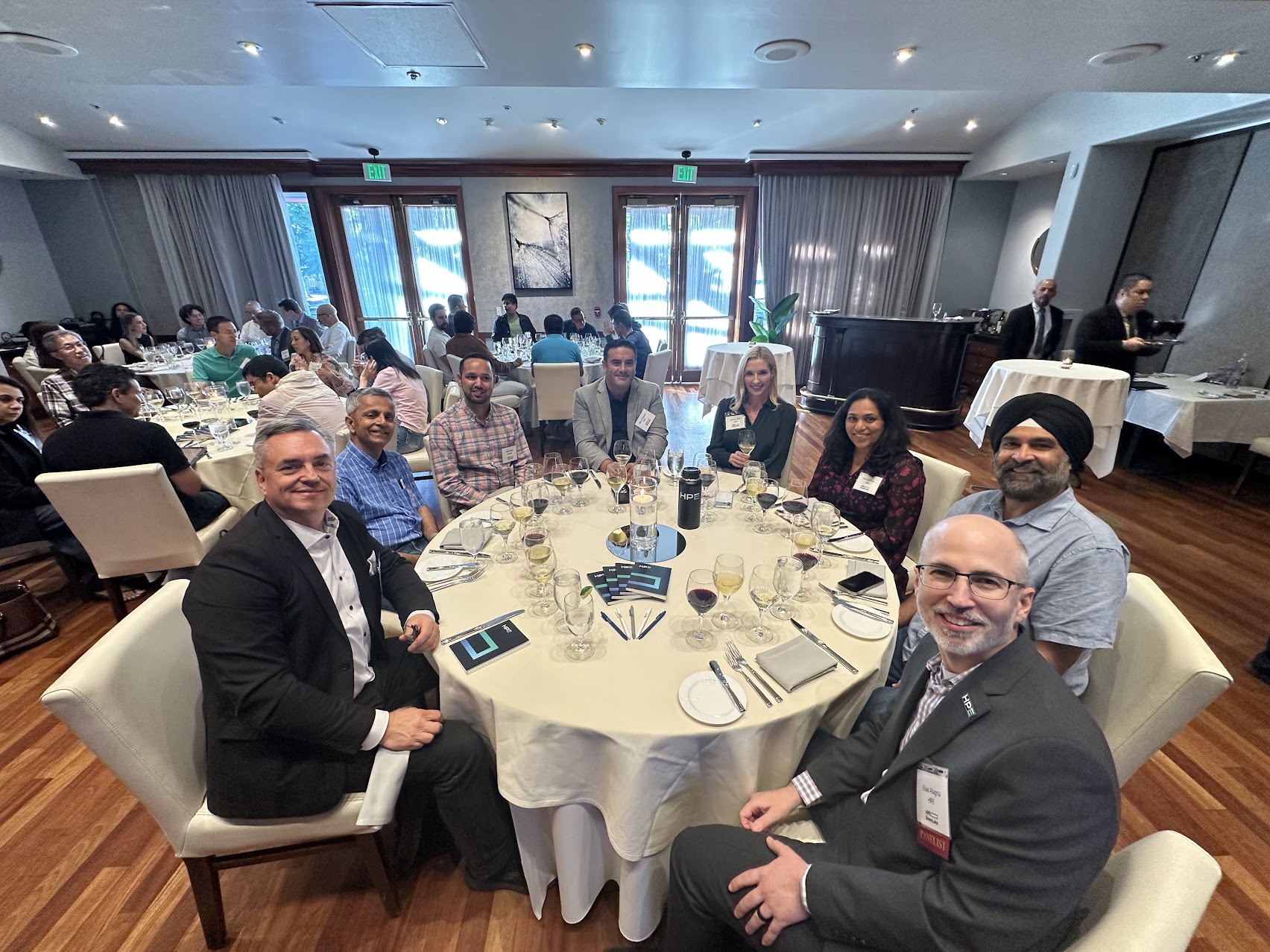
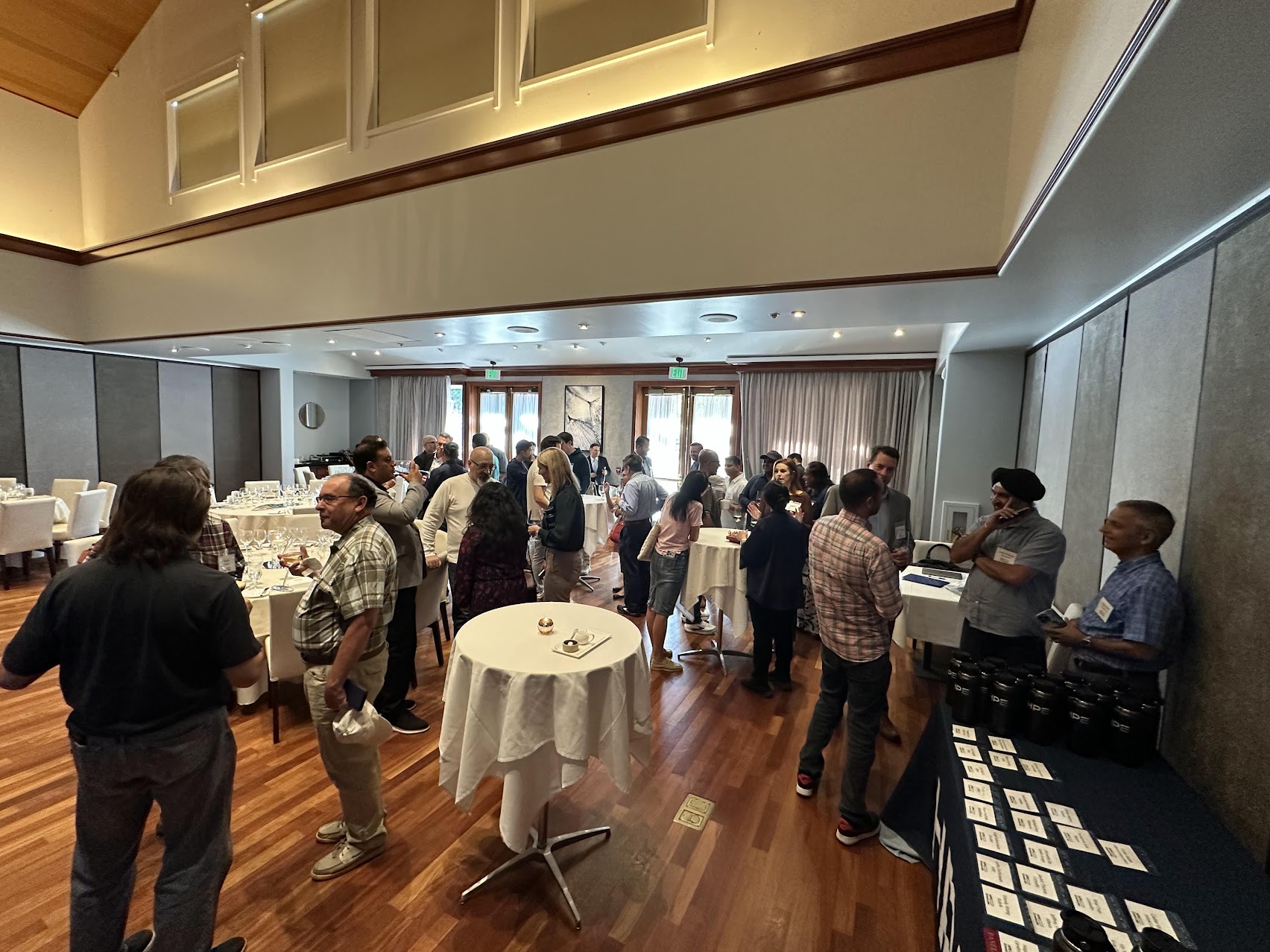
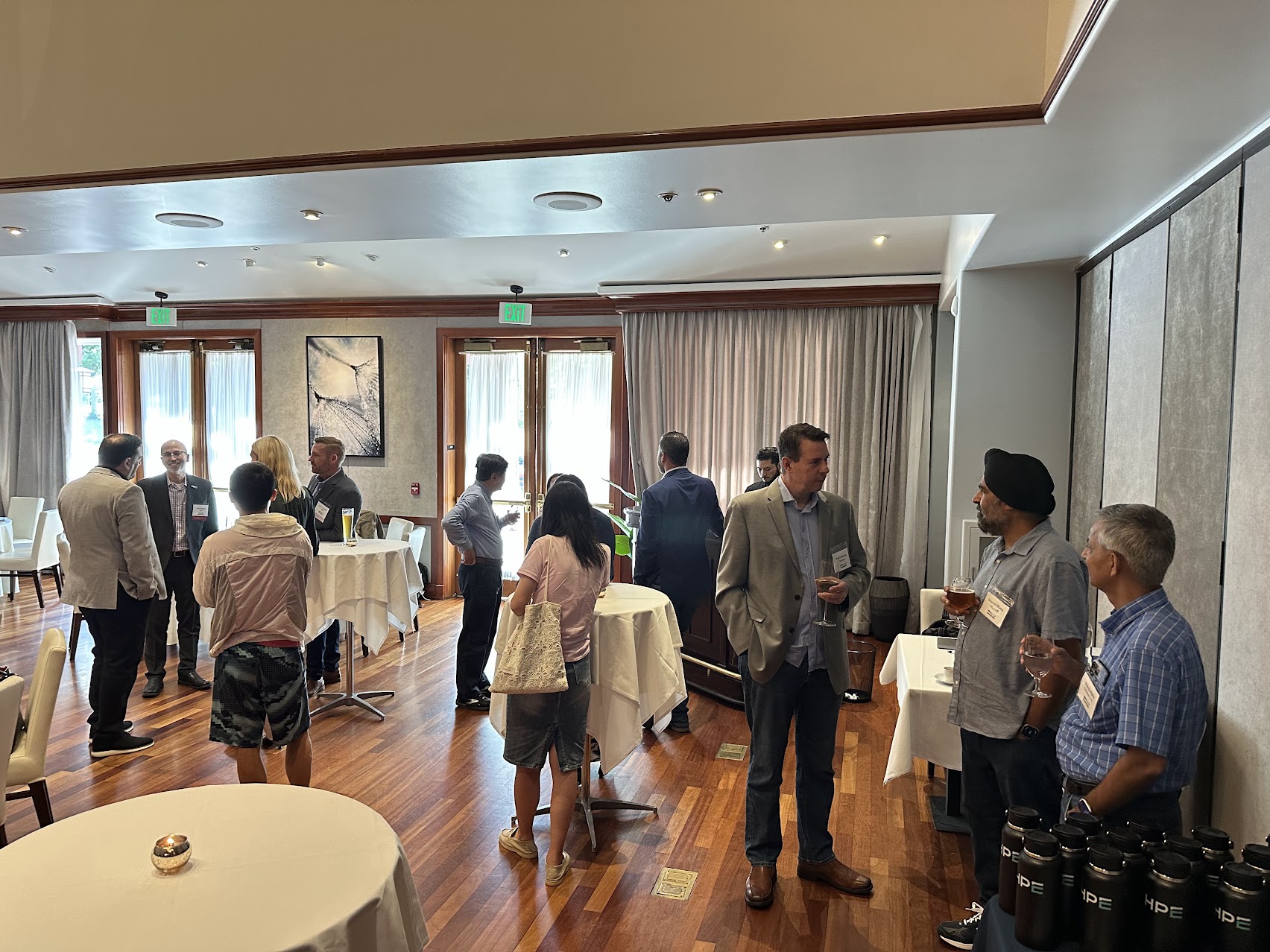
The evening combined a moderated panel with candid peer discussion, giving attendees space to compare strategies, challenges, and operating realities.




Event sponsor
Unlock your organization’s next phase of innovation with HPE GreenLake, the edge-to-cloud platform designed for the AI era. HPE GreenLake brings cloud agility to applications and data wherever they live, combining scalable infrastructure, built-in security, and intelligent operations. With deep expertise across AI, cloud, and networking, HPE helps enterprises turn data into insight, improve performance, and operate with greater speed and control. Backed by decades of innovation, HPE GreenLake enables organizations to modernize, scale, and lead with confidence.
Learn more about HPE GreenLake ↗