
BlackLine
Scott Stern
VP, Global Head of Product Marketing & Customer Advocacy


Post-event recap
A private executive conversation on how AI is moving finance from insight to governed execution — while preserving the accuracy, control, and trust the Office of the CFO requires.
Executive summary
Most CFO organizations are no longer debating whether AI will reshape finance. The more urgent question is how to introduce autonomous execution without weakening the controls, traceability, and accountability that financial operations depend on.
The discussion explored how agentic financial operations can move beyond isolated copilots and point solutions toward purpose-built digital workers that execute routine finance activities while keeping humans responsible for judgment, exceptions, and final accountability.
A consistent message was that autonomy only becomes useful when it sits on top of trusted financial data, standardized processes, and a governed orchestration layer. The goal is not simply faster automation. It is greater capacity, stronger control, and more strategic impact from finance teams.
Featured panel
BlackLine
VP, Global Head of Product Marketing & Customer Advocacy

NICE
Chief Financial Officer

Integreon
Chief Financial Officer

BlackLine
Chief Accounting Officer
The room
Senior finance leaders joined the conversation from a cross-section of large enterprises and growth organizations.
Key themes
AI in finance is moving beyond summarizing, recommending, and forecasting toward systems that can complete defined work inside governed workflows.
Autonomous finance requires provenance, traceability, permissioning, and human accountability to be built into the operating model rather than added later.
Fragmented financial data and inconsistent processes limit the value of AI. A unified, governed data foundation makes reliable execution possible.
The strongest use cases remove repetitive execution from finance teams so professionals can focus on exceptions, judgment, analysis, and business partnership.
Agentic finance becomes more powerful when workflows, data, and controls are connected across the financial close and adjacent processes.
The operating principle
The goal is not less control. It is more execution with confidence.
Agentic finance only creates strategic value when autonomous work remains visible, governed, auditable, and connected to accountable finance leaders.
Actionable takeaways
Prioritize workflows that already have clear ownership, repeatable rules, trusted data, and defined approval paths.
Reduce fragmentation before asking autonomous systems to make or execute decisions across finance.
Set explicit boundaries for what agents can execute, what requires review, and who remains responsible for the outcome.
Evaluate whether AI gives finance professionals more time for exception management, analysis, and strategic work.
Design AI workflows with permissions, provenance, audit trails, and controls that finance and audit teams can understand.
Look beyond isolated tasks and identify where agents can orchestrate work across the broader financial operating model.
From the room
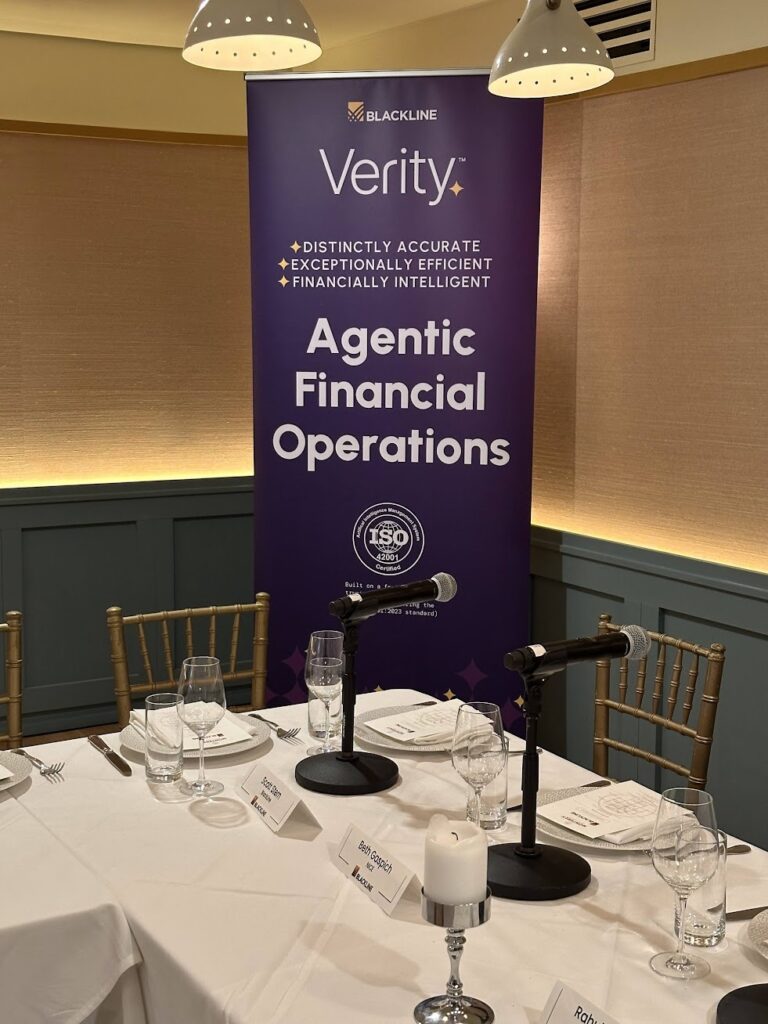



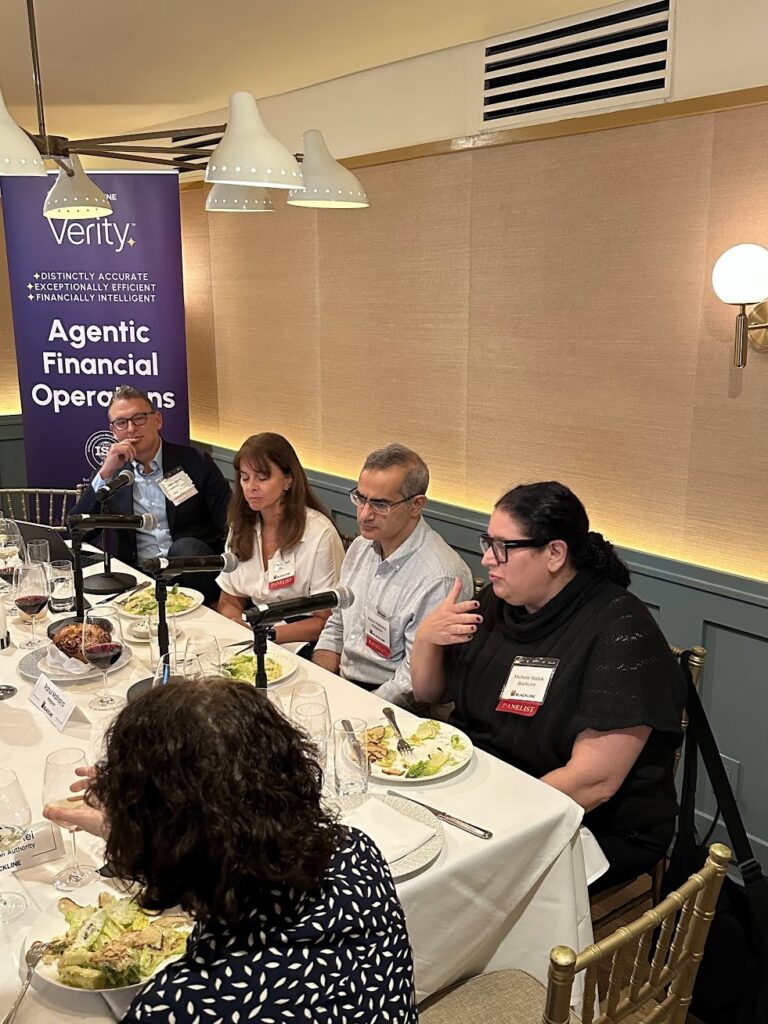







Event sponsor
BlackLine helps finance and accounting teams modernize financial operations with unified data, intelligent automation, embedded controls, and trustworthy AI designed for the Office of the CFO.
Visit BlackLine ↗