Culture Amp
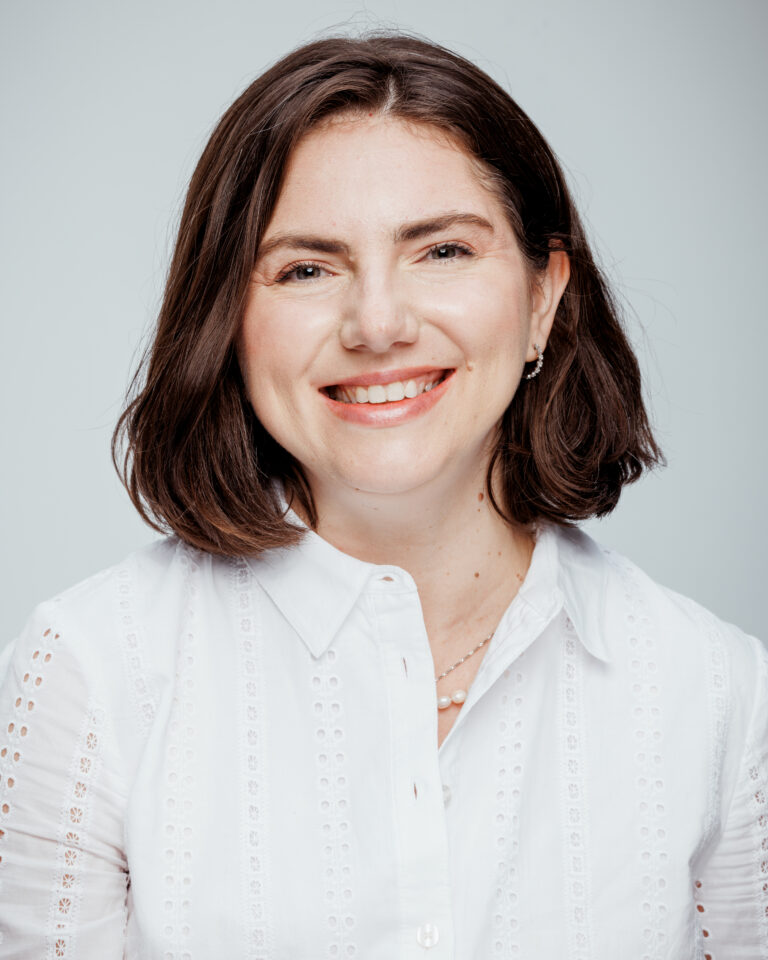
Roza Jankovic
Lead People Scientist


Post-event recap
How senior HR leaders are using AI to anticipate change and shape culture — moving from periodic surveys to continuous listening, and from collecting feedback to acting on it.
Organizations are rethinking how they approach employee experience, engagement, and performance in response to shifting workforce expectations and increasing pressure to demonstrate measurable business impact. Traditional engagement strategies are proving insufficient, prompting leaders to focus on continuous listening, real-time feedback, and more personalized approaches to understanding employee sentiment. This shift reflects a broader recognition that employee experience is directly tied to productivity, retention, and overall organizational performance.
A central challenge is translating feedback into meaningful action. Many organizations have invested in tools to collect employee data but struggle to operationalize insights at scale. Leaders are now prioritizing systems and processes that enable faster decision-making, clearer accountability, and stronger alignment between people strategies and business objectives. This includes integrating employee feedback into leadership workflows and ensuring that managers are equipped to act on insights effectively.
At the same time, there is growing emphasis on building resilient organizational cultures that can adapt to ongoing change. Companies are moving away from one-size-fits-all engagement models and toward more flexible, data-informed approaches that account for diverse employee needs. The ability to connect employee experience initiatives to measurable outcomes is becoming a key differentiator, particularly as organizations seek to justify continued investment in people and culture programs.
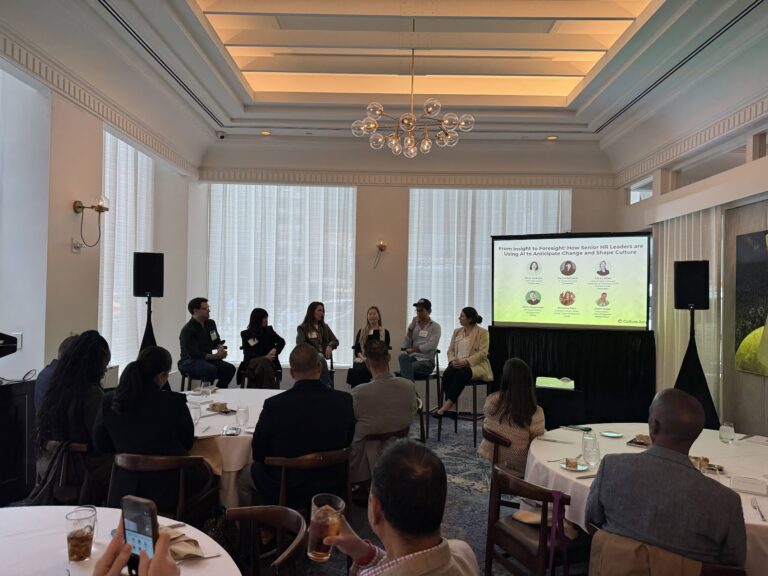
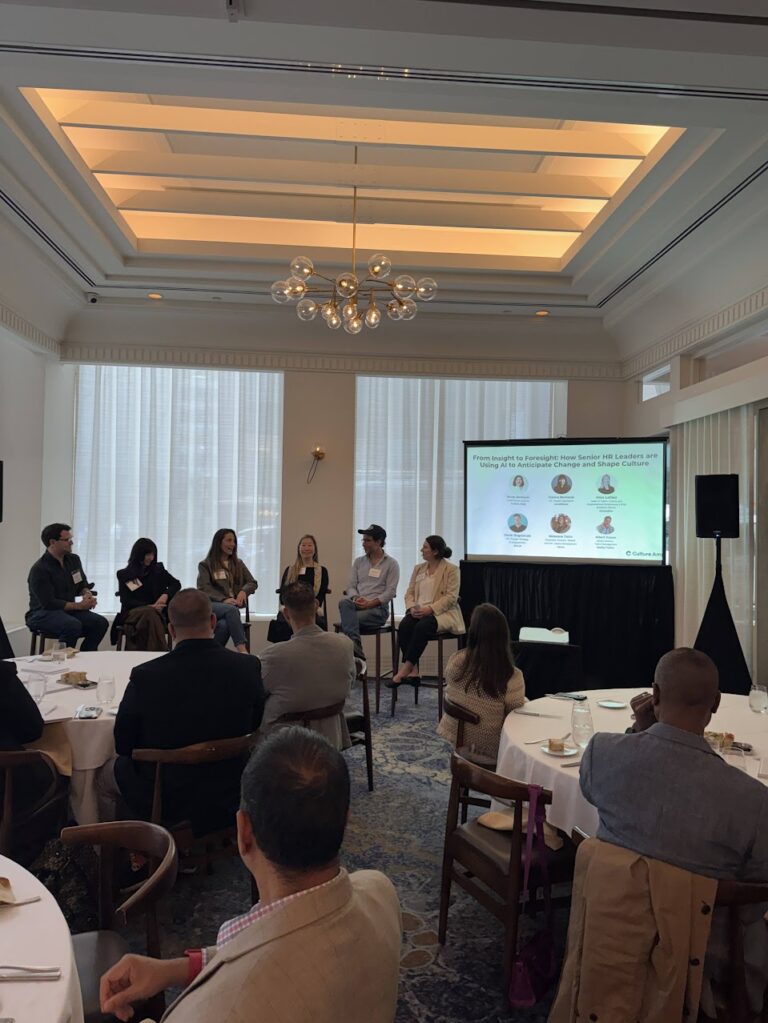
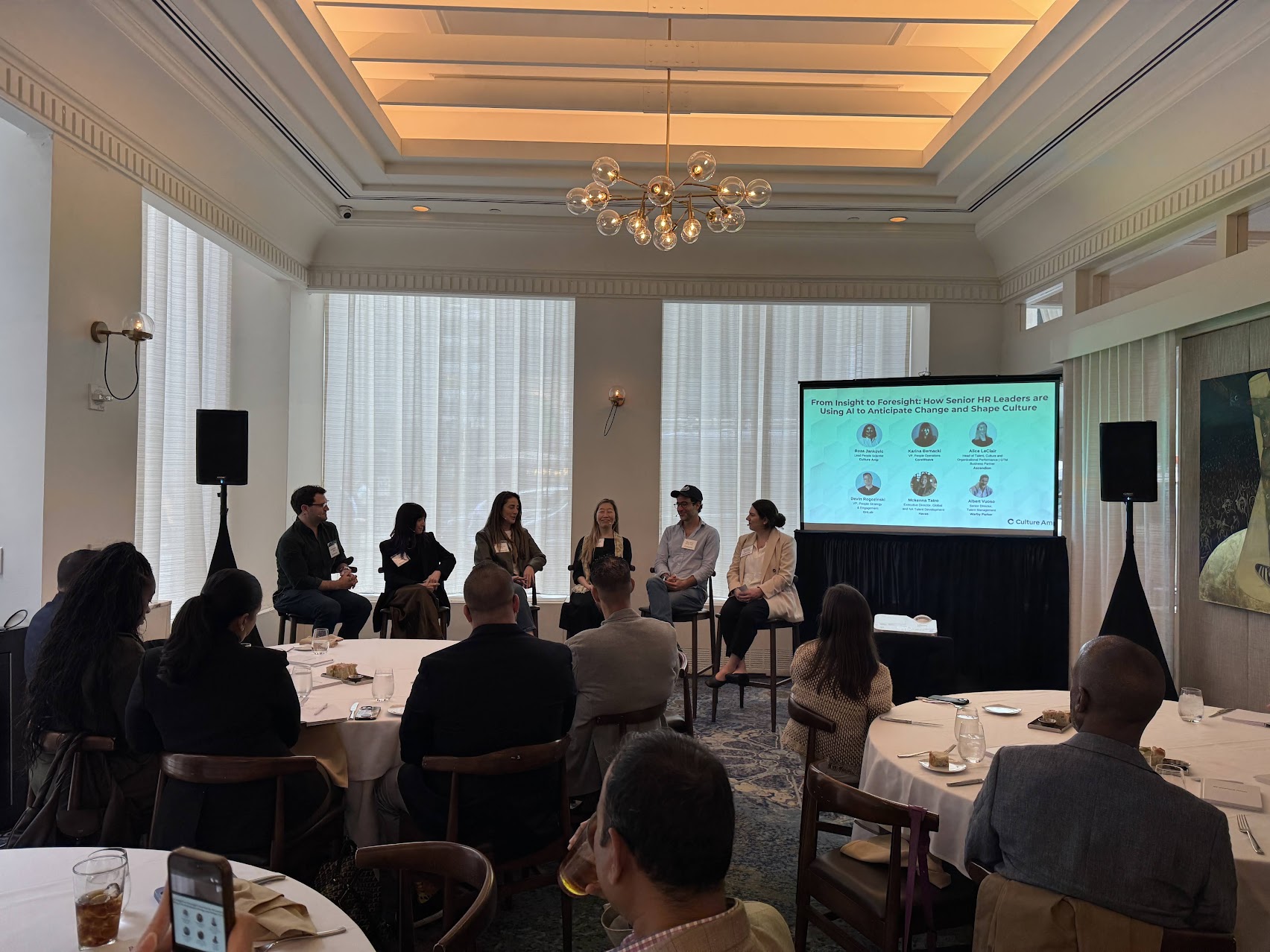
Moderator and panel
Perspectives from people science, talent management, organizational performance, talent development, and people strategy.
Culture Amp
Lead People Scientist

Ascendion
Head of Talent, Culture and Organizational Performance

Warby Parker
Senior Director, Talent Management
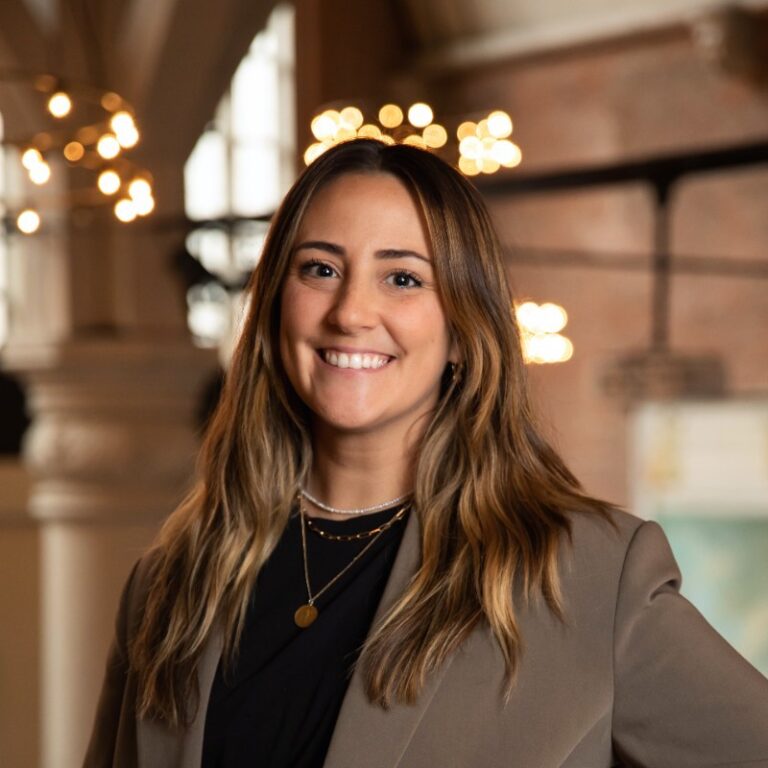
Havas
Executive Director, Global and NA Talent Development
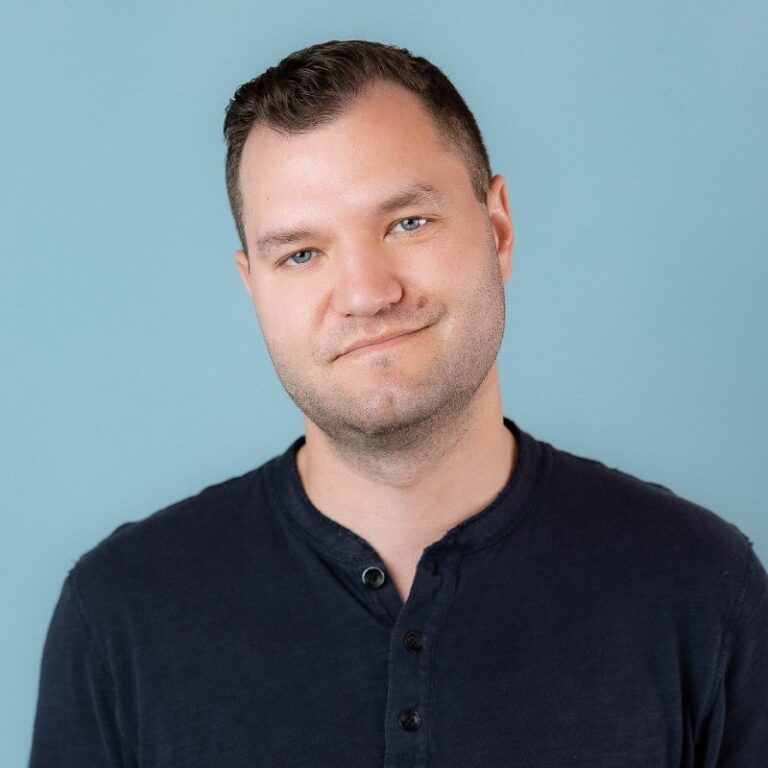
GitLab
VP, People, Culture & Engagement Strategy

CoreWeave
VP, People
Key themes
Five themes framed the discussion about listening, action, and measurable impact.
Organizations are moving away from annual engagement surveys toward ongoing feedback models that provide more timely, actionable insights.
The challenge has shifted from collecting feedback to enabling leaders and managers to respond quickly and consistently to employee insights.
Frontline managers are central to translating feedback into action, making training, support, and accountability essential to success.
Organizations face increasing pressure to connect engagement and culture initiatives to retention, productivity, and measurable financial performance.
Companies are shifting toward tailored approaches that reflect different roles, geographies, and employee expectations rather than one-size-fits-all programs.
Actionable takeaways
A practical operating list for turning employee feedback into measurable change.
Replace or supplement annual surveys with ongoing listening tools that capture real-time employee sentiment.
Define accountability at the manager and leadership level to ensure feedback results in measurable change.
Provide simplified data, training, and playbooks so managers can respond to feedback without delay.
Align engagement and experience metrics with outcomes such as retention, performance, and revenue impact.
Develop targeted initiatives based on role, function, and employee needs rather than applying uniform solutions.
Reduce the time between feedback collection and action to build trust and maintain engagement.
Embed employee insights into regular business reviews and decision-making processes.
Treat employee experience initiatives as ongoing programs, refining approaches based on measurable results.
From the room
Event sponsor

Culture Amp revolutionizes how over 25 million employees across 6,500 companies create a better world of work. As the global platform leader for employee experience, Culture Amp empowers companies of all sizes and industries to transform employee engagement, develop high-performing teams, and retain talent via cutting-edge research, powerful technology, and the largest employee dataset in the world. The most innovative companies across the globe, such as Salesforce, PwC, KIND, SoulCycle, and BigCommerce depend on Culture Amp every day.
Culture Amp is backed by 10 years of innovation, leading venture capital funds, and offices in the U.S., U.K., and Australia. Culture Amp was recognized as one of the world’s top private cloud companies by Forbes and one of the most innovative workplace companies by Fast Company.
cultureamp.com ↗