
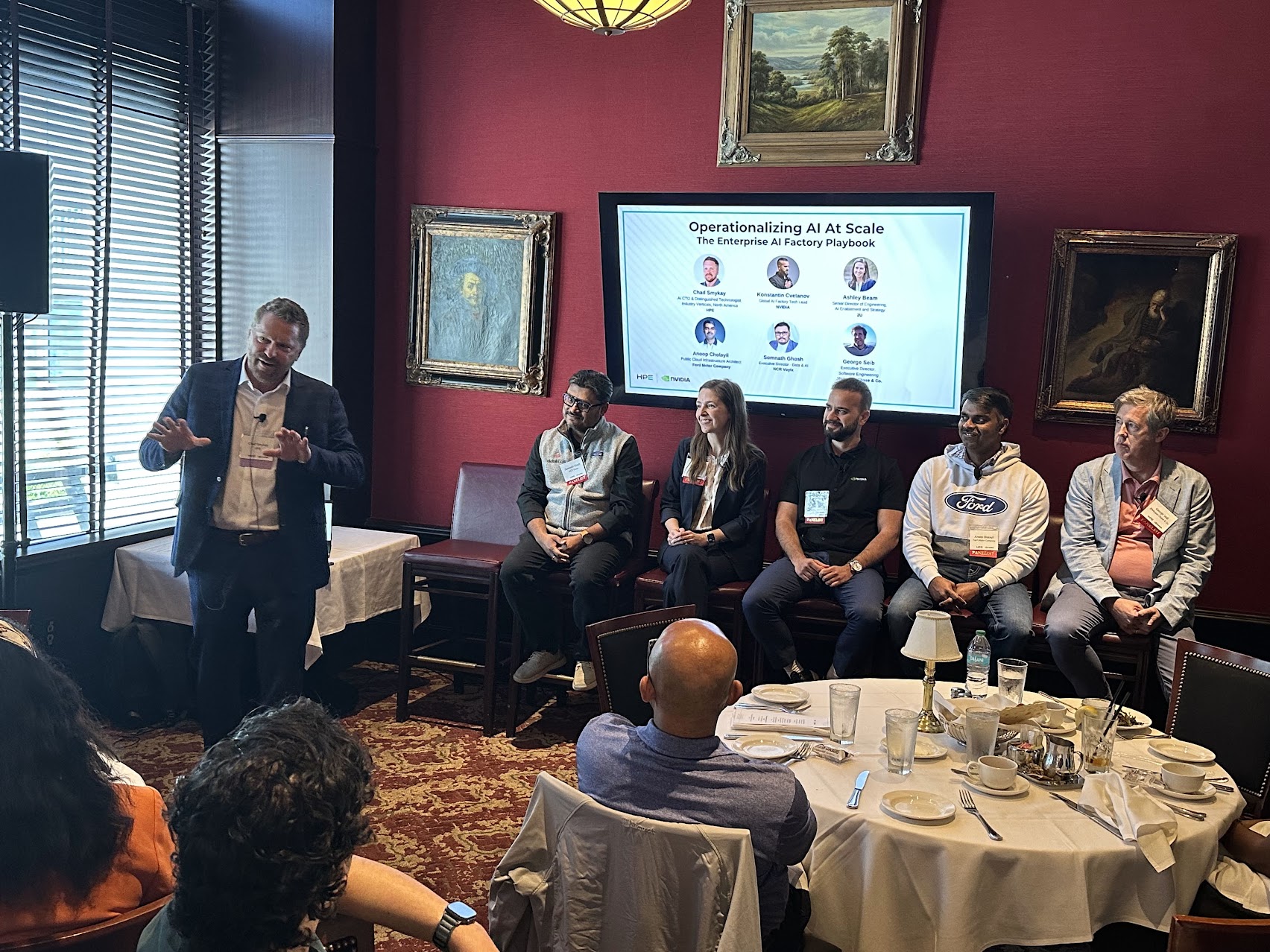
Panel
Chad Smykay
AI CTO & Distinguished Technologist, Industry Verticals, North America
Hewlett Packard Enterprise


Executive summary
Executive SummaryEnterprise organizations are moving from experimentation to operationalization of AI, but progress is constrained by fundamental gaps in data, governance, and infrastructure readiness. While access to models has become easier, the complexity has shifted downstream to integrating AI into real business processes, ensuring data quality, and defining measurable outcomes. Many organizations initially approached AI as a tooling problem, but are now recognizing it as a data and operational discipline that requires tighter alignment with core business functions.At the infrastructure level, AI is exposing limitations in traditional architectures. Workloads are highly data-intensive, require proximity to sensitive datasets, and introduce new cost pressures that challenge cloud-first assumptions. As a result, enterprises are reevaluating deployment strategies, balancing cloud convenience with long-term cost control, regulatory requirements, and performance considerations. Hybrid and workload-specific architectures are emerging as the practical path forward.A parallel shift is occurring in how organizations think about AI systems themselves. Foundational models are becoming commoditized, while differentiation is moving toward how enterprises combine general-purpose models with specialized, domain-specific capabilities. Success is increasingly tied to how effectively organizations integrate these components into existing workflows, govern their use, and scale them responsibly across teams.
The discussion
AI CTO & Distinguished Technologist, Industry Verticals, North America
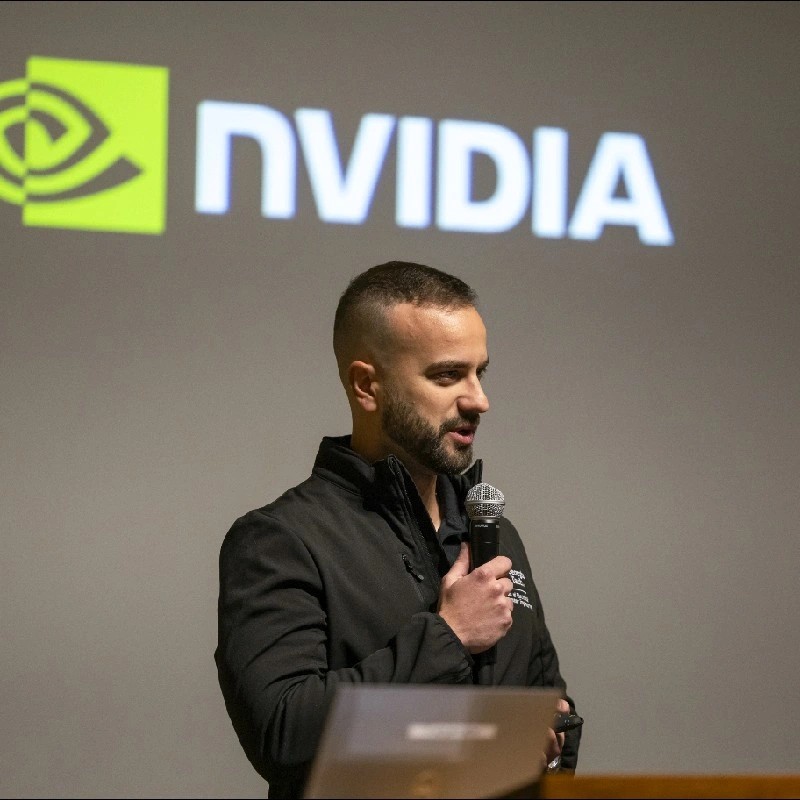
Global AI Factory Tech Lead

Executive Director - Data & AI

Public Cloud Infrastructure Architect

Senior Director of Engineering, AI Enablement and Strategy

Executive Director | Software Engineering
Key themes
Early implementations failed when organizations underestimated the importance of clean, structured, and well-governed data. Model performance and business impact remain directly tied to data quality and accessibility.
Many AI initiatives stall due to unclear KPIs, undefined use cases, and weak alignment to business outcomes. Scaling requires disciplined workload selection and measurable success criteria.
Enterprises are balancing cloud, on-premise, and edge environments to address cost, performance, and regulatory constraints, particularly for sensitive or data-intensive workloads.
Organizations are combining large foundational models with smaller, specialized or open-source models to solve targeted business problems more effectively.
Many enterprises still lack standardized frameworks for AI risk, compliance, and lifecycle management, creating friction between innovation, security, and regulatory requirements.
Actionable takeaways
Prioritize a small number of initiatives that leverage existing data and deliver measurable business value rather than pursuing broad, unfocused adoption.
Establish clear KPIs tied to productivity, cost savings, or revenue impact to avoid ambiguous outcomes and stalled projects.
Standardize data labeling, metadata, and governance practices to improve model accuracy and enable long-term scalability.
Evaluate workload placement based on data sensitivity, latency, and cost rather than defaulting to a single environment.
Use general-purpose models for broad capabilities and layer in specialized models to address targeted business problems.
Implement risk assessment, compliance checks, and access controls as part of the development lifecycle rather than retrofitting later.
Embed AI into existing processes where it can drive immediate efficiency gains instead of building isolated tools.
Adjust roles, responsibilities, and review processes to account for AI-assisted development while maintaining code quality and accountability.
Ensure both technical and non-technical stakeholders can use AI tools effectively without introducing operational or security risk.
Event moments





Presented by

Unlock your boldest ambitions with HPE, your essential partner for the AI era. HPE uses the power of AI, cloud, and networking to help you move faster, work smarter, and achieve more. With deep expertise and bold ingenuity, we empower organizations to turn data into foresight, elevate performance, and drive real-world impact—at scale. Rooted in decades of innovation, we focus on helping companies adapt, grow, lead, and challenge the limits of what’s possible. www.hpe.com
Learn more about HPE ↗
NVIDIA is a full‑stack, accelerated computing company that delivers the AI infrastructure and software powering the world’s most demanding enterprises, from cloud to data center to factory floor. We combine industry‑leading GPUs, high‑performance networking, and optimized software into integrated platforms that enable you to build, deploy, and scale generative AI, digital twins, and advanced analytics with unmatched performance and efficiency. As the engine behind many of the world’s largest clouds and AI initiatives, NVIDIA helps organizations transform their data into a competitive advantage, modernize their core systems, and accelerate innovation while reducing total cost of ownership and time to value.
Learn more about NVIDIA ↗