
Panel
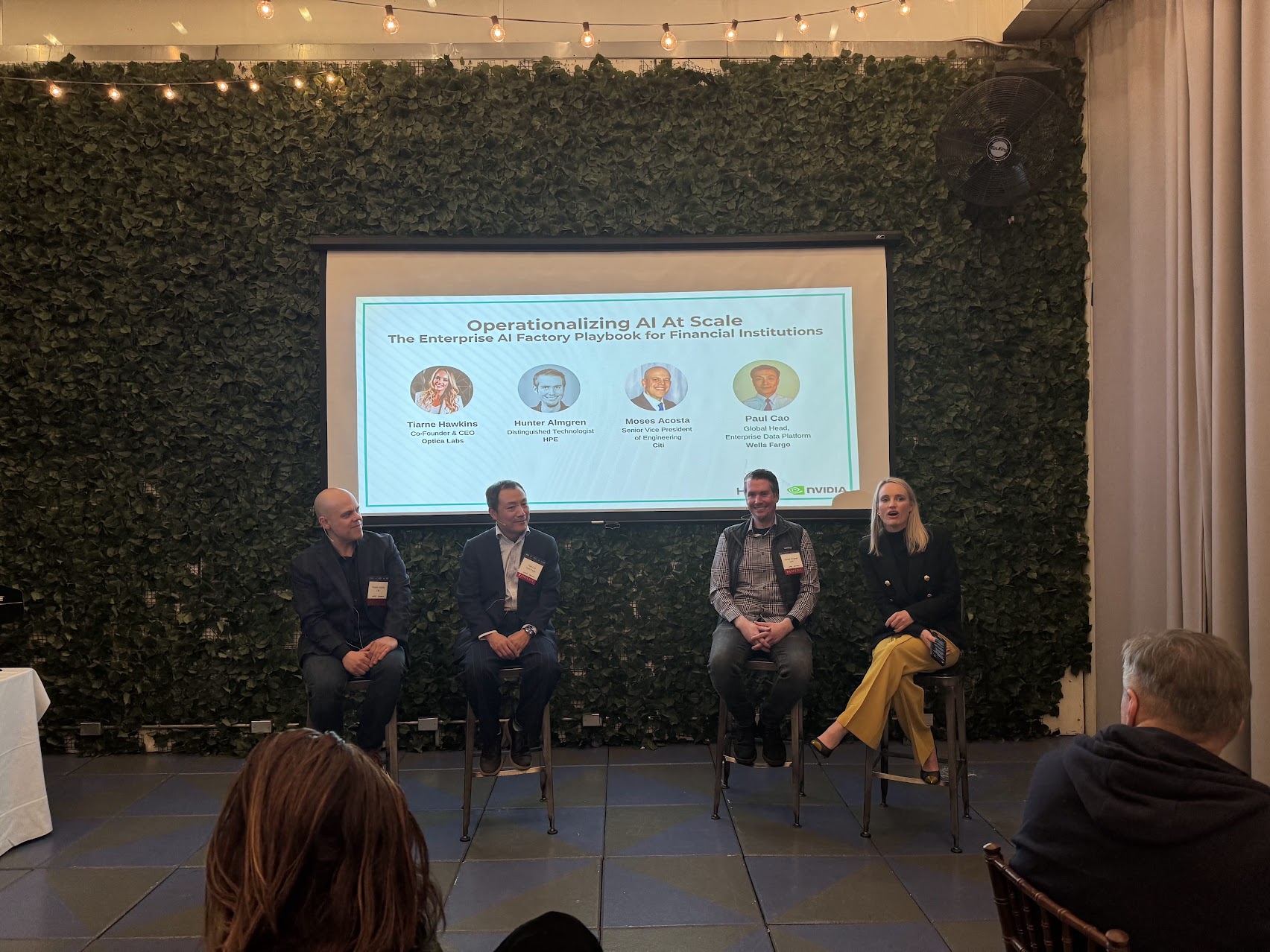
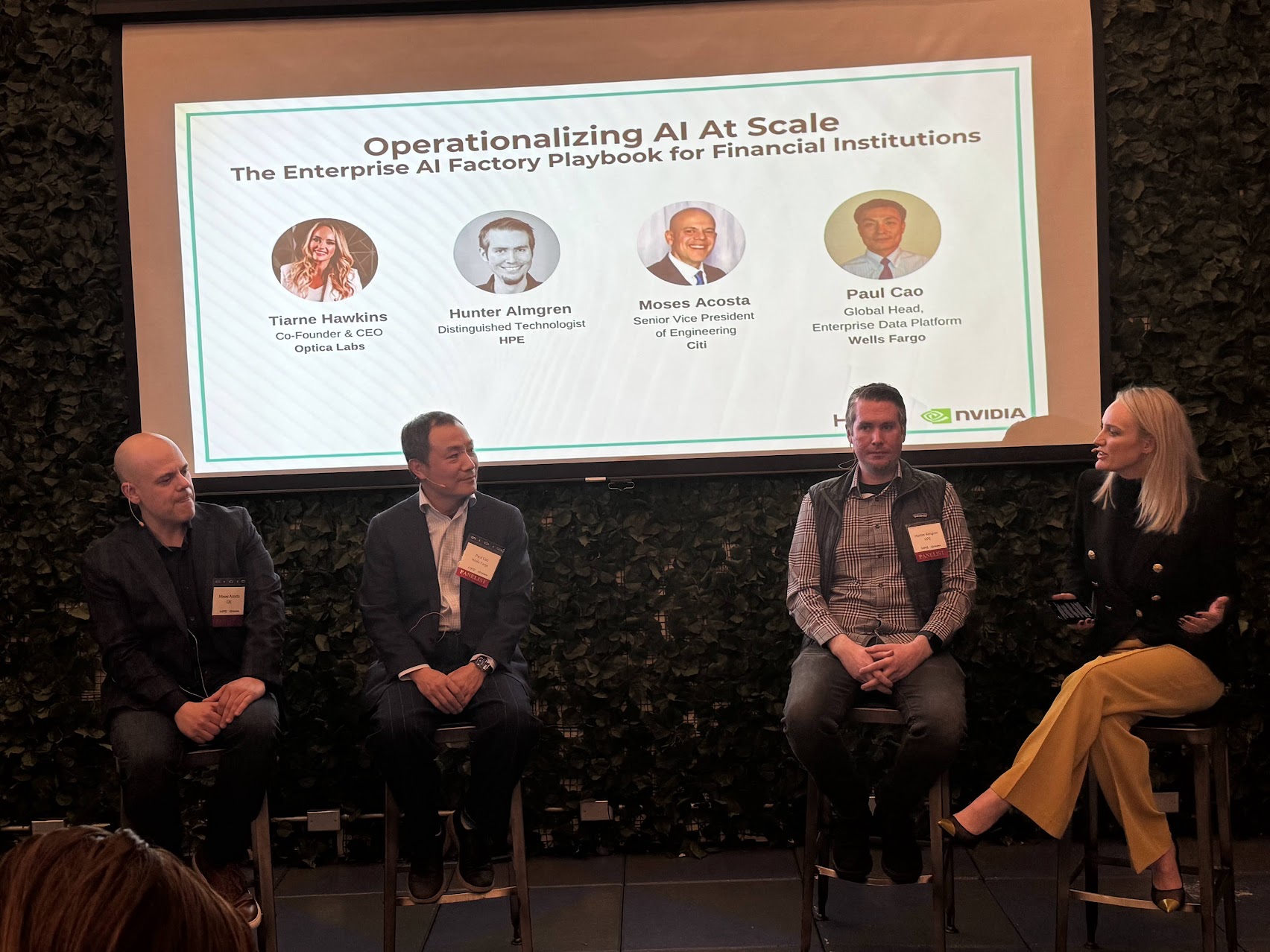
Tiarne Hawkins
Co-Founder & CEO
Optica Labs Inc


Executive summary
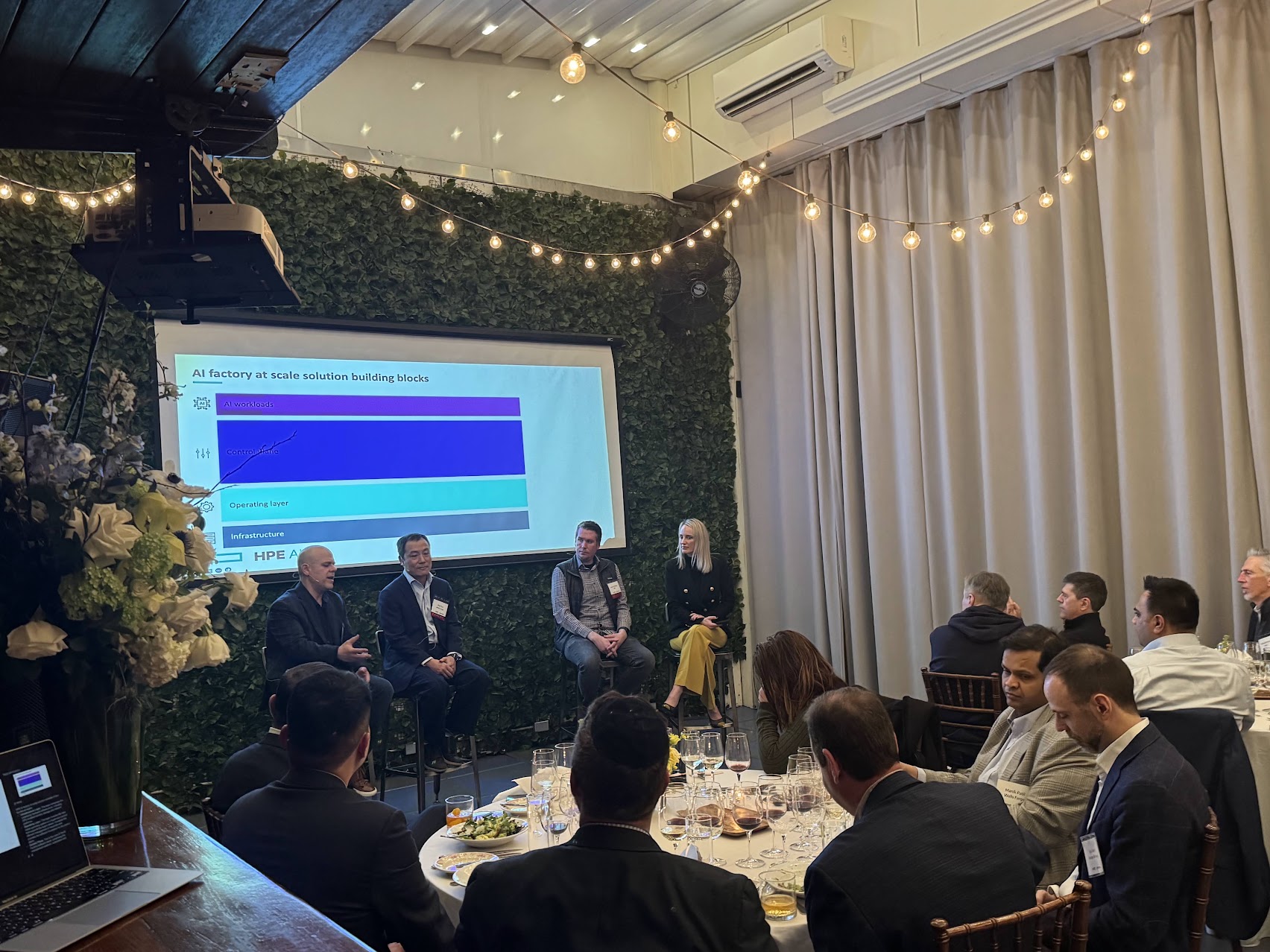
Executive SummaryEnterprise organizations are accelerating investment in AI, yet most initiatives remain in early experimentation due to unresolved challenges around data readiness, governance, and operationalization. The discussion emphasized that AI success is less about models and more about the surrounding ecosystem, including trusted data pipelines, governance frameworks, and infrastructure platforms capable of supporting scalable workloads. Organizations that move beyond proof-of-concept stages typically focus first on foundational capabilities such as data quality, lineage, and secure access, rather than jumping directly to advanced AI use cases.A second critical shift is the transition from experimentation toward operational AI platforms that can support multiple teams, workloads, and governance requirements simultaneously. Enterprises are increasingly adopting centralized AI platforms or “AI factories” that provide shared infrastructure, security controls, and cost management while still allowing decentralized innovation. This hybrid approach enables teams to prototype rapidly while ensuring that production deployments meet regulatory, security, and operational standards required at scale.The conversation also highlighted a broader organizational transformation driven by AI adoption. Productivity gains are emerging primarily through internal use cases such as automation, document generation, and development workflows. However, realizing these gains requires cultural change, workforce enablement, and clear demonstrations of value. Leaders must focus on measurable outcomes and practical use cases that demonstrate efficiency improvements rather than pursuing AI initiatives solely for innovation optics.
The discussion
Co-Founder & CEO

Distinguished Technologist

Global Head, Enterprise Data Platform

Senior Vice President of Engineering
Key themes
Many organizations struggle to move beyond experimentation because of incomplete data governance, inconsistent data quality, and limited lineage visibility. AI initiatives frequently expose long-standing data management gaps that must be addressed before scaling.
Enterprises are adopting hybrid governance models that allow teams to experiment independently while enforcing centralized controls for production workloads, security, and cost management.
As AI agents and automated decision systems expand, organizations must implement stronger observability, explainability, and regulatory reporting capabilities to maintain trust and compliance.
Many enterprises are prioritizing AI applications that improve internal processes, such as engineering workflows, documentation, and operational automation, before launching customer-facing AI solutions.
AI adoption is increasingly constrained by infrastructure factors including power availability, cooling capacity, GPU supply, and data center architecture, making infrastructure planning a strategic priority.
Actionable takeaways
Prioritize data governance, lineage tracking, and quality management to ensure AI systems are built on trusted and auditable datasets.
Establish centralized infrastructure, cost management, and security controls that allow multiple teams to build and deploy AI workloads safely.
Focus on automation opportunities within engineering, documentation, operations, and knowledge management to demonstrate measurable value quickly.
Deploy tools that provide visibility into model behavior, agent actions, and data usage to meet regulatory and compliance expectations.
Evaluate power availability, cooling requirements, GPU density, and data center modernization to support future AI workloads.
Provide structured training programs and hands-on learning environments so employees understand how to apply AI tools effectively in their daily workflows.
Use pilot projects to clearly show efficiency gains or cost reductions, helping build executive confidence and accelerate broader adoption.
Event moments









Presented by

Unlock your boldest ambitions with HPE, your essential partner for the AI era. HPE uses the power of AI, cloud, and networking to help you move faster, work smarter, and achieve more. With deep expertise and bold ingenuity, we empower organizations to turn data into foresight, elevate performance, and drive real-world impact—at scale. Rooted in decades of innovation, we focus on helping companies adapt, grow, lead, and challenge the limits of what’s possible. www.hpe.com
Learn more about HPE ↗
NVIDIA is a full‑stack, accelerated computing company that delivers the AI infrastructure and software powering the world’s most demanding enterprises, from cloud to data center to factory floor. We combine industry‑leading GPUs, high‑performance networking, and optimized software into integrated platforms that enable you to build, deploy, and scale generative AI, digital twins, and advanced analytics with unmatched performance and efficiency. As the engine behind many of the world’s largest clouds and AI initiatives, NVIDIA helps organizations transform their data into a competitive advantage, modernize their core systems, and accelerate innovation while reducing total cost of ownership and time to value.
Learn more about NVIDIA ↗